Workplace Challenges for Neurodivergent Adults

Neurodivergent adults bring a wide range of strengths to the workplace, including creative problem-solving, pattern recognition, deep focus, and innovative thinking. At the same time, many workplaces are designed around a narrow set of communication styles, sensory environments, and expectations, which can make day-to-day tasks more demanding than necessary.
Neurodivergence reflects natural variation in how people process information, communicate, and interact with their environment. Differences in attention, sensory processing, communication style, and organization are not deficits, but they may require more intentional workplace design to ensure everyone can perform at their best.
Understanding these experiences helps both employees and employers create environments that support a wider range of working styles. When workplaces are flexible and responsive, neurodivergent professionals are better able to contribute fully without unnecessary stress or barriers.
Key Takeaways
Workplace differences for neurodivergent adults may show up in areas such as communication preferences, sensory sensitivities, task management, or task switching. These differences are often associated with neurodevelopmental profiles such as ADHD and autism, but they are highly individual.
Many neurodivergent employees bring valuable strengths, including attention to detail, systems thinking, creativity, and persistence. When these strengths are recognized and supported, they can drive meaningful impact within teams and organizations.
Inclusive workplace practices benefit everyone. Clear written communication, flexible workflows, predictable expectations, and options for managing sensory input can improve focus, efficiency, and overall well-being.
Supportive workplace cultures, including open communication and reduced stigma, contribute to stronger collaboration, better mental health, and higher job satisfaction across teams.
Daily Work Tasks in a Neurodiverse Workplace
Task Completion, Organization, and Time Management
Task Switching, Multitasking, and Focus
Communication and Social Interactions at Work
Sensory Overload and the Work Environment
Mental Health, Stress, and Burnout
Strengths and Competitive Advantage
Building an Inclusive Work Environment
Frequently Asked Questions About Neurodivergence in the Workplace
Daily Work Tasks in a Neurodiverse Workplace

Workplace challenges for neurodivergent adults often become most noticeable during everyday work tasks, especially in environments designed around neurotypical working styles. These challenges tend to reflect a mismatch between workplace expectations and the natural differences in how neurodivergent individuals process information, communicate, and manage tasks.
Neurodiversity refers to the range of neurological differences that shape how people interact with the world. Neurodivergent employees, including those with Attention Deficit Hyperactivity Disorder (ADHD) and Autism Spectrum Disorder (ASD), may approach work tasks, social interactions, and problem-solving in ways that differ from what is considered typical. When workplaces recognize and support these differences, employees are better positioned to succeed.
Task Completion, Organization, and Time Management

Many neurodivergent employees complete tasks effectively when expectations are clear, structured, and predictable. Workplace challenges tend to arise when instructions are unclear, priorities shift quickly, or multiple tasks compete for attention.
Time awareness and focus can vary depending on the task and environment. Some neurodivergent workers may underestimate how long tasks take or lose momentum during repetitive work, particularly in distracting environments.
Workplace accommodations such as written instructions, visual schedules, and checklists support task completion and reduce stress. These tools improve organization and help neurodivergent professionals manage responsibilities more consistently.
Task Switching, Multitasking, and Focus

Task switching and multitasking are often expected in the workplace, but they can increase cognitive load for many neurodivergent workers. Many people perform more effectively when focusing on one task at a time rather than constantly switching between tasks.
Frequent interruptions and unclear priorities reduce efficiency and increase stress. Structured work blocks, predictable routines, and clear transitions between tasks support focus, productivity, and overall performance.
Communication and Social Interactions at Work

Communication differences are one of the most common workplace challenges for neurodivergent employees. These differences can affect how people communicate ideas, interpret social cues, and respond during workplace discussions.
Neurodivergent individuals may interpret tone, facial expressions, eye contact, or indirect language differently than neurotypical employees. In fast-paced meetings or group discussions, processing spoken information in real time can require additional effort.
Clear, direct communication improves collaboration. Providing meeting agendas in advance and written summaries afterward helps employees process information, participate more fully, and complete tasks accurately.

Communication Support for Neurodivergent Adults
Check out our blog on communication support for neurodivergent adults.
Sensory Overload and the Work Environment

Sensory overload is a common experience for many neurodivergent people in traditional workplace settings. Bright lights, background noise, and crowded environments can increase stress and make it more difficult to focus.
Many neurodivergent workers benefit from environmental adjustments such as quieter workspaces. Simple changes to the physical environment can significantly improve comfort, productivity, and overall well-being for employees.
Mental Health, Stress, and Burnout

Mental health can be impacted when workplace challenges are not addressed. Research suggests that many neurodivergent adults experience higher levels of workplace stress, particularly in environments that require constant adaptation.
Masking, or suppressing natural differences in communication or behavior, can increase mental fatigue over time. This often leads to stress, reduced confidence, and burnout.
Supportive workplace practices, including flexible expectations, clear communication, and opportunities for breaks, help reduce stress and support long-term well-being.
Strengths and Competitive Advantage
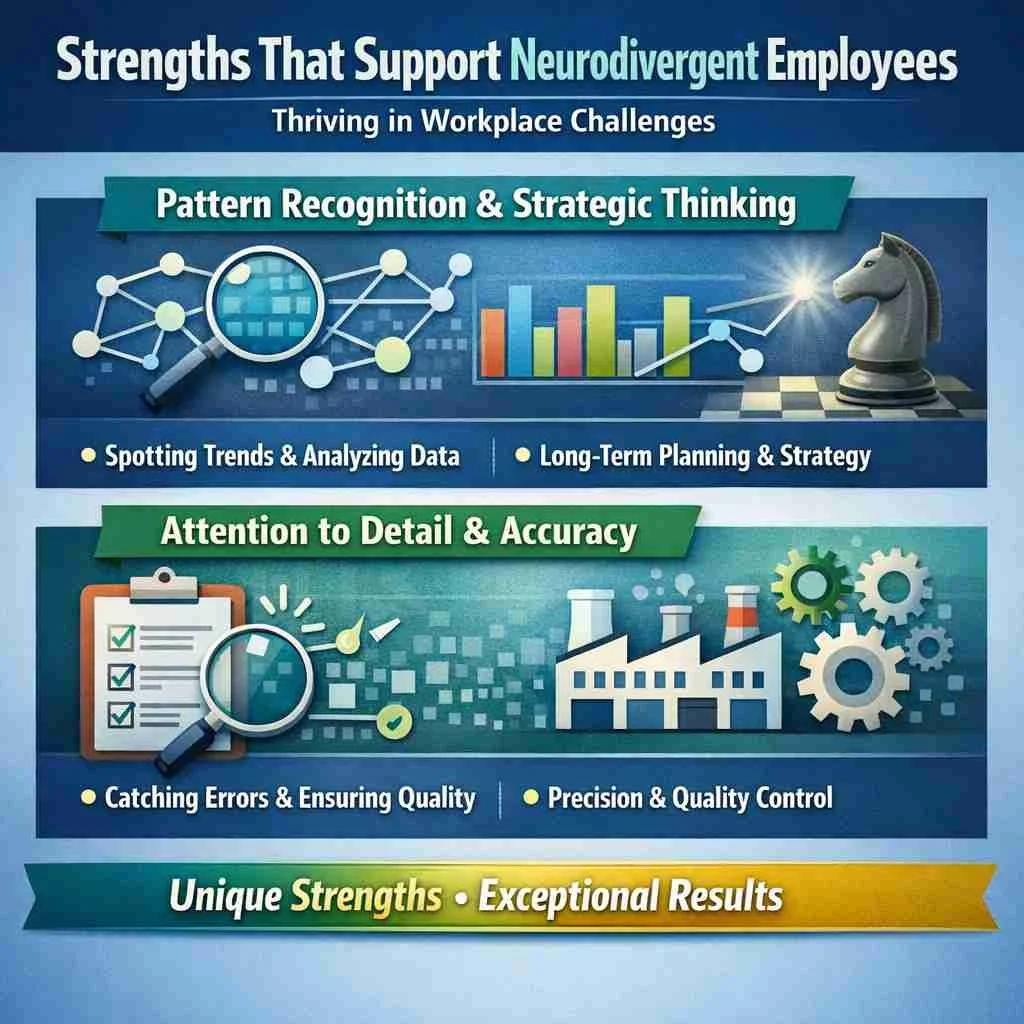
Neurodivergent talent brings valuable strengths to the workplace. Many neurodivergent professionals demonstrate strong problem-solving, pattern recognition, and strategic thinking skills.
Attention to detail, creativity, and persistence are also common strengths that support high-quality work. When these strengths are recognized and aligned with the right tasks, they create a clear competitive advantage for organizations.
Many employers are beginning to recognize the value of diverse cognitive perspectives and adapting workplace practices to better support neurodivergent employees.
Building an Inclusive Work Environment

Creating an inclusive work environment means supporting a range of working styles, communication preferences, and sensory needs. Inclusive workplace practices help reduce stigma, promote understanding, and improve collaboration between neurodivergent colleagues and neurotypical individuals.
Peer support, clear expectations, and flexible systems help employees thrive. Inclusive hiring practices, structured interviews, and transparent communication also improve access and long-term success for neurodivergent professionals.
When organizations focus on reducing barriers rather than changing individuals, they create workplaces where all employees can contribute their full skills and abilities.
Frequently Asked Questions About Neurodivergence in the Workplace

1. What are common workplace challenges for neurodivergent adults?
Workplace challenges for neurodivergent adults often include differences in communication, sensory overload, time management, and dealing with social situations. These experiences are linked to neurological differences, including ADHD and ASD. Many neurodivergent individuals process information, interpret social cues, and approach work tasks differently than neurotypical employees.
2. How can employers support neurodivergent employees at work?
Employers can support neurodivergent employees by creating an inclusive work environment that accommodates diverse working styles and communication preferences. Clear written instructions, structured workflows, flexible scheduling, and workplace accommodations such as quiet spaces or noise-canceling headphones can make a meaningful difference.
3. Are workplace accommodations required by law for neurodivergent workers?
Workplace accommodations may be required under laws such as the Disabilities Act in the United States and the Equality Act in other regions when reasonable adjustments support employee success. These accommodations are designed to reduce barriers and provide equitable access to job responsibilities.
4. How does sensory overload affect neurodivergent employees?
Sensory overload can make it more difficult for neurodivergent employees to focus, process information, and complete tasks efficiently. Bright lights, background noise, and busy environments can increase cognitive load and workplace stress. Environmental adjustments, including quieter workspaces, flexible seating, or noise-canceling headphones, help reduce distractions and support productivity.
5. Can neurodivergent employees succeed in competitive workplaces?
Neurodivergent employees can succeed and often excel in competitive workplaces when their strengths are recognized and supported. Many neurodivergent professionals bring valuable skills such as pattern recognition, attention to detail, and creative problem-solving. When workplace practices align with diverse needs and provide appropriate accommodations, neurodivergent employees can thrive and create a strong competitive advantage for organizations.
How Connected Speech Pathology Can Help

Workplace challenges for neurodivergent adults often show up in communication, organization, and the ability to meet workplace expectations. At Connected Speech, we provide online communication coaching that supports real-world skills used in professional settings.
Our communication coaches work with neurodivergent adults to strengthen communication during meetings, presentations, and everyday workplace conversations. This includes organizing ideas clearly, responding in the moment, and interpreting social cues in ways that feel practical and authentic.
We take a whole-person approach, looking at how communication and work tasks show up day-to-day and what may be contributing to stress or breakdowns. From there, we build personalized strategies that support both communication and task management, helping neurodivergent professionals complete tasks more efficiently and with greater confidence.
Our flexible online model makes it easier for working adults to stay consistent with support. The goal is not to change how someone communicates, but to provide tools that reduce stress, improve clarity, and support long-term workplace success.
Summary
Workplace experiences for neurodivergent adults often include differences in communication, sensory needs, and time management. These reflect natural neurological differences that shape working styles and interactions, not limitations in ability.
With supportive workplace practices and appropriate accommodations, many neurodivergent employees perform at a high level while maintaining strong mental health. Inclusive environments create the conditions for growth, reduce stress, and support long-term success for both individuals and teams.

About the Author
Allison Geller is a communication coach, speech-language pathologist, and founder of Connected Speech Pathology, an international online practice providing professional communication coaching and speech therapy for children, teens, and adults. With more than two decades of experience, she has worked in medical and educational settings, published research on aphasia, and leads a team of specialists helping clients improve skills in public speaking, vocal presence, accent clarity, articulation, language, fluency, and interpersonal communication.