Executive Functioning Coaching for Neurodivergent Adults

Neurodivergence refers to natural differences in how the brain processes information. It includes conditions such as ADHD, autism, dyslexia, and other cognitive variations. Neurodivergent individuals often demonstrate creativity, strong problem-solving skills, deep focus on areas of interest, and innovative thinking.
At the same time, some neurodivergent adults may experience challenges with executive functioning. Executive functioning is the brain’s management system. It includes the skills that help you plan, organize, start tasks, manage time, regulate emotions, and follow through on responsibilities.
When executive functioning is strained, daily life can feel harder than it should. You may know exactly what needs to get done, but struggle to begin. You may feel capable at work but overwhelmed by organization or deadlines. These patterns are not due to laziness or a lack of effort. They reflect differences in how certain cognitive systems operate.
Executive functioning coaching provides structured, practical support that aligns with how your brain works. Rather than forcing rigid productivity systems, coaching helps you build personalized strategies that are sustainable and realistic.
Key Takeaways
Executive functioning coaching for neurodivergent adults builds practical skills in time management, task initiation, and task organization in daily life.
Coaching follows a structured, goal-oriented process with measurable outcomes.
A strong coaching relationship improves self-awareness, self-compassion, and confidence.
Personalized systems help neurodivergent adults and teens create sustainable habits that support professional growth and personal relationships.
What Is Executive Functioning and Why Does It Matter in Everyday Life?
Executive Functioning Challenges and Common Challenges in Adults and Teens
What Is Executive Function Coaching?
Executive Functioning Skills Addressed With Coaching
Building Sustainable Habits Through an Executive Function Coaching Program
Frequently Asked Questions About Executive Functioning Coaching for Neurodivergent Individuals
What Is Executive Functioning and Why Does It Matter in Everyday Life?

Executive functioning refers to the mental skills that allow you to manage yourself and your responsibilities. These include working memory, attentional control, emotional regulation, flexible thinking, planning, prioritization, and self-monitoring.
These skills impact nearly every area of life:
Meeting deadlines at work or school
Completing assignments
Managing household responsibilities
Maintaining relationships
Following through on long-term goals
For many neurodivergent adults and teens, executive functioning challenges show up as difficulty keeping track of information, managing time effectively, shifting between tasks, or regulating frustration. You may feel overwhelmed by responsibilities that others seem to handle with ease. Over time, repeated struggles can lead to self-doubt and frustration.
Executive Functioning Challenges and Common Challenges in Adults and Teens
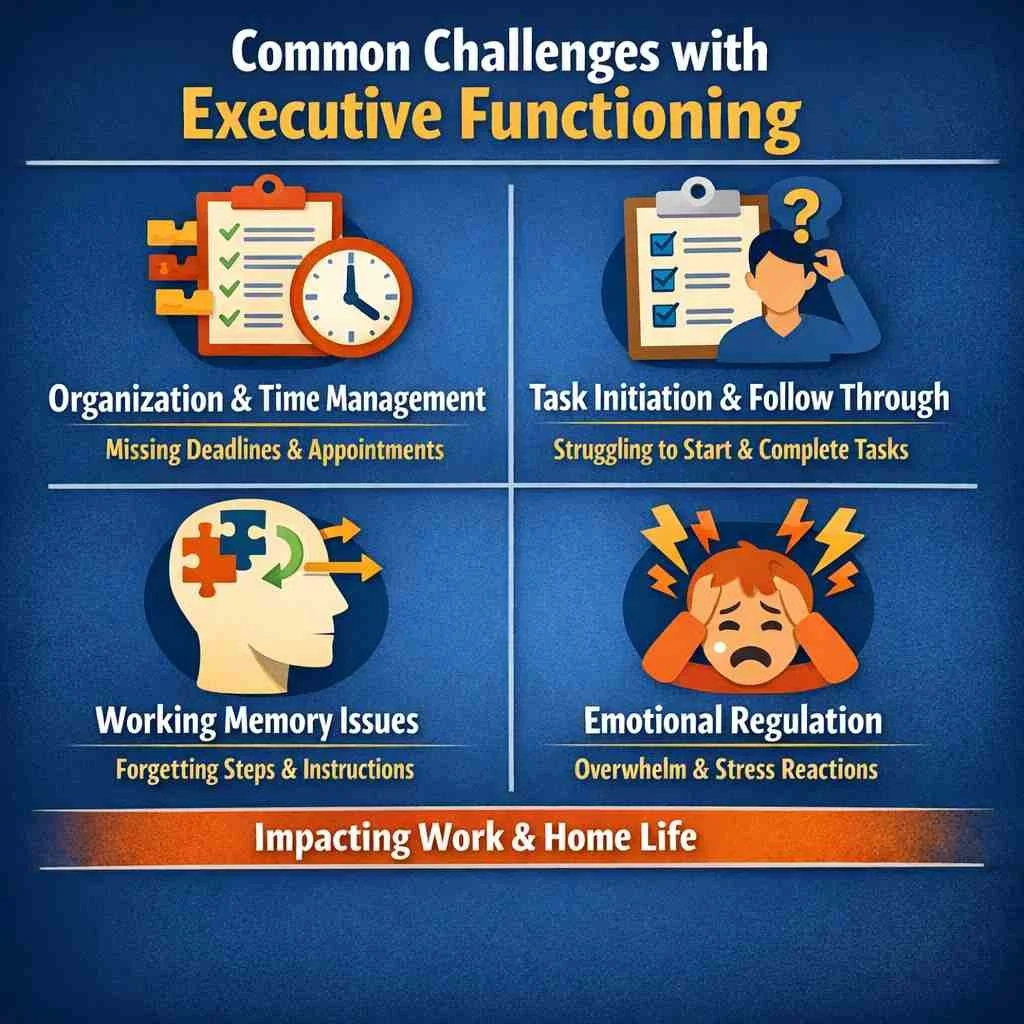
Executive functioning challenges affect more than productivity. They influence mental health, personal relationships, workplace performance, and overall confidence. Many people describe a constant cycle of planning, falling behind, and trying to catch up.
Common Executive Functioning Challenges
Common challenges include difficulty with organization, time management, task initiation, prioritization, and follow-through. Managing competing deadlines, appointments, meetings, and responsibilities can feel overwhelming. Breaking large projects into clear, manageable steps may also be difficult.
Working memory differences can make it hard to retain multi-step instructions or keep track of details during meetings. Emotional regulation challenges may increase stress when plans change or when feedback is given. These patterns often impact performance both at work and at home.
Executive Functioning Across Different Life Stages
Executive functioning demands increase at every stage of adulthood.
High school and college students transition from structured environments to greater independence. Young adults entering the workforce must manage deadlines, communication, and professional expectations with less external support.
Working adults often balance career growth, household responsibilities, and personal commitments. Parents manage schedules, finances, and emotional demands while trying to stay organized and present. Professionals in leadership roles must juggle planning, delegation, long-term strategy, and rapid decision-making.
Executive function coaching helps adults at all stages build systems that support sustained performance, reduced stress, and greater confidence.

Executive Function Disorder in Adults
Check out our blog on executive function disorder in adults for more information!
What Is Executive Function Coaching?

Executive function coaching is a structured coaching program that focuses on skill-building and measurable progress. It supports neurodivergent adults in building practical skills for daily life, work, and personal goals. The focus is on action, reflection, and building systems that work consistently.
The coaching process typically begins with an initial consultation and an executive functioning skills assessment. This assessment identifies executive function strengths and areas of executive dysfunction. From there, you and your coach create a personalized coaching plan through collaborative goal setting.
The Coaching Process in a Structured Coaching Session
The coaching process is structured and goal-driven. In early sessions, you work closely with your coach to identify key factors that affect executive functioning in your personal and professional life. Together, you define how to measure success and how to assess progress.
Each coaching session includes reviewing goals, practicing new strategies, and planning next steps. You may build systems to organize tasks, create time management routines, or practice strategies for initiating tasks. Between sessions, you apply these practical strategies in real life and reflect on the results.
The Coaching Relationship and Long-Term Success
A strong coaching relationship supports accountability and growth. The right support includes clear expectations, structured feedback, and encouragement grounded in self-compassion. This balanced approach increases self-awareness and builds self-confidence.
Coaching is a collaborative process. You and your coach work collaboratively to adjust strategies as new challenges arise. Over time, this partnership supports a deeper understanding and consistent progress.
Executive Functioning Skills Addressed With Coaching

Executive function coaching targets the specific skills that tend to create friction in daily life. Rather than teaching abstract productivity tips, coaching focuses on practical systems that improve follow-through, reduce overwhelming feelings, and increase consistency.
Time Awareness and Planning
Many neurodivergent people underestimate how long tasks will take or struggle to map out realistic schedules. Coaching builds time awareness by introducing structured planning routines, visual task mapping, and external reminders that reduce mental load.
When planning is externalized rather than held in working memory, daily responsibilities feel more manageable and predictable.
Task Initiation and Follow-Through
A common pattern in executive dysfunction is knowing what needs to be done but struggling to start. Coaching focuses on closing the gap between intention and action.
Goals are broken into smaller, clearly defined steps. Structured routines, accountability systems, and simplified workflows reduce decision fatigue and make starting easier. Consistent follow-through builds momentum and confidence over time.
Emotional Regulation and Self-Monitoring
Stress, frustration, and perfectionism can interfere with productivity just as much as disorganization. Coaching introduces strategies to pause, recalibrate, and respond intentionally during high-pressure moments.
Self-monitoring strengthens awareness of patterns in behavior, energy, and focus. When adults can identify what helps or hinders performance, they can make more strategic adjustments. This leads to greater emotional stability, clearer thinking, and sustained progress.
Building Sustainable Habits Through an Executive Function Coaching Program

A structured coaching program supports long-term change through repetition and reflection. Instead of relying solely on motivation, coaching helps you build systems that guide your daily life. Systems reduce decision fatigue and increase consistency.
During the coaching experience, you regularly assess progress and refine your coaching plan. You learn to measure success based on clear benchmarks rather than perfection. This shift reduces self-doubt and supports steady improvement.
Skill-building in executive functioning improves both personal life and professional development. As you strengthen practical skills, you gain more control over your schedule and responsibilities. Over time, executive functioning challenges become more manageable.
Frequently Asked Questions About Executive Functioning Coaching for Neurodivergent Individuals

1. What is executive functioning coaching for neurodivergent adults?
Executive functioning coaching for neurodivergent adults provides structured, individualized support to strengthen planning, organization, time management, and follow-through. It targets cognitive skills such as working memory, attentional control, task initiation, and emotional regulation. Coaching also introduces practical, compensatory strategies that reduce cognitive load and create reliable external systems, making daily responsibilities more manageable and sustainable.
2. How does the coaching process work?
The coaching process involves assessment, goal-setting, and ongoing skill-building. It typically begins with an initial consultation and an executive functioning skills assessment. Early sessions focus on identifying common challenges, creating a coaching plan, and defining how to measure success.
3. Who benefits from executive function coaching?
Neurodivergent individuals who struggle with time management, organization, or task initiation benefit most from executive function coaching. This may include adults with ADHD, autism, learning differences, and executive dysfunction. Young adults, college students, and professionals facing new challenges often seek coaching for additional support.
4. How long does executive functioning coaching last?
The length of executive functioning coaching depends on individual goals and progress. Some adults participate for several months to address specific challenges, while others continue longer to build sustainable habits. Regular sessions and consistent practice improve outcomes.
5. What happens during a coaching session?
A coaching session includes reviewing progress, practicing strategies, and planning next steps. You and your coach work collaboratively to adjust systems and refine practical strategies. Each session ends with clear action items to apply in everyday life.
How Connected Speech Pathology Can Help

At Connected Speech Pathology, we provide online executive functioning coaching for neurodivergent adults. Our coaches use a structured coaching process to strengthen executive functioning skills that impact everyday life. We focus on practical strategies that support both personal relationships and professional development.
Our process begins with an initial consultation and a detailed assessment of executive functioning skills. Through collaborative goal setting, we create a personalized coaching plan that targets time management, task initiation, organization, emotional regulation, and self-monitoring. Each coaching session includes clear action steps and measurable ways to assess progress.
We work closely with adults and teens, including high school students transitioning to adulthood, college students, and working professionals. Our speech-language pathologists integrate executive function coaching within speech therapy when communication and executive functioning overlap. With the right support, we help clients build sustainable habits, complete daily tasks, and achieve goals with greater confidence.
Summary
Executive functioning coaching for neurodivergent adults strengthens the skills needed to manage time, organize tasks, regulate emotions, and follow through on goals. Through coaching, implementing practical strategies, and consistent reflection, adults can build sustainable habits that support success. With increased self-awareness and supportive systems, everyday life becomes more manageable and predictable.

About the Author
Allison Geller is a communication coach, speech-language pathologist, and founder of Connected Speech Pathology, an international online practice providing professional communication coaching and speech therapy for children, teens, and adults. With more than two decades of experience, she has worked in medical and educational settings, published research on aphasia, and leads a team of specialists helping clients improve skills in public speaking, vocal presence, accent clarity, articulation, language, fluency, and interpersonal communication.