Muscle Tension Dysphonia Recovery Time: How Long Does It Take?

Muscle tension dysphonia recovery time depends on how severe it is, what caused it, and how steadily it gets treated. Behind that timeline is muscle tension dysphonia (MTD), a voice disorder where overworked muscles around the voice box strain the voice. Most people recover within weeks to months: mild cases often settle in four to six weeks, while long-standing tension can take three to six months or longer.
Here is what to know about recovery from MTD: what it is, how it is diagnosed and treated, the typical timeline, and what speeds or slows healing. If you are an adult whose voice keeps tiring, straining, or cutting out before the day ends, this is written for you. A clear picture of recovery makes it easier to start voice therapy early and stick with it, the two things that shorten recovery most.
Key Takeaways:
Muscle tension dysphonia (MTD) is a voice disorder where overworked muscles in and around the voice box strain the voice. The vocal cords are often healthy on their own; the problem is the extra squeeze from the surrounding muscles when you speak.
Recovery time for muscle tension dysphonia depends on severity, causes, and consistency of treatment. Mild cases often improve in four to six weeks, while complex cases can take three to six months or longer.
Voice therapy is the main treatment for MTD. A speech therapist uses vocal exercises and relaxation techniques to reduce tension and rebuild an easy, comfortable voice.
Diagnosis starts with a medical history and a voice evaluation. An ear, nose, and throat doctor examines the vocal cords using tools such as a laryngoscope to rule out other voice problems. Early intervention is best.
What is Muscle Tension Dysphonia?
Diagnosing and Treating Muscle Tension Dysphonia
How Long Does Muscle Tension Dysphonia Recovery Take?
Supporting Recovery and Finding Help
What We See Working with Clients
What is Muscle Tension Dysphonia?

Muscle tension dysphonia (MTD) is a common voice disorder driven by muscles squeezing the larynx harder than speech requires. Psychogenic voice disorders are another kind of functional voice problem, but they come from psychological stress rather than muscle tension. The vocal cords themselves are often healthy; the problem is excessive muscle tension in the muscles surrounding them while you speak. That extra squeeze changes how the vocal cords vibrate, so the voice sounds rough, tight, or weak.
Common symptoms of muscle tension dysphonia include:
A strained or hoarse voice that worsens the longer you talk
Vocal fatigue, where speaking takes more effort as the day goes on
A feeling of tightness or discomfort in the throat
Frequent throat clearing
Difficulty projecting the voice in noisy rooms
Vocal overuse, such as loud talking or long days of heavy voice use, is the most common MTD trigger, and stress and anxiety add tension throughout the body, including the throat muscles. Medical conditions, such as acid reflux, and recent illnesses, including a chest cold or laryngitis, can irritate the throat and leave the muscles bracing long after the original problem clears. MTD most often affects women between 40 and 50, though anyone who depends on their voice can develop it.
Primary MTD vs. Secondary MTD
Doctors describe two types of MTD. In primary MTD, the neck and throat muscles overwork even though the vocal folds are healthy and there is no structural problem. With secondary MTD, an underlying problem with the vocal cords, such as nodules or weakness, leads the surrounding muscles to squeeze and compensate.
MTD is also different from spasmodic dysphonia, a neurological voice disorder that causes involuntary vocal cord spasms. With MTD, the strain stays steady across nearly everything you say, and voice therapy alone usually resolves it.
Left untreated, the constant squeeze can lead to further damage to the vocal cords, making recovery harder. Early intervention prevents voice changes from settling into habits.
Diagnosing and Treating Muscle Tension Dysphonia

Diagnosing and treating muscle tension dysphonia usually involves two specialists. An ear, nose, and throat doctor (ENT) rules out medical causes, and a speech-language pathologist leads the voice therapy.
How is Muscle Tension Dysphonia Diagnosed?
Muscle tension dysphonia is diagnosed through a medical history, a physical exam, and a close look at the vocal cords. The evaluating doctor asks when the voice problems started, how they change through the day, and what your voice use, stress levels, and recent illnesses have looked like. Sometimes the ENT brings in other specialists, such as a reflux specialist, and checks for vocal cord dysfunction, a breathing problem that sounds similar.
A laryngoscope or videostroboscopy then gives a close-up view of how the vocal cords move and vibrate. The exam shows whether the voice disorder comes from laryngeal tension alone, which points to the primary form, or from an underlying problem in the vocal folds.
How Is Muscle Tension Dysphonia Treated in Voice Therapy?
Voice therapy is the primary way muscle tension dysphonia is treated. After the ENT evaluation, the voice therapist assesses vocal quality, tension patterns, and speaking habits, then builds a treatment plan around them. The voice therapist may also do their own videostroboscpoic exam of the vocal folds. Online voice therapy works for many adults with MTD; fit depends on the individual.
Sessions often start with resonant voice therapy. The client hums a gentle “mmm” and learns to feel the sound vibrate at the lips instead of squeezing from the throat. Semi-occluded vocal tract exercises, such as straw phonation and lip trills, add gentle back-pressure while reducing muscle tension, and the steady airflow builds breath support behind each phrase.
Many speech-language pathologists also use laryngeal massage. Pressing and kneading the tight muscles around the voice box lets a high-held larynx settle back down. The aim is a comfortable voice that does not have to fight the throat to be heard.
Deep breathing exercises, posture work, and progressive muscle relaxation round out most treatment plans, along with coaching on healthy vocal habits for everyday voice use. These vocal exercises look simple, but with the wrong technique, they can add strain, so a speech pathologist should guide them rather than a video or a printout.
Our companion guide to voice therapy for muscle tension dysphonia covers what a full course of sessions involves.
How Long Does Muscle Tension Dysphonia Recovery Take?
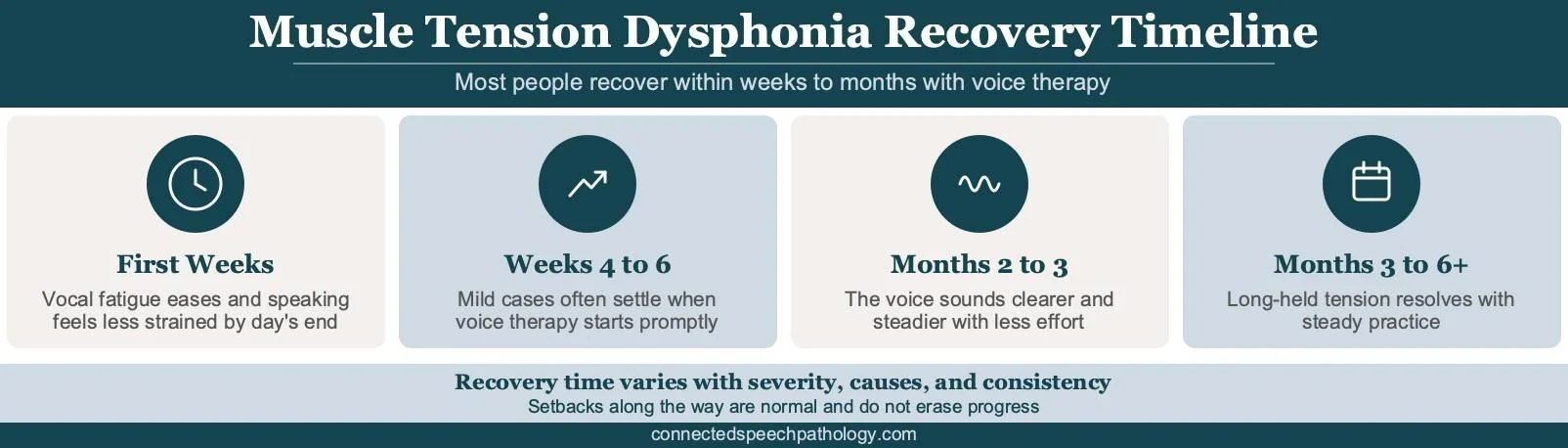
Most people recover from muscle tension dysphonia within weeks to months. Mild cases often resolve in four to six weeks when voice therapy begins promptly, while more complex cases can take three to six months or longer. The pace comes down to how severe the tension is, what caused it, and how consistent treatment and home practice are.
Typical Recovery Time
Recovery from muscle tension dysphonia varies from person to person, but improvement tends to arrive in a recognizable order. In the first weeks of speech therapy, most clients notice less vocal fatigue and less strain by late afternoon. Voice quality improves next, and the voice sounds clearer and steadier with less effort with each sentence.
By the later stages, endurance returns, and most people speak through a full workday without worrying that their voice will give out. Research on voice therapy for MTD shows measurable gains by six weeks of treatment, with continued improvement at three months. Setbacks happen along the way, especially during stressful weeks or long talking days, and they do not erase progress.
Factors That Affect MTD Recovery Time
Severity. Mild muscle tension often releases within weeks, while long-standing tension patterns take several months of consistent work to resolve.
Underlying problems. Contributing factors, such as stress, acid reflux, or poor vocal habits, prolong recovery when left unaddressed, so managing them alongside voice therapy speeds healing.
Consistency. Practicing between speech therapy sessions, staying hydrated, and making lifestyle changes, such as pacing heavy talking days, all shorten the timeline.
Health and vocal demands. Age, overall health, and other medical conditions influence the pace, and high-use vocal professionals, such as teachers and singers, often need longer because their voices rarely get a full rest.
Jobs requiring extensive voice use raise the risk of developing MTD in the first place, and they slow recovery for the same reason. Building voice breaks into a demanding schedule is part of the appropriate treatment.
Supporting Recovery and Finding Help
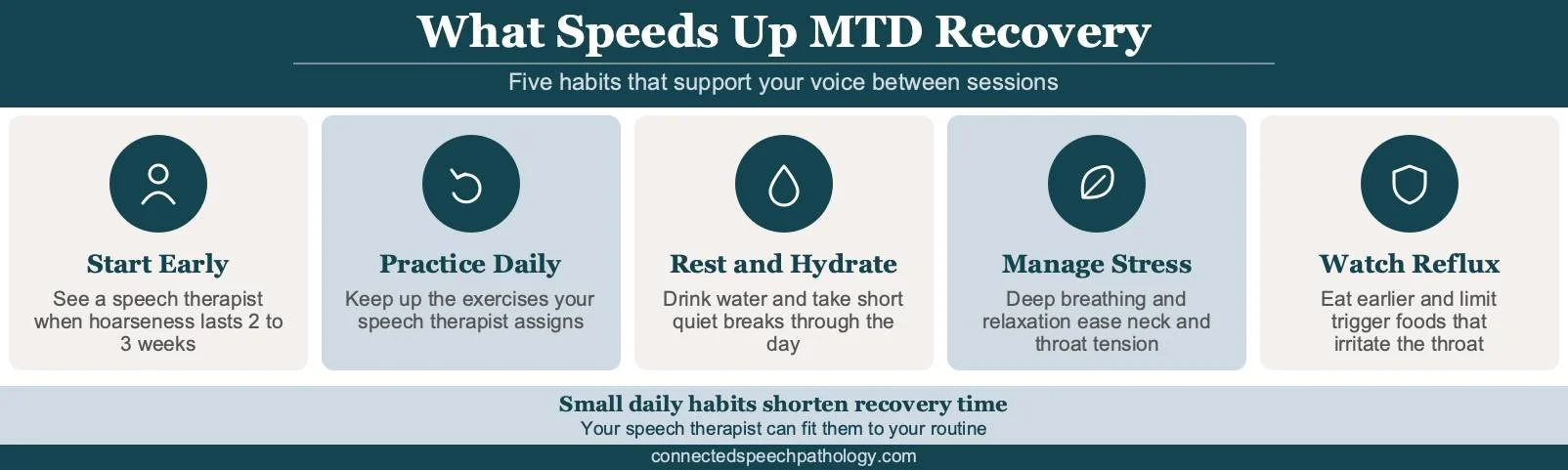
Supporting recovery at home and finding the right professional to guide it shapes how quickly your voice comes back.
Tips for Supporting Recovery at Home
Daily habits do much of the healing between sessions, and they reinforce the voice therapy exercises your speech therapist assigns. These self-care steps protect vocal health day to day:
Hydrate regularly. Water keeps the vocal cords lubricated so it takes less effort to speak, while caffeine and alcohol dry them out.
Practice vocal rest. Short, quiet breaks throughout the day help, and so do avoiding shouting, whispering, and marathon conversations.
Manage stress. Relaxation methods, such as deep breathing, yoga, or meditation, release tension in the neck and throat.
Avoid irritants. Smoke, dry air, and strong fumes inflame the throat. A humidifier keeps the air moist, so the vocal cords stay comfortable overnight.
Watch reflux. Lifestyle changes, such as eating earlier in the evening and limiting trigger foods, reduce the reflux that keeps a throat irritated.
If your voice stays hoarse, strained, or tired for more than two to three weeks despite rest, see a professional. Lingering voice problems shrink your workday and social life alike; waiting rarely helps.
How to Find the Right Speech-Language Pathologist
Finding the right speech-language pathologist is one of the biggest decisions in your recovery from muscle tension dysphonia. Four things matter most:
Specialization. Look for a voice therapist with experience treating MTD and other voice disorders.
Recommendations. Your ENT, your primary care doctor, and client reviews all point you toward a speech pathologist with a strong track record.
A personalized approach. The right speech pathologist listens to your concerns, evaluates your symptoms, and builds the treatment plan around your goals.
Accessibility. Consider the location of the voice therapy sessions, whether online sessions are an option, and scheduling you can keep up with.

How to Find a Speech Pathologist
Check out our blog on how to find a speech pathologist for more information!
What We See Working with Clients

In our speech therapy practice, we work with adults whose voices have to last all day, from teachers and managers to singers and call-center professionals. The examples below are real clients of ours. Identifying details have been changed to protect privacy.
One client, a middle-school teacher, arrived hoarse by fourth period every day. She had started dreading her afternoon classes and let phone calls go to voicemail because her voice felt used up.
Her speech therapist paired laryngeal massage in sessions with straw phonation breaks between classes, plus breath support work to take the load off her throat. Within about three months, her voice lasted the full school day, and the end-of-day rasp faded.
Another client's hoarseness hung on for months after a chest infection had cleared. He cleared his throat constantly, felt a lump-like tightness when he swallowed, and noticed that both worsened during stressful weeks.
His sessions focused on resonant voice therapy, humming gently enough to feel a buzz at the lips, along with lip trills and progressive relaxation work for the stress side. Now his voice is clearer most days, and when a flare-up starts, he knows the voice exercises that settle it.
Frequently Asked Questions About Muscle Tension Dysphonia

1. Can you recover from muscle tension dysphonia?
Yes, muscle tension dysphonia is treatable, and most people recover with the right treatment. Voice therapy reduces the muscle tension behind the problem and rebuilds vocal function through voice exercises and relaxation techniques. Many people reach a full recovery, and consistency matters more than speed.
2. Can muscle tension dysphonia go away on its own?
Mild cases sometimes ease with rest and hydration, but most do not resolve on their own. The tension pattern usually outlasts whatever caused it, because the muscles keep gripping out of habit. A speech pathologist helps you unlearn the pattern instead of waiting it out.
3. What are the common symptoms of muscle tension dysphonia?
Common symptoms include a strained or hoarse voice, vocal fatigue, and throat tightness. Frequent throat clearing and difficulty projecting the voice are typical too, and speaking starts to feel like work. Symptoms often worsen with prolonged voice use, stress, or poor vocal habits.
4. Can untreated muscle tension dysphonia damage your voice?
Yes, left untreated, the constant strain can contribute to vocal cord damage over time. The extra pressure on the vocal cords every time you speak increases the risk of problems like nodules. An ENT evaluation, alongside speech therapy, rules out a medical cause and helps prevent small voice problems from becoming bigger ones.
5. Can muscle tension dysphonia come back after recovery?
Yes, it can return if old habits or unmanaged stress creep back in. Ongoing healthy vocal habits and occasional check-ins with a speech pathologist keep the risk low. Staying mindful of voice use during stressful stretches protects long-term vocal health.
How Connected Speech Pathology Can Help

Connected Speech Pathology helps adults with muscle tension dysphonia through virtual sessions, so expert voice care fits around a work schedule instead of competing with it.
Our voice therapists start by finding what drives the tension, whether that is stress, vocal strain, or habit, and build the treatment plan around it.
We blend resonant voice therapy, relaxation methods, and vocal exercises to match each person's voice and daily demands, tailoring the pace to your voice's response. Because sessions are online, a teacher can practice during a planning period and a manager between meetings, in the same room where they use their voice most.
Our voice therapists are highly experienced. If you are already under the care of an ENT or laryngologist, we work with them to shape your treatment plan and stay in touch as your recovery continues, so both sides of your care support each other.
Summary
Muscle tension dysphonia recovery time depends on severity, underlying causes, and consistent treatment. Mild cases often clear up in four to six weeks; long-standing ones can need three to six months or more.
Voice therapy with a speech-language pathologist remains the most reliable path, easing the muscle tension, retraining vocal habits, and restoring comfortable voice production. If your voice keeps straining or giving out, seek help early. Getting help early shortens recovery, and a healthy, strong voice is worth the effort.

About the Author
Allison Geller, M.A., CCC-SLP, is a communication coach, speech-language pathologist, and founder of Connected Speech Pathology, an international online practice providing professional communication coaching and speech therapy for children, teens, and adults. With more than two decades of experience, she has worked in medical and educational settings and published research on aphasia. Today, she leads a team of specialists who help clients improve their skills in public speaking, vocal presence, accent clarity, articulation, language, fluency, and interpersonal communication.