Can Stress Cause You to Lose Your Voice?

Can stress cause you to lose your voice? Yes, stress can affect the voice, causing anything from mild hoarseness to complete voice loss without a cold or other illness. Understanding the possible causes, warning signs, and treatment options can help you know when to seek care.
If you are an adult whose voice keeps giving out during tense stretches, or it cuts out under pressure, a speech-language pathologist can help. Understanding what pressure does to your voice helps you step in early, before a passing problem becomes a habit.
Key Takeaways
Stress can cause voice loss by creating muscle tension around the vocal cords and throat. Changes in breathing and voice overuse add to the strain. In rare cases, the voice cuts out completely with no damage to the vocal cords, which is called psychogenic aphonia.
Stress can also worsen acid reflux and laryngitis, which irritate the vocal cords directly.
Most stress-related voice changes improve when overall pressure drops and speaking habits improve. Hoarseness that lasts more than two to three weeks needs an ear, nose, and throat exam, and voice therapy can help from there.
What Is Stress-Related Voice Loss? How Stress Affects the Vocal Cords
Can Stress Cause You to Lose Your Voice Completely?
Voice Therapy for Stress-Related Voice Problems
When Stress-Related Voice Problems and Voice Disorders Need Help
What We See Working with Clients
What Is Stress-Related Voice Loss? How Stress Affects the Vocal Cords
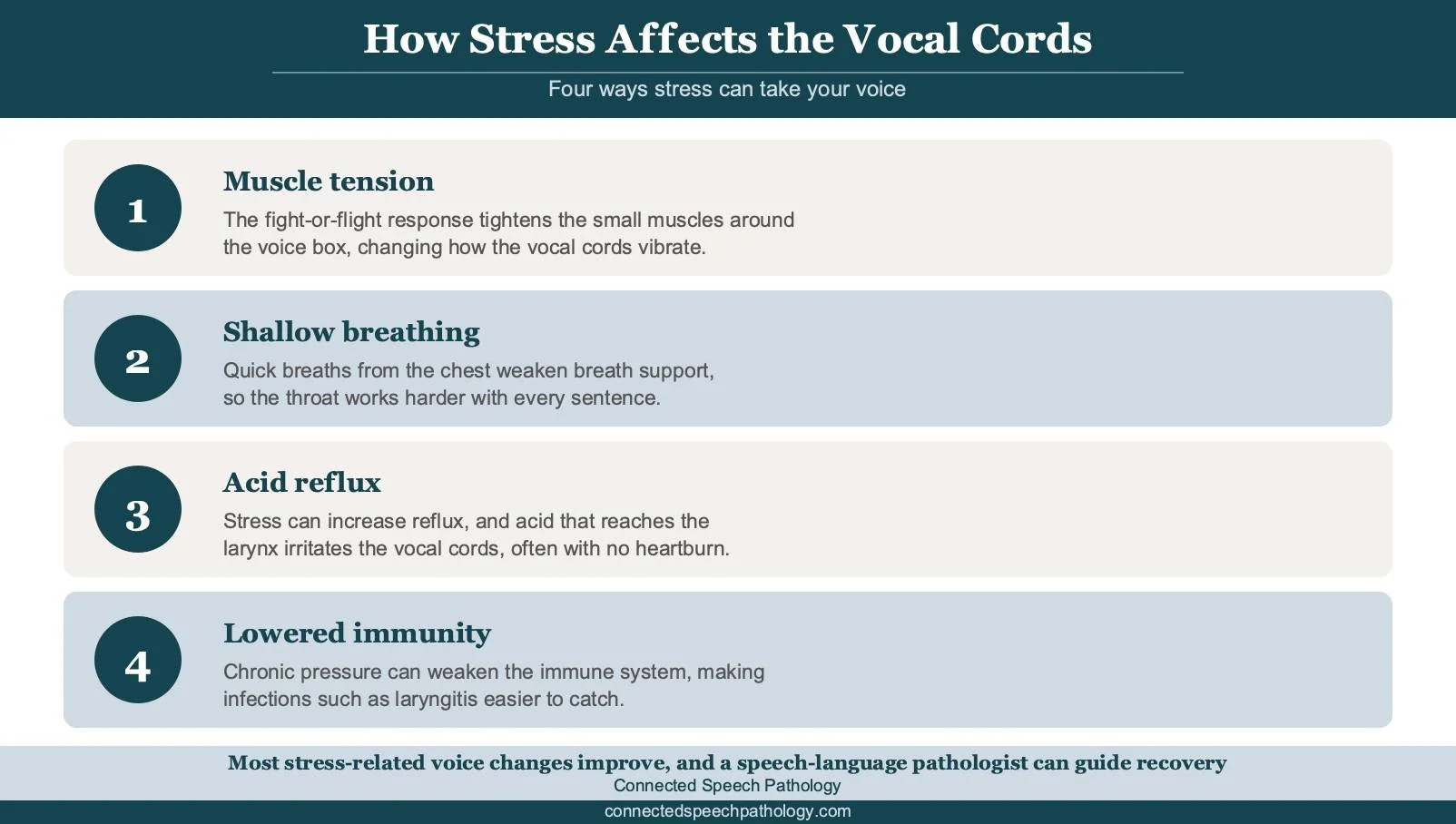
Anxiety-related voice problems involve voice change driven by the body's stress response. Neck and throat muscles tighten under pressure, breathing turns shallow, and the vocal folds can no longer vibrate freely. Stress can also make a physical problem like laryngitis more likely, so it affects the voice in more than one way.
Research suggests about 15% of people experience voice changes related to an anxiety disorder. Stress is rarely the only cause of a voice problem, but it can start one and keep it going.
Stress activates the fight-or-flight response, which tightens muscles throughout the body, including the small muscles of the larynx, or voice box. The neck, jaw, and tongue tense without your awareness, and that tension changes how the vocal cords vibrate.
Healthy voicing also depends on steady airflow. In tense moments, many people take quick, shallow breaths from the chest, which weakens breath support and makes the throat work harder as you speak.
Hormones released under pressure dry out the tissue of the vocal folds, and drier folds face more friction every time you speak.
Muscle Tension in the Throat and Neck Area
Some people carry that tension long after the stressful moment passes. Speaking starts to take real effort, and the sound fades as the day goes on. When throat tension becomes an ongoing pattern, it is called muscle tension dysphonia, and it can happen even when the vocal folds stay perfectly healthy.
Lasting tension brings throat tightness, vocal fatigue, or pain while talking. Teachers and others who use their voices all day face the highest risk, because voice overuse and pressure combine in daily life.
Emotional Stress, Anxiety, and Voice Control
Anxiety changes how the body controls the voice. People who feel anxious often hold their breath, tighten the throat, or push the pitch up when they speak, and each of those habits can lead to a weak or strained voice.
Anxiety-related voice problems show up most in high-pressure moments, such as public speaking or a hard conversation. A shaky or breathy sound then reflects throat tension and breath changes, and it tends to ease as the anxiety does. Anxiety can also affect confidence when speaking, which adds to the tension.
Can Stress Cause You to Lose Your Voice Completely?

Complete voice loss can occur during periods of intense emotional stress. This is known as psychogenic aphonia, and most people with it are still able to whisper. Unlike voice loss caused by an injury or illness affecting the vocal folds, psychogenic aphonia occurs without any structural damage to the throat or vocal folds. Instead, the voice is disrupted by the way the brain and body respond to psychological stress.
Psychogenic aphonia often starts suddenly, sometimes overnight, and it is not something the person is doing on purpose. One telling sign is that coughing or throat clearing still sounds normal, because those movements use the vocal folds by reflex.
A healthcare provider should confirm the cause before any voice work begins. With guidance from a speech-language pathologist, many people regain their voice.
Can Stress Cause Laryngitis?

Stress can raise your risk of laryngitis and make an existing case last longer. Laryngitis is inflammation of the larynx, and it leaves the voice hoarse, weak, or barely there. Unlike muscle tension and psychogenic aphonia, laryngitis involves real inflammation of the tissue.
Chronic pressure weakens the immune system, which makes infections such as viral laryngitis easier to catch, something singers and teachers, who use their voices all day, know well.
Stress also increases acid reflux. Acid that reaches the larynx can irritate the throat and vocal cords enough to cause reflux laryngitis, often with no heartburn at all. Frequent throat clearing, morning hoarseness, a raspy voice, and ongoing throat irritation are common symptoms of that silent form.
A sore throat with a voice that sounds rough after a cold usually points to laryngitis itself, and most cases clear within one to two weeks with voice rest and fluids. Voice trouble that appears during a tense stretch with no illness points more toward muscle tension.
Here is how the three most common stress-related voice conditions compare:
| Condition | What it is | How the voice sounds | What usually helps |
|---|---|---|---|
| Muscle tension dysphonia | Extra muscle activity makes voicing effortful | Strained, tight, or tired, and speaking takes work | Releasing tension and rebuilding easy voicing |
| Psychogenic aphonia | A sudden loss of voice from emotional distress, with healthy vocal folds | A strained whisper, while coughing still sounds normal | Guidance from a speech-language pathologist, often with mental health support |
| Stress-worsened laryngitis | A larynx inflamed by reflux or lowered immunity | Hoarse, rough, or deeper than usual | Voice rest, hydration, and treating what causes it |
| Connected Speech Pathology | connectedspeechpathology.com | |||
Voice Therapy for Stress-Related Voice Problems

Voice therapy is a behavioral treatment that changes how you use your voice. The aim is efficient voicing, where breath and vocal fold vibration do the work instead of the muscles of the throat. A speech-language pathologist, sometimes called a voice therapist, first listens to how you speak and breathe, then matches the work to whatever is driving the strain.
Sessions often include semi-occluded vocal tract exercises, such as humming through a straw or gentle lip trills, which let the vocal folds vibrate with less effort. These voice exercises pair with breathing exercises and vocal technique practice for long days of teaching, singing, or presenting.
Voice treatment also builds awareness. Clients learn to notice rising tension early and to resolve tension patterns before the strain becomes a habit.
Relaxation Techniques to Reduce Vocal Tension During Stress
Simple relaxation techniques can ease vocal tension while you work on the underlying source of stress. Gentle neck and jaw stretches, slow deep breaths from the belly, and taking short voice breaks throughout the day can all reduce the effort of speaking.
Staying well hydrated can also help protect your voice by promoting healthy vocal fold function and reducing the effort needed for voicing. If your throat feels dry or irritated, sipping water throughout the day is more helpful than waiting until you're thirsty.
Avoid shouting, singing over loud music, or speaking over background noise since these activities place extra strain on the voice. These are general suggestions, and even simple vocal exercises can increase strain if they're not matched to your specific voice.
A speech-language pathologist can recommend techniques that are appropriate for your needs. If voice problems persist, voice therapy can help identify the cause of the strain and teach healthier ways to use your voice.

Voice Therapy For Hoarseness
Check out our blog on voice therapy for hoarseness for more information!
When Stress-Related Voice Problems and Voice Disorders Need Help

Voice symptoms that last more than two to three weeks need a medical exam, even when stress seems like the obvious cause. Ongoing throat pain or trouble producing any sound at all needs attention sooner than that.
Start with an ear, nose, and throat specialist. They can examine the larynx directly and rule out other voice disorders. Seeing the specialist first matters, because more than one cause is often present. Reflux, infection, or growths on the vocal folds can appear alongside a stressful stretch.
Once the specialist identifies a medical cause or rules one out, a speech therapist can start treatment based on what the exam showed. Symptoms that get attention early tend to improve sooner than ones that are pushed through.
What We See Working with Clients

Adults with tension-related voice problems are some of the most typical clients in our online sessions. The examples below are real clients of ours. Identifying details have been changed to protect privacy.
One client, a high school teacher, came to us with a voice that sounded strained by midday and was gone by evening. Talking over classroom noise left her hoarse through dinner, and she avoided phone calls altogether.
Her sessions focused on releasing neck and jaw tension, humming through a straw to restore easy vibration, and planned voice breaks across the school day. After a couple of months, she was able to teach a full day and still have a voice left for her own family.
Another client lost his voice completely two days after a family emergency, even though an exam showed healthy vocal cords. Only a whisper came out, and he worried the loss was permanent.
We began with sounds his body already made by reflex, shaping a gentle cough into a hum, then into words and short phrases. His speaking voice returned within a few sessions, and the rest of our time built steadier breathing habits for the next tense stretch.
Frequently Asked Questions About Stress-Induced Voice Loss
1. Can stress cause you to lose your voice suddenly?
Yes, sudden loss of voice can happen during intense pressure, even without illness. Muscle tension around the larynx disrupts vocal fold vibration, and in psychogenic aphonia, it can drop to a whisper almost overnight.
2. How long does a stress-related voice problem last?
The loss usually lasts from a few hours to a few weeks. Length depends on voice use, ongoing anxiety, and any other health issues, and it is rarely permanent, though lasting tension habits deserve treatment.
3. Can pushing through a strained voice make it worse?
Yes, forcing a strained voice usually makes things worse. Speaking or singing through the strain adds effort exactly where rest is needed, so speak quietly and take short voice breaks while you address the cause.
4. Do you still need a professional if your voice comes back on its own?
A voice that returns quickly after a brief tense period usually needs no treatment. A loss that keeps returning, or hoarseness lasting more than two to three weeks, deserves a medical exam, since many vocal disorders respond well to early care.
How Connected Speech Pathology Can Help

At Connected Speech Pathology, we help adults with stress-related voice problems through online voice therapy. Our speech-language pathologists look at the whole pattern, including muscle tension, breathing, and the daily speaking habits that keep tension going.
Your sessions follow a treatment plan built from your own assessment, delivered online from home, and they pair specific exercises with practice for the real situations that push your voice hardest, such as a class, a meeting, or a hard phone call.
Summary
Stress can take a healthy voice down to a whisper by tightening muscles around the vocal cords, disrupting breathing, and worsening acid reflux and laryngitis. So, can stress cause you to lose your voice? Yes, and the loss is usually temporary.
Most stress-related voice changes improve with lower daily pressure and healthy voice habits. Hoarseness or voice loss that lasts more than two to three weeks needs a medical exam first, and once a doctor identifies the cause, a speech-language pathologist can begin treatment.

About the Author
Allison Geller, M.A., CCC-SLP, is a communication coach, speech-language pathologist, and founder of Connected Speech Pathology, an international online practice providing professional communication coaching and speech therapy for children, teens, and adults. With more than two decades of experience, she has worked in medical and educational settings and published research on aphasia. Today, she leads a team of specialists who help clients improve their skills in public speaking, vocal presence, accent clarity, articulation, language, fluency, and interpersonal communication.