Executive Functioning Coach for Students

Many students fall behind in school despite being capable and motivated. Missed assignments, poor time management, and disorganization often indicate a planning and organization issue. The patterns may indicate that executive functioning skills have not yet fully developed.
An executive functioning coach for students helps explain why these struggles happen and what can change. Executive function coaching focuses on skills such as planning, focus, and follow-through that affect schoolwork and daily routines. Parents often see relief once these gaps are more clearly defined and addressed.
This article explains what executive functioning coaching looks like, who it helps, and why it leads to steady progress over time. You will see how targeted support builds confidence, stronger habits, and better outcomes in school and beyond.
Key Takeaways
Executive function coaching helps students develop skills that support academic success, daily life, and personal life. These skills affect how students plan ahead, manage time, and maintain focus.
An executive functioning coach for students provides one-on-one support using personalized strategies tailored to a student’s learning style and personality. This approach supports confidence and self-awareness.
Executive functioning coaching focuses on long-term success by helping students build positive habits, self-advocacy, and stronger executive function skills. Students and parents often notice a huge difference over time.
Executive Functioning Coach for Students Explained
Understanding Executive Functioning Skills and Challenges
Executive Function Coaching Helps Students Build Skills
Executive Functioning Coaching for High School and College Students
Frequently Asked Questions About Executive Functioning Coach for Students
Executive Functioning Coach for Students Explained
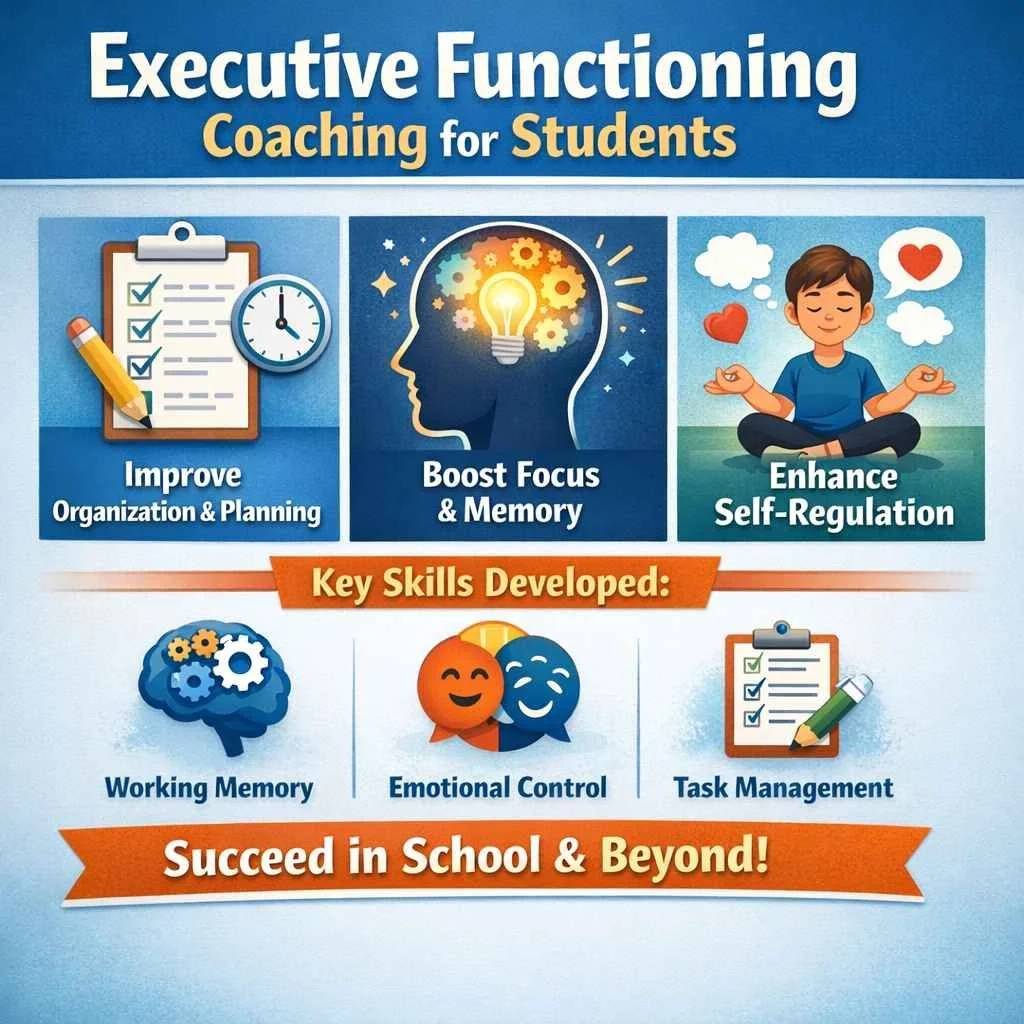
An executive functioning coach helps students turn intentions into action. Executive functioning skills include planning, organization, time management, working memory, emotional regulation, and attention control.
These skills develop gradually and are often stressed by academic demands, learning differences, anxiety, neurodivergence (such as ADHD), or increased independence, which is why many capable students struggle to apply what they know.
Executive functioning (EF) can also be impacted by brain-based differences and development, especially during periods of rapid change or reduced external structure.
Effective coaching goes beyond naming skills. A strong EF coach helps students:
Break down assignments and long-term projects into manageable steps
Create systems that fit how the student actually thinks and works
Build routines for starting work, not just finishing it
Manage procrastination, avoidance, and overwhelm in real time
Prioritize tasks when everything feels urgent
Practice flexible thinking when plans change
Develop self-advocacy skills, including asking for help and communicating needs
Connect motivation, emotions, and energy levels to productivity
Build independence so support fades over time rather than becoming crutches
Understanding Executive Functioning Skills and Challenges

Executive Function Challenges That Affect Academic Success
Executive function challenges often show up as missing assignments, procrastination, or difficulty managing time. Many students want to do well but struggle with self-motivation and follow-through, which can make school feel frustrating and overwhelming. Over time, these challenges affect both academic success and overall well-being.
Executive functioning influences not only schoolwork, but also social and personal life. Students with learning differences or learning disabilities may need additional support, but executive function challenges are not limited to students with diagnoses. Many students experience these difficulties at different stages of development.
Signs Parents Notice in Executive Functioning
Parents may notice their child frequently loses materials, forgets deadlines, or struggles to stay organized. A high school student may understand the material but still fail to complete assignments. College students often struggle to maintain focus and manage the demands of college life.
First-year College students face new expectations with significantly less structure. Teenagers may struggle to plan, prioritize, and manage responsibilities independently. Without support, executive function challenges can become more pronounced over time.

Executive Functioning in Children
Check out our blog on executive functioning in children for more information!
Executive Function Coaching Helps Students Build Skills

How Executive Function Coaching Focuses on Skill Building
Executive functioning coaching focuses on helping students identify areas that create the biggest challenges. Each coaching session includes goal setting and actionable plans. Students learn skills they can use in daily life.
Executive function coaching helps students build skills in planning, time management, and emotional regulation. Coaching uses evidence-based strategies that support growth. Students learn how to apply skills across settings.
One-on-One Support That Meets Students
One-on-one support allows coaches to meet students at their level. Person-centered coaching considers a student's personality and learning styles. This approach supports personalized support and self-awareness.
Students build confidence as they practice new habits. Consistent check-ins help students stay accountable. Over time, students build self-confidence and self-esteem.
Executive Functioning Coaching for High School and College Students

Executive Functioning Support for High School Students
High school students often struggle to balance schoolwork, social life, and daily responsibilities at home. Executive function coaching helps students with time management, breaking assignments into manageable steps, and organizing both academic and personal tasks. Support often includes building routines for studying, cleaning, and keeping materials organized, which reduces stress and improves follow-through.
Students learn to manage distractions, use tools such as timers and reminders, and create systems that support focus. Coaching also provides external supports, such as visual schedules and checklists, while strengthening internal skills, such as self-monitoring and motivation.
Executive Function Coaching for College Students
College students manage longer-term assignments, fewer reminders, and greater responsibility for daily life. Executive function coaching helps students track deadlines across multiple courses, plan weeks in advance, and manage competing academic and personal demands. Support often extends to organizing living spaces, managing routines, and maintaining consistency without external oversight.
Coaching focuses on handling distractions, regulating attention, and using tools such as timers, calendars, and accountability systems. Students also build self-advocacy skills, including communicating with professors and managing workload expectations. These strategies help students thrive academically and perform independently in areas beyond college.
Frequently Asked Questions About Executive Functioning Coach for Students

1. What does an executive functioning coach for students do?
An executive functioning coach helps students build skills in organization, planning, and self-regulation. Coaches support students in identifying areas of difficulty and creating actionable plans. Sessions focus on positive habits that support academic success. Progress builds through consistent practice.
2. Who benefits from executive function coaching?
Executive function coaching is especially helpful for students who struggle with organization, time management, procrastination, or follow-through. It also supports students who are academically capable but struggle to manage the day-to-day demands of school and independent living.
3. How does executive function coaching help with school work?
Executive function coaching provides tailored strategies to help students manage schoolwork. They can learn to improve planning, time management, and focus. Students learn how to plan and reduce the number of missing assignments. Coaching supports better organization. These skills improve academic success.
4. How long does executive functioning coaching take?
Executive functioning coaching often includes weekly sessions over several months. Progress depends on consistency and engagement. Many families notice changes within weeks. Long-term support with the right coach builds new habits.
How Connected Speech Pathology Can Help

At Connected Speech Pathology, we offer virtual executive functioning coaching for students who need support managing school and daily life. Our speech-language pathologists work with students on executive functioning, communication, and self-advocacy in practical, individualized ways. Support extends beyond academics to help students function more confidently in day-to-day life.
Coaching is one-on-one and built around each student’s needs, routines, and goals. Sessions include regular check-ins, clear expectations, and strategies that actually fit the student rather than generic systems. We support students with learning differences and those who struggle with executive function challenges, regardless of formal diagnosis.
We offer a free consultation to help families determine whether executive functioning coaching is the right fit. Our focus is on building skills that last, so students become more independent over time. Services are designed with both students and families in mind.
Summary
Executive functioning challenges affect students in school and daily life. With the right support, students learn skills that reduce stress and improve success. An executive functioning coach for students can support confidence and growth.

About the Author
Allison Geller is a communication coach, speech-language pathologist, and founder of Connected Speech Pathology, an international online practice providing professional communication coaching and speech therapy for children, teens, and adults. With more than two decades of experience, she has worked in medical and educational settings, published research on aphasia, and leads a team of specialists helping clients improve skills in public speaking, vocal presence, accent clarity, articulation, language, fluency, and interpersonal communication.