Can You Damage Your Voice While Practicing Your New Vocal Pitch?

Trying a new vocal pitch can feel both exciting and uncomfortable. Some people experience tension, fatigue, or voice changes and begin to worry about whether they’re causing damage. These concerns are common among singers, professional voice users, public speakers, individuals pursuing gender-affirming voice work, and adults who rely on their voices day-to-day.
Practicing pitch affects how the vocal folds and surrounding muscles function. The outcome depends on technique, breath support, and the amount of pressure the voice takes during practice. Over time, these factors significantly influence long-term vocal health.
In this article, we’ll break down how pitch practice affects the body, what actually leads to vocal damage, and how to protect both your speaking and singing voice as you build control and comfort. By the end, you’ll know which warning signs to watch for and which strategies support a healthy, reliable voice.
Key Takeaways
It is possible to strain or damage your voice while practicing a new vocal pitch, especially when using excessive pressure or practicing for long periods without adequate rest.
Healthy pitch changes depend on breath support, efficient technique, and gradual practice, not force.
Ongoing vocal fatigue, tension, or chronic hoarseness are signals to pause, rest your voice, or seek professional guidance.
What’s Actually Changing When You Practice Pitch?
What Actually Causes Vocal Damage During Pitch Practice
Warning Signs of Vocal Fatigue and Vocal Strain
Practical Strategies to Protect Vocal Health
Technique Habits to Avoid During Pitch Practice
What’s Actually Changing When You Practice Pitch?

The Role of the Vocal Cords (Vocal Folds) in Sound
The vocal cords, also called vocal folds, produce sound by vibrating together as air passes through them. Pitch rises when the folds stretch and thin, and lowers when they shorten and thicken. These movements depend on coordinated muscle control to maintain smooth, efficient vibration.
Excess tension in the voice box muscles interferes with vocal cord vibration and can disrupt voice production, leading to strain or reduced vocal endurance. Consistent, efficient vibration is key to protecting the voice over time.
Breath Support and Voice Production
Breath support determines how air flows through the vocal system to create sound. When breath support drops away and the throat muscles take over, the result can be muscle tension dysphonia. Diaphragmatic breathing helps regulate airflow and reduces excess pressure on the vocal folds, while poor breath support often forces the voice to compensate with added tension.
When airflow is steady and well-supported, the voice can produce sound with less effort. This protects the vocal mechanism and supports healthy pitch use in both speaking and singing.

How to Make Your Voice Higher-Pitched
Check out our blog on how to make your voice higher-pitched for more information!
What Actually Causes Vocal Damage During Pitch Practice
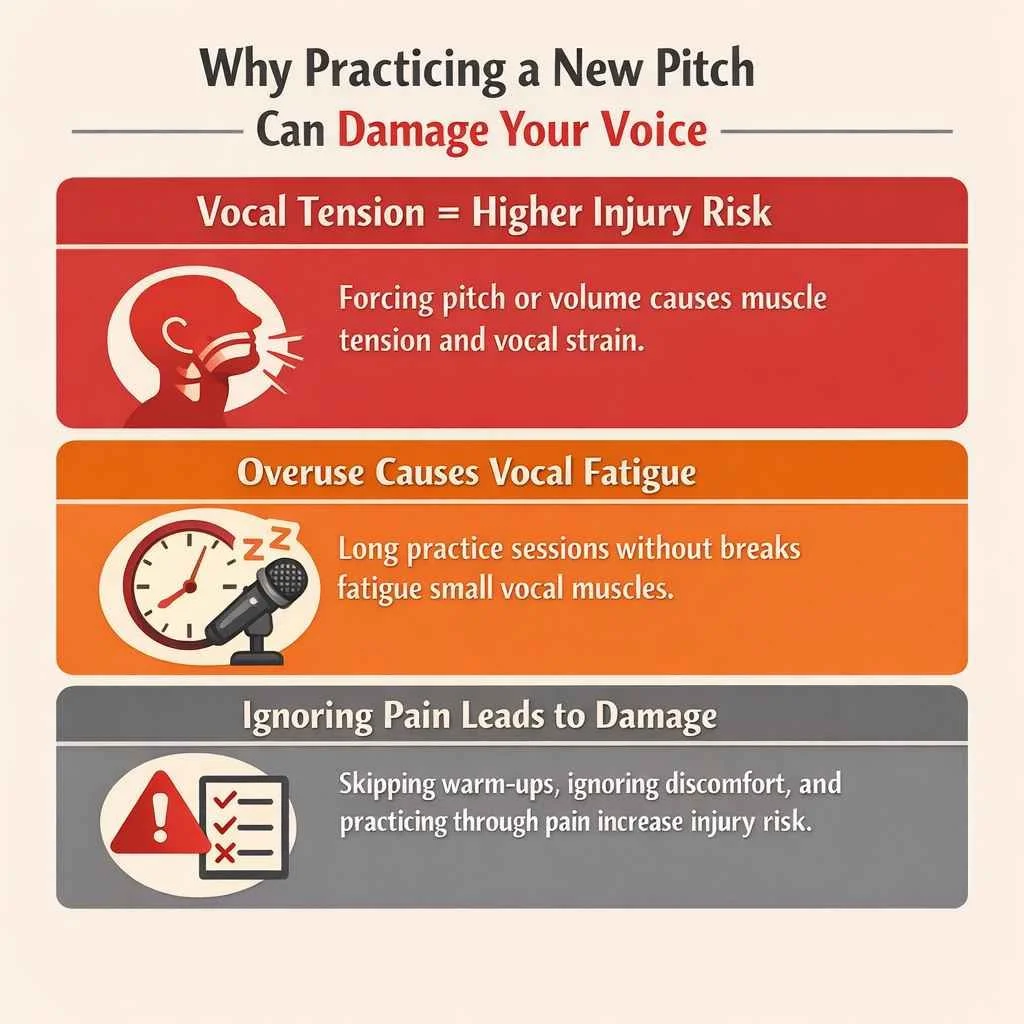
Vocal Tension and Vocal Strain During Pitch Practice
Vocal tension occurs when muscles in the throat, jaw, or neck tighten during pitch practice. This often happens when someone forces higher pitches, pushes volume, or relies on too much pressure instead of proper technique. Over time, this strain can interfere with healthy vocal function and increase the risk of vocal damage.
Many singers and public speakers experience tension when working with unfamiliar pitches. If that tension becomes habitual or is sustained over long periods, it disrupts efficient vocal production and limits vocal performance. Repeated tension places unnecessary stress on the vocal system and can lead to ongoing discomfort or muscle strain.
Vocal Overuse During Extended Periods of Practice
Vocal overuse happens when the voice is used for long periods without enough rest. Extended pitch practice can overload the small muscles involved in voice production, especially when vocal technique is inefficient or fatigue is ignored. These muscles need recovery time to function properly.
Without breaks, vocal fatigue builds quickly, reducing control and increasing strain. Fatigued voices are more likely to rely on force rather than coordination, which raises the risk of injury. Regular rest supports both vocal health and long-term vocal performance.
Common Mistakes That Lead to Vocal Damage
Several common habits increase the risk of vocal damage during pitch practice. These include skipping warm-ups, practicing through discomfort, and continuing to sing or speak while fatigued. Some voice users also try to match a professional singer’s sound or range without considering their own anatomy or current singing technique.
Pain, tightness, or persistent discomfort are signals that something is off. Continuing to practice through these warning signs places unnecessary stress on the voice and can lead to lasting damage. Listening to the body and adjusting practice habits helps protect the voice and supports healthier, more sustainable progress.
Warning Signs of Vocal Fatigue and Vocal Strain

Physical and Vocal Symptoms to Watch For
Hoarseness, throat discomfort, or a noticeable loss of vocal range are common signs of vocal strain. Ongoing hoarseness after practice often indicates irritation or overuse and is a clear signal that the voice requires rest.
Other warning signs can include dryness, tightness, or difficulty speaking comfortably. The voice may feel weaker than usual or sound unstable. These changes are your body’s way of seeking attention and shouldn’t be dismissed.
Singers may experience strain when pushing their range or volume, whereas public speakers often experience fatigue from prolonged vocal use or projection. Individuals working on gender-affirming voice goals may be more sensitive to early tension as they explore new pitch patterns.
When Vocal Fatigue Becomes a Problem
Vocal fatigue often shows up as a heavy, tired, or weak feeling in the voice. As fatigue sets in, controlling pitch and volume during speaking or singing becomes more difficult. Continuing to practice in this state increases the risk of strain or injury.
Fatigue is useful feedback from the body, not something to push through. Rest allows the voice to recover and supports healing, while ignoring fatigue can lead to longer-term vocal issues.
Practical Strategies to Protect Vocal Health

Warm Up and Cool Downs for Safe Pitch Changes
Warming up prepares the vocal folds for pitch changes by gradually engaging the voice. Gentle vocal exercises help improve coordination and ease the voice into practice. Lip trills and light humming are commonly used warm-up techniques.
Cool downs help the voice transition out of practice. Gentle lower notes and soft sounds can help release residual tension after pitch work. Cool-downs support recovery, especially after longer practice sessions.
Drink Water to Support Vocal Health
Good hydration helps keep the vocal folds flexible and reduces friction during voice use. Drinking water consistently throughout the day is more effective than only drinking during practice. Many people find room-temperature water more comfortable for the voice.
Keeping a water bottle nearby encourages regular hydration. Some people find non-caffeinated herbal teas soothing for the throat. If acid reflux affects your voice, avoiding trigger foods such as spicy foods may help reduce irritation.
Taking Breaks and Using Vocal Rest
Vocal rest means reducing talking and singing when the voice feels tired or strained. Taking short breaks during practice helps reduce vocal load. Extended rest may be needed after heavy or prolonged voice use.
Singers may benefit from shorter, more frequent practice sessions, while public speakers often need to prioritize vocal pacing and rest throughout the day. For individuals pursuing gender-affirming voice work, consistency and gradual changes are key.
Rest does not slow progress. It protects vocal health and supports more consistent voice production over time. Knowing when to rest your voice helps prevent strain and damage.
Technique Habits to Avoid During Pitch Practice

Certain technique habits increase strain during pitch practice, even when practice time is short. One of the most common issues is applying too much pressure when reaching or holding a pitch. Pushing the voice, especially at the top or bottom of the range, places unnecessary stress on the vocal folds and can limit control.
This strain can show up differently depending on how the voice is used. For singers, it often appears as a forced range. Professional voice users and public speakers may rely on excessive volume or throat tension to be heard. During gender-affirming voice work, pushing pitch too quickly can increase strain when breath support and coordination aren’t fully established.
Another habit to watch for is relying on throat tension instead of breath support. When the neck, jaw, or throat muscles take over, the voice often feels tight or effortful. This interferes with smooth pitch changes and can reduce vocal performance over time.
Practicing at full volume for extended periods is another frequent source of strain. Loudness increases vocal load, and without proper technique, it becomes harder to maintain healthy coordination. Pitch work is usually more effective when practiced at a moderate, comfortable volume.
Finally, continuing to practice through discomfort or fatigue can reinforce inefficient patterns. Pitch practice should feel engaged but not painful or forced. If the voice starts to feel unreliable, tight, or tired, it’s a sign to pause rather than push.
When to Seek Professional Help for Vocal Concerns

Medical and Functional Voice Issues
Ongoing voice changes that don’t improve with rest or technique adjustments should be evaluated by a medical professional. Medical conditions such as acid reflux, muscle tension, inflammation, or vocal overuse can affect how the vocal folds function and how the voice feels day to day. In some cases, a medical provider such as a laryngologist (throat doctor) may be involved to rule out structural injury or irritation.
Speech-language pathologists who specialize in voice assess how the voice is produced, including coordination, breath support, and vocal load. They help identify inefficient patterns early, reducing the risk of long-term vocal problems and teaching you how to keep your voice healthy.
Voice Therapy for Vocal Health and Recovery
Voice therapy focuses on developing healthy, sustainable voice use for both speaking and singing. A voice therapist guides proper technique, safe pitch practice, and strategies to reduce unnecessary strain. Therapy addresses the full voice system, not just symptoms.
Professional support allows voice users to build control and confidence while protecting vocal health. With targeted guidance, strain is reduced, and long-term voice function is supported.
Frequently Asked Questions

1. Can practicing a new pitch cause permanent damage to the voice?
Permanent vocal damage is uncommon, but it can occur if excessive strain or poor technique continues over a long period of time. Repeated misuse can irritate the vocal folds and surrounding tissues, especially when warning signs are ignored. Rest, technique adjustments, and early professional support significantly reduce the risk of long-term injury.
2. How much vocal rest do I need after pitch practice?
The amount of vocal rest needed depends on how your voice feels after practice. Mild fatigue may require only short breaks or reduced vocal effort. Ongoing discomfort or hoarseness may warrant reduced talking or singing for the remainder of the day. Rest can promote healing.
3. Should I stop practicing if my throat hurts?
Yes. Throat pain is a clear signal to stop practicing. Pain often indicates irritation, muscle strain, or excessive pressure, and continued practice can exacerbate the condition. Resting and reassessing the technique is the safest next step.
4. Can a vocal therapist help with vocal strain?
Yes, a voice therapist can help improve vocal technique and reduce inefficient habits, which may ease strain. Speech-language pathologists specializing in voice address vocal health, recovery, and coordination when strain or injury is present.
How Connected Speech Pathology Can Help

At Connected Speech Pathology, we help adults safely and sustainably explore new vocal pitches. Our voice therapists provide online voice therapy and vocal coaching focused on vocal health, vocal technique, and efficient voice production.
We work with singers, professional voice users, public speakers, individuals pursuing gender-affirming voice work, and adults who rely on their voices day-to-day. Our support is tailored to each person’s goals, whether that’s performance, comfort, consistency, or confidence.
Our team evaluates breath support, vocal tension, and vocal fold coordination during pitch changes. From there, we provide practical strategies to reduce strain, improve control, and support steady progress without vocal overuse.
Through our virtual services, clients receive professional guidance that fits into real life. We teach evidence-based warm-ups, cool-downs, hydration strategies, and rest practices to build a strong, reliable voice that holds up over time.
Summary
Practicing a new vocal pitch can support growth when done safely. Vocal damage occurs when strain, overuse, or poor care take over. Listening to warning signs and using healthy strategies protects the voice over time.

About the Author
Allison Geller is a communication coach, speech-language pathologist, and founder of Connected Speech Pathology, an international online practice providing professional communication coaching and speech therapy for children, teens, and adults. With more than two decades of experience, she has worked in medical and educational settings, published research on aphasia, and leads a team of specialists helping clients improve skills in public speaking, vocal presence, accent clarity, articulation, language, fluency, and interpersonal communication.