How to Make Your Voice Higher-Pitched: Safe, Healthy Ways to Sing and Speak Higher
Your voice has a natural pitch, but it is far more flexible than most people realize. If you want to know how to make your voice higher-pitched, you can train it to rise safely for singing, for a clearer speaking voice, or so that your voice sounds better, matching who you are.
The first step is to go gently, because reaching for a higher-pitched voice the wrong way can lead to strain instead of progress. Below, you will learn how the voice works, the techniques that lift it without force, and the signs that tell you when to ease off or ask for help.
You don't need a naturally high voice to make progress. With a clear understanding of how your voice works and consistent practice, most people can learn to use a higher pitch safely and comfortably.
Key Takeaways
Pitch is controlled by the vocal folds and the muscles around them. When the vocal folds vibrate faster, the voice sounds higher. Most people can learn to adjust pitch within a healthy range through training and practice.
You can raise your pitch with technique, not force. Exercises that target pitch control, resonance, breath support, and vocal flexibility can help you reach higher pitches more comfortably.
How your voice resonates affects how high it sounds. Changes in resonance and vocal tract shaping can make a voice sound brighter or lighter, even when the actual pitch changes only slightly.
A voice coach or speech-language pathologist can help you reach your goals more efficiently. Professional guidance can provide personalized feedback and strategies for singing, public speaking, gender-affirming voice training, or other voice-related goals.
The Science of Vocal Pitch: How Your Voice Makes Sound
How Anatomy, Hormones, and Age Shape Your Voice
Why People Want a Higher Voice
How Can You Make Your Voice Higher-Pitched Safely?
Finding Your Ideal Pitch: Safe Vocal Exploration
What We See Working with Clients
The Science of Vocal Pitch: How Your Voice Makes Sound

Voice pitch is how high or low your voice sounds. It depends on how fast your vocal cords vibrate; faster vibration produces higher sounds. When the small bands of tissue, your vocal folds, stretch thinner and tighter, they move faster, and the note rises.
How Your Vocal Cords Work
Your vocal cords, also called vocal folds, are two small bands of muscle and tissue inside your voice box, or larynx. As air from your lungs passes between them, they open and close quickly to make sound. The faster they move, the higher you sound.
Tiny muscles in the voice box (larynx) adjust the tension and length of the vocal folds to change pitch. Similar to a guitar string, increased tension generally produces a higher-pitched sound.
Resonance: Shaping the Sound
Pitch is only half of the story. Resonance is the way sound bounces around the spaces in your throat, mouth, and nose, and it shapes how high your voice seems to a listener. Aiming the sound forward, toward your lips and the front of your face, brightens your voice and makes it seem higher before the note changes.
That forward placement is why two people can speak at the same note yet sound quite different. Bringing the sound forward is one of the fastest ways to seem higher without strain.
Vocal Range and Your Comfort Zone
Everyone has a vocal range, the span between the lowest and highest notes you can make comfortably. Within it sits your comfort zone, the note your voice settles into without effort. The goal is to ease into a higher vocal range gently, not to live at the top of it.
If you want to stretch the edges of your vocal range over time, our guide on how to increase your vocal range builds on these same ideas.
How Anatomy, Hormones, and Age Shape Your Voice
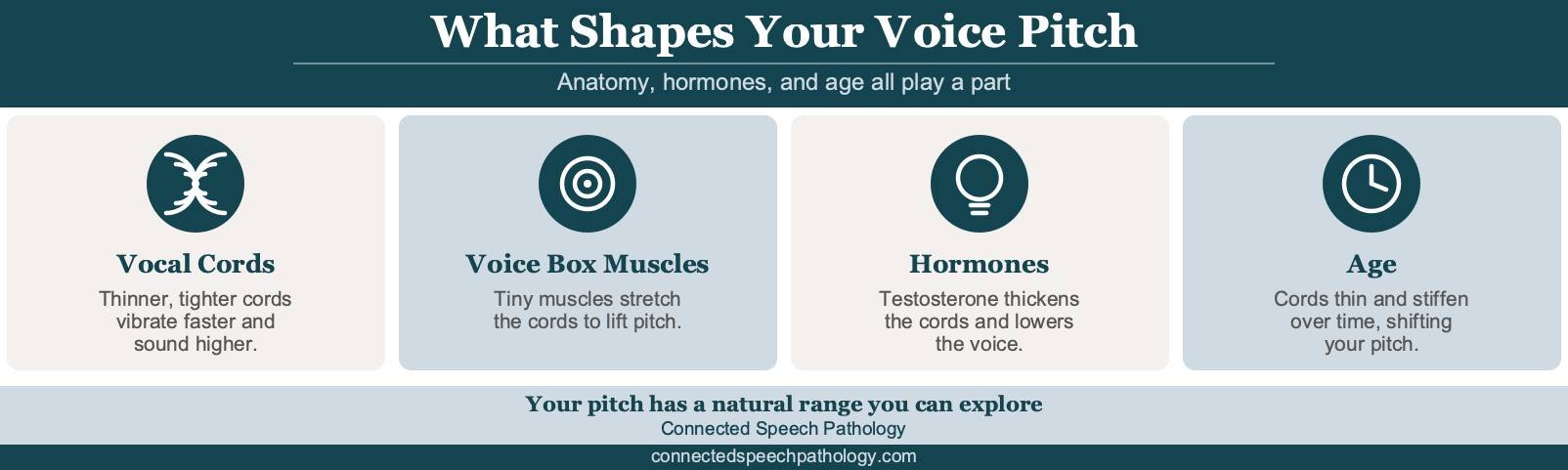
A few things beyond technique shape where your natural voice sits. To put rough numbers on it, a typical adult man speaks at about 85 to 180 Hz, while a typical adult woman speaks closer to 165 to 255 Hz.
Anatomy comes first. Longer, thicker vocal folds generally produce a lower pitch, while shorter, thinner vocal folds generally produce a higher one. This difference is one reason women tend to have higher-pitched voices than men.
Hormones matter too. During puberty, testosterone causes the vocal folds and larynx to grow, which lowers the voice. That change is largely permanent.
Estrogen does not reverse those structural changes, so people who experienced a testosterone-driven puberty typically rely on vocal training rather than hormone therapy alone to raise pitch. Questions about hormone treatment should always be discussed with a qualified medical provider.
Age can affect pitch as well. Changes to the vocal folds and surrounding muscles over time may alter how the voice sounds. Some men's voices become slightly higher with age, while some women notice a lower pitch after menopause. Maintaining overall vocal health can help preserve voice quality throughout life.
Why People Want a Higher Voice

People want a higher voice for many different reasons, and none is more valid than another. Knowing your own motivation helps you set a goal that is realistic and comfortable for you.
Confidence and Clarity
A higher pitch is not necessarily better, but some people feel more comfortable and confident speaking in a slightly higher range. Others find that exploring a wider pitch range helps them sound more expressive and engaged. If your goal is to communicate with greater confidence, clarity, or vocal variety, learning to adjust pitch can be a useful tool.
Singers Reaching High Notes
Singers often want to expand their vocal range and reach higher notes comfortably. In the music world, many of the techniques used to raise pitch overlap with voice training for singers, including healthy vocal technique, breath support, and efficient vocal fold coordination. Even Grammy Award-winning singers warm up before performing, and many spend time exploring their range in practice before using it in performance.
Gender Affirmation
For many transgender and nonbinary people, a higher voice is part of how they speak and express their identity, and it can help reduce voice dysphoria. That work often involves more than pitch alone and may include resonance, intonation, speech patterns, and other aspects of communication. Gender-affirming voice training offers a structured, supportive approach that feels safer and more effective than experimenting on their own.
Personal Preference
Some people simply prefer how they sound when speaking with a higher pitch, and that is reason enough. Your voice is personal, and choosing a lighter, brighter sound can be a valid form of self-expression.
How Can You Make Your Voice Higher-Pitched Safely?
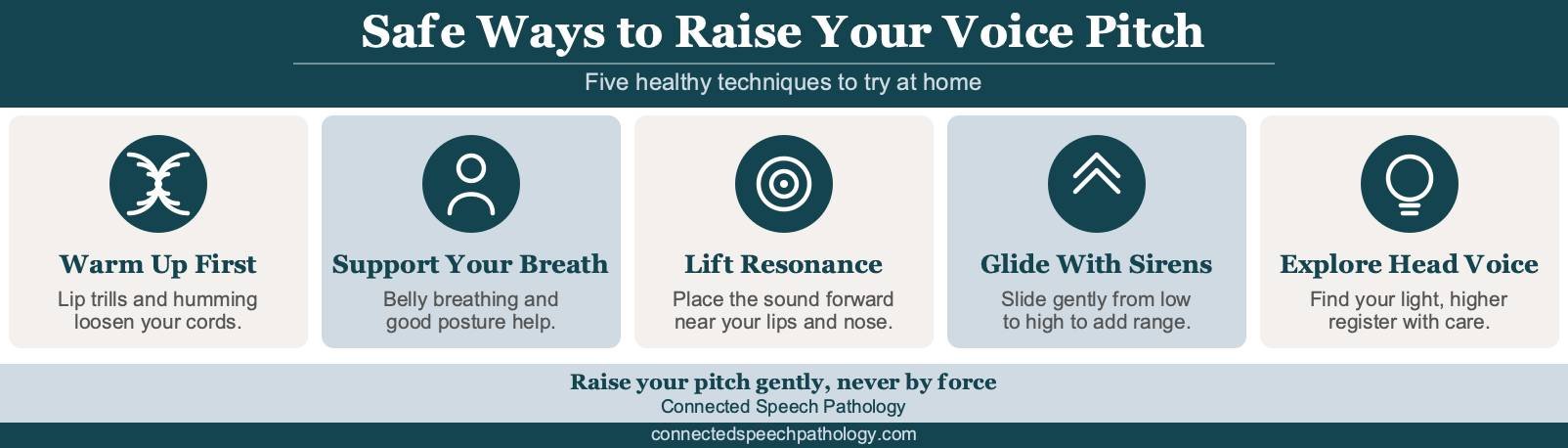
You can raise your pitch through a combination of vocal warm-ups, pitch exercises, resonance training, and healthy voice use. The goal is to gradually explore a higher pitch range without strain so that speaking or singing at a higher pitch feels comfortable and natural over time.
For a guided approach, our article on how to control the pitch of your voice with vocal coaching explains how a voice coach or speech-language pathologist can help you reach your goals safely and efficiently.
Note: Working with a voice coach or speech-language pathologist is the best way to make lasting changes to your voice. If you'd like to become familiar with some common pitch-raising exercises, here are a few techniques to explore on your own, but keep in mind that they're not a substitute for individualized voice training.
Warm Up First
Warm up before reaching for higher notes. Lip trills, where you blow air through loosely closed lips while making a sound, help your vocal folds move with less effort. Humming for 10 to 15 seconds gently engages the voice and creates a vibration that you can feel in your lips, nose, and face.
These are semi-occluded vocal tract (SOVT) exercises. Humming or phonating through a straw partially narrows the airflow pathway, creating gentle back pressure above the vocal folds. That back pressure can reduce strain and make voice production feel easier. Both are simple exercises you can practice almost anywhere.
Support Your Voice With Breath and Posture
Higher notes need steady airflow, and that starts with good posture and breath support. Sit or stand tall, keep your shoulders relaxed, and allow your lower ribs and abdominal muscles to expand as you inhale. The goal is coordinated breathing, not forcing air from your throat.
A few rounds of slow, deep breathing can help you maintain a steady airflow while speaking or singing. Consistent breath support often makes higher pitches feel more stable and controlled.
Bring Resonance Forward
Forward resonance means directing sound vibrations toward the front of the vocal tract. Try a bright "ee" sound and notice the vibration near your lips, teeth, or nose. Then maintain some of that sensation as you speak.
Many people also benefit from slightly reducing vocal weight, which refers to how heavy or thick the voice sounds. A lighter production can make higher pitches easier to access without adding strain.
Practice Pitch Slides and Sirens
Pitch slides and sirens build vocal flexibility and pitch awareness. Start on a comfortable note and glide your voice upward like a gentle siren. Let steady airflow carry the sound rather than pushing from your throat.
Gradually explore a slightly higher range over time. Small, consistent increases are often more effective than trying to reach the highest possible note immediately.
Develop Your Head Voice
Head voice is a lighter vocal register that often feels as though the sound resonates higher in the head than in the chest. Gentle exercises that encourage head voice can expand your upper range and improve vocal endurance.
Keep the sound easy and relaxed. If you notice strain, discomfort, or vocal fatigue, stop and return to a comfortable pitch.
Everyday Habits That Help
A few daily habits can support long-term vocal health and make higher pitches easier to access over time:
Stay hydrated. Water helps keep the vocal folds lubricated so they can move efficiently and comfortably.
Avoid smoking. Smoke can irritate and dry the vocal folds, which may affect vocal quality and flexibility.
Practice after warming up. Vocal exercises often feel easier once your voice has been used gently and warmed up.
Track your progress. A pitch-tracking app or short recording can help you monitor changes and maintain good vocal quality.
Include some singing practice. Light singing exercises can improve pitch control and reinforce healthy voice habits. Regular practice often makes higher notes feel more comfortable.
Keep sessions short and consistent. A few focused minutes most days typically produce better results than occasional long practice sessions.
Avoid forcing the sound. Pain, strain, or persistent discomfort are signs to stop and reassess your technique. Pushing for higher notes can increase the risk of vocal injury.
Finding Your Ideal Pitch: Safe Vocal Exploration

Work Within Your Natural Range
Your ideal note lies within your natural range, not at the top. Aim for a comfortable pitch you can sustain throughout a whole conversation, not just for a moment. A note you strain to reach is too high to be your everyday voice.
Listen to Your Body
Your body will tell you when the note you speak in is right for you. Tension, scratchiness, or fatigue are signs to ease off and rest. If you ever feel pain, stop, and if it continues, check whether your vocal cords are irritated or damaged.
Use Recording as a Gentle Tool
Recording yourself can help you hear progress, but only if it feels comfortable. If listening back is stressful, focus instead on how a note feels physically, or ask a trusted friend for feedback. When you do use a recording, treat it as information rather than judgment, and notice what already works.

Gender-Affirming Voice Therapy: A Complete Guide
Check out this gender-affirming voice therapy guide for more information.
What We See Working with Clients

Many people who want a higher voice aren't looking for a dramatic change. They're looking for a voice that feels more natural, comfortable, or aligned with how they want to sound. A couple of client experiences illustrate what that process often looks like.
One client, a transfeminine woman in her thirties, wanted a speaking voice that felt more aligned with her identity. We focused on forward resonance and gentle pitch work rather than trying to force her voice higher. Within a few weeks, she found a higher, easier speaking voice that felt authentic, and the tightness she often noticed by evening had faded.
Another client, a teacher who also hosts a podcast, disliked how low and flat her voice sounded in recordings. She worked on bringing her resonance forward, supporting her breath control, and practicing with short recordings between sessions. Over time, she developed a brighter speaking voice for presentations without losing vocal strength, and she no longer felt fatigued at the end of the day.
Neither person was trying to become someone else. Small, consistent adjustments helped them build a voice that felt more like their own.
Frequently Asked Questions About a Higher Voice

1. Is it safe to try to raise the pitch of my speaking voice?
Yes, raising your speaking pitch is generally safe when done gradually and without strain. Focus on gentle exercises such as lip trills, humming, and pitch slides rather than forcing your voice higher from your throat. If you experience pain, persistent discomfort, or vocal fatigue, stop and give your own voice time to rest.
2. Can you make your voice permanently higher in pitch?
With consistent practice, a higher voice can become natural and automatic. In everyday use, it then feels like your normal voice, because the change is behavioral rather than structural. Your anatomy still sets the outer limits of your range and ability.
3. Can hormones or testosterone change my voice pitch?
Testosterone thickens the vocal cords and lowers the voice. That change does not reverse on its own, and estrogen does not lift an already-deep voice, so most people train instead. Always discuss hormones with your prescribing provider.
4. How long does it take to raise your vocal pitch?
Many people hear small changes within a few weeks of regular vocal exercises. Lasting results usually take a few months, depending on your starting point and how consistently you practice. Working with a vocal coach often shortens the timeline.
5. I sing. Can these techniques help me reach high notes?
Yes, these same techniques help singers reach high notes too. Whether you sing for fun or to perform, the warm-ups, breathing support, and slides that lift your speaking voice also lift your singing voice. Safely finding your head voice helps most with the highest notes.
How Connected Speech Pathology Can Help

You can make progress on your own, but working with a voice therapist often makes the process more efficient. They can identify habits that may be holding you back, help you avoid vocal strain, and customize voice exercises to your goals, whether you're a singer, a public speaker, or someone seeking a voice that feels more authentic.
At Connected Speech Pathology, our vocal coaches help people lift their voice safely and confidently. With personalized guidance through voice therapy, we work on warm-ups, breathing support, forward placement, and gentle range-building, all tailored to your goals.
Our sessions are online and built around your schedule, including voice and performance coaching for anyone whose work depends on their voice. A skilled vocal coach meets you where you are and helps you build a higher, healthier voice with good vocal stamina.
Summary
Learning how to make your voice higher-pitched comes down to understanding your voice and training it with care. Your voice rises when the vocal cords vibrate faster, and you can encourage that safely with warm-ups, steady breathing, forward placement, and a gentle reach into your head voice.
Go slowly, listen to your body, and let consistent practice do the work. With patience and support from a voice coach or speech-language pathologist when you want it, a higher-pitched voice that feels comfortable and natural is well within reach.

About the Author
Allison Geller, M.A., CCC-SLP, is a communication coach, speech-language pathologist, and founder of Connected Speech Pathology, an international online practice providing professional communication coaching and speech therapy for children, teens, and adults. With more than two decades of experience, she has worked in medical and educational settings and published research on aphasia. Today, she leads a team of specialists who help clients improve their skills in public speaking, vocal presence, accent clarity, articulation, language, fluency, and interpersonal communication.