Throat Pain After Talking: What It Means
Throat pain after talking usually means the voice is working harder than it should, leading to voice strain, irritation, or inflammation in the throat and vocal cords. Here is what to know about throat pain after talking: what it feels like, its common causes, when it needs a doctor, and the treatments that help. If you are an adult whose throat is sore after meetings, phone calls, or teaching, this is written for you.
Most sore throats from vocal overuse settle with rest and simple care, and finding the cause early keeps a sore throat from becoming an ongoing voice problem.
Key Takeaways
Throat pain after talking usually comes from voice strain, irritation, or inflammation of the vocal cords. The sore throat builds during long periods of speaking and eases with rest.
A sore throat from talking is rarely serious. Pain with every conversation can point to muscle tension, laryngitis, or acid reflux.
Voice therapy treats the cause of the strain. A speech pathologist teaches easier ways to speak.
What Throat Pain After Talking Feels Like
What Causes Throat Pain After Talking?
When Throat Pain Signals a Medical Issue
Treatment Options for Throat Pain After Talking
What We See Working with Clients
What Throat Pain After Talking Feels Like

Throat pain after talking can feel like soreness, burning, or tightness in the throat or neck and may be related to voice use. Some people notice a dry throat, a scratchy throat, or a raspy voice, while other symptoms include hearing your voice sound strained, an irritating dry cough, or developing hoarseness.
Specialists call these symptoms vocal fatigue. A sore throat after long periods of talking that fades overnight reflects heavy voice use, while throat pain or losing your voice every time you speak, even when you are not sick, deserves a closer look.
Vocal Cords, Voice Box Function, and Throat Pain
Voice production starts when air flows from the lungs through the larynx, or voice box, where the vocal cords vibrate to produce sound. Poor breath support, talking loudly, or bad technique makes the throat, neck, and mouth muscles squeeze harder, leaving the throat sore.
What Causes Throat Pain After Talking?
| Cause | Typical signs | What usually helps |
|---|---|---|
| Voice strain | Sore throat after heavy talking | Rest and easier speaking habits |
| Throat muscle tension | Effortful talking, a tight or strained sound | Voice therapy with a speech-language pathologist |
| Laryngitis (acute or chronic) | Sore throat and hoarseness, for days or for weeks | Rest and fluids; a medical exam when it lasts |
| Silent reflux | A sore throat with no heartburn, throat clearing | Reflux care from a doctor, voice care |
| Dryness and irritants | A sore throat that worsens in dry rooms | Water, a humidifier, avoiding smoke |
| Connected Speech Pathology | connectedspeechpathology.com | ||
Voice strain is the most common cause of throat pain after talking. Laryngitis, acid reflux, dryness, and irritants follow.
Voice Strain and Sore Throat From Overuse
The strain builds when you speak for extended periods without breaks, talk over noise, or speak louder than is comfortable. Teachers, singers, public speakers, and other vocal professionals carry high vocal demands, so their sore throat returns each week. Vocal overuse can also lead to small injuries, such as vocal nodules, which strain the vocal cords.
Muscle Tension Dysphonia: When Throat Muscles Work Too Hard
Muscle tension dysphonia means the muscles around the voice box squeeze too hard during speech while the vocal cords stay healthy. Talking takes effort, the throat aches, and many people notice throat tightness when talking. The pattern often starts during a cold or a stressful stretch and continues after the trigger passes.
A speech-language pathologist can retrain those habits, and our guide to muscle tension voice recovery explains that work.
Acute Laryngitis, Chronic Laryngitis, and Strep Throat
Acute laryngitis is sudden inflammation of the larynx after a viral infection, such as the common cold, and the voice sounds hoarse for a few days. Viral infection is the most common cause of sore throats, and talking while sick makes the sore throat worse. Chronic laryngitis means symptoms lasting longer than three weeks, often from reflux or smoking, and brings hoarseness with a sore throat most days.
Strep throat is different. Streptococcus bacteria cause a severe sore throat with pain on swallowing, and a throat culture confirms it. Antibiotics treat a bacterial infection like strep throat, while most sore throats from a virus improve within three to ten days.
Acid Reflux, Stomach Acid, and Throat Pain
Acid reflux lets stomach acid rise and irritate the throat and vocal cords. Doctors call the throat version laryngopharyngeal reflux, or silent reflux, because it causes a sore throat, throat clearing, and hoarseness without heartburn. These symptoms often feel worse after long conversations.
Spicy foods, late meals, and lying down after eating make it worse, and frequent throat clearing irritates the vocal folds further. Postnasal drip from allergies worsens these symptoms, as does dehydration, which increases friction on the vocal folds.
When Throat Pain Signals a Medical Issue
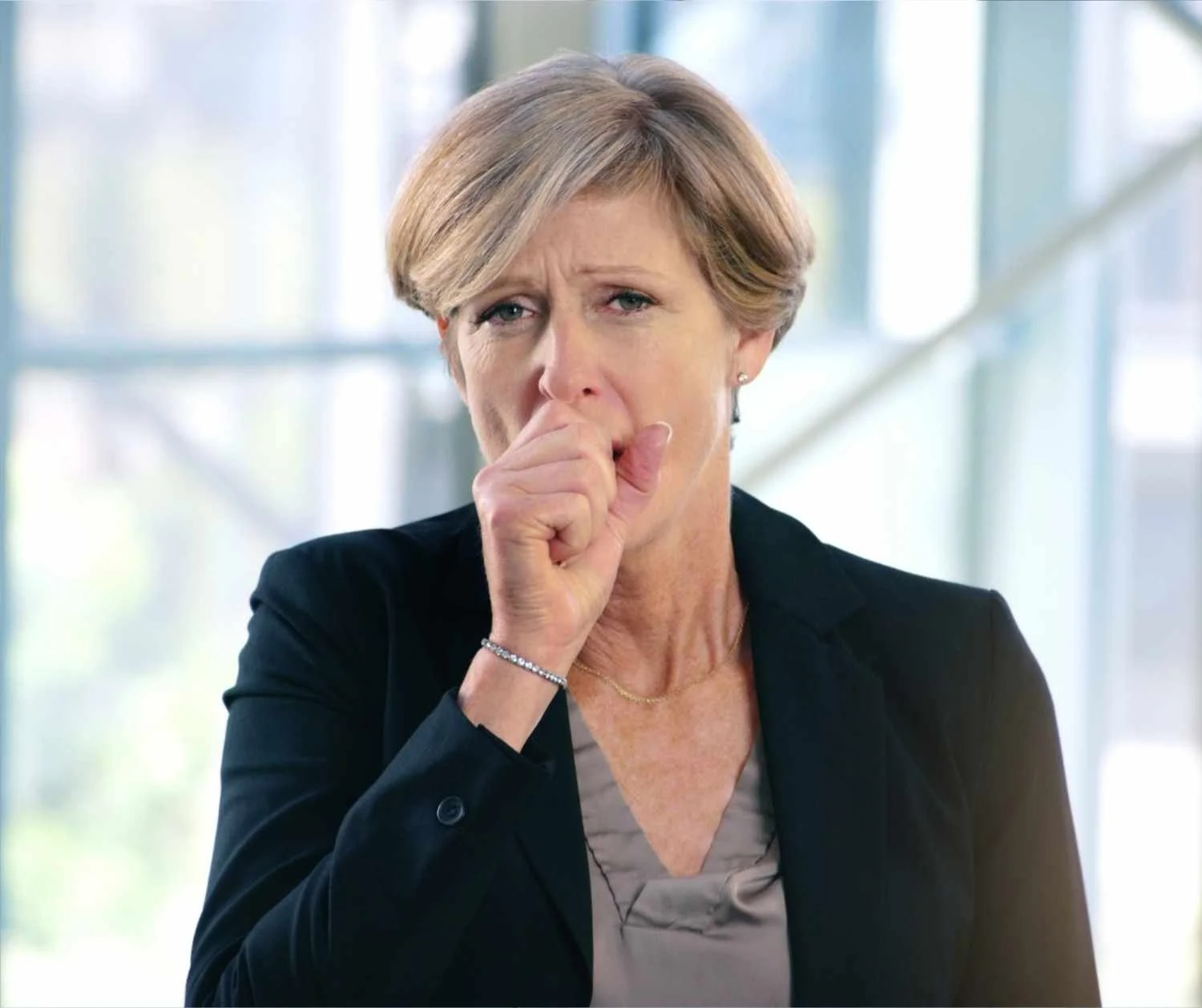
Persistent throat pain after talking sometimes points to a medical issue. Acid reflux, allergies, or thyroid problems can create ongoing irritation and swelling, and when symptoms persist, seek professional help from a specialist.
Voice Changes That Require Medical Care
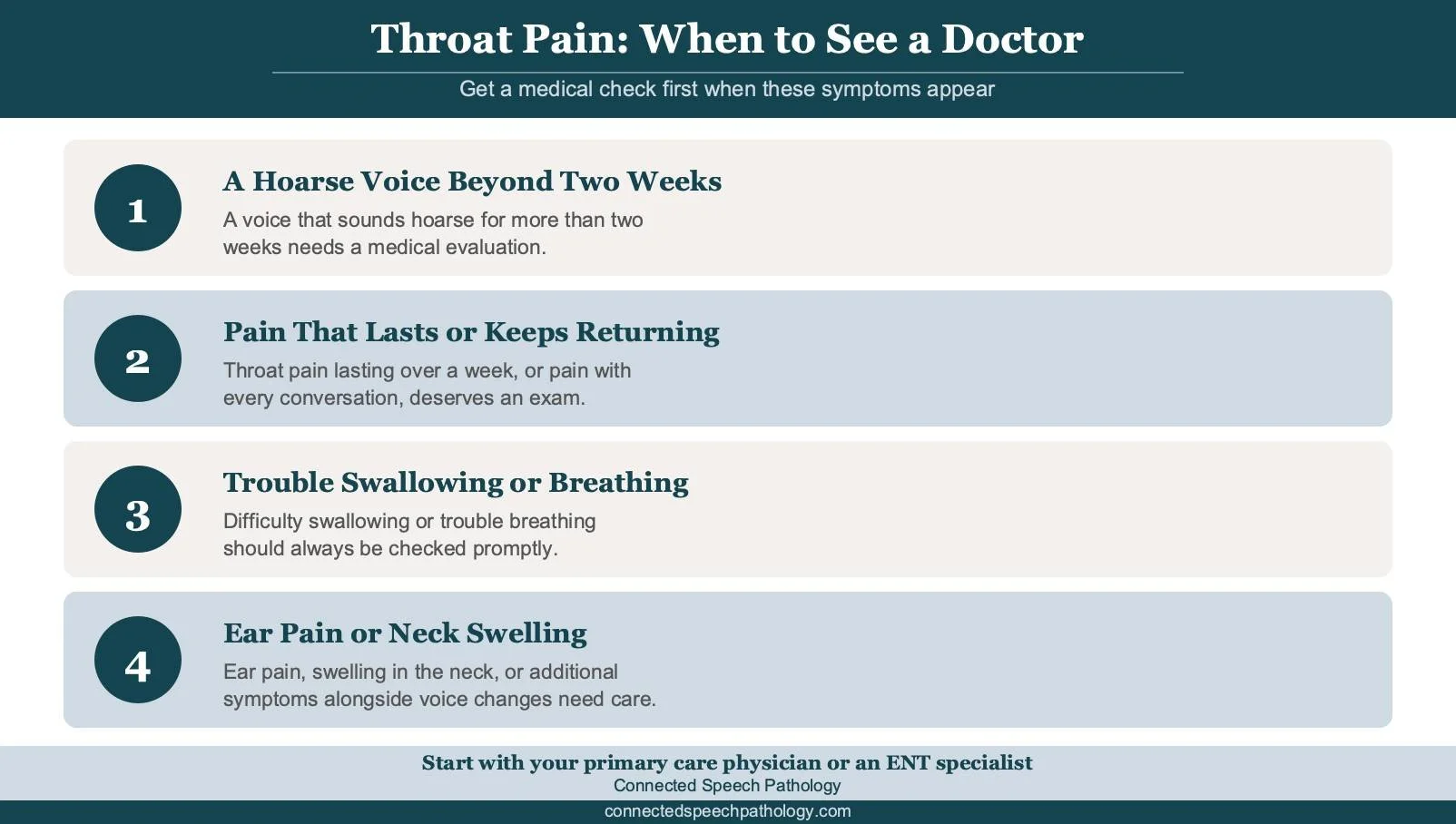
See a healthcare provider before starting voice therapy if you notice any of the following:
Hoarseness or another voice change that persists or does not improve.
Throat pain that persists or keeps happening, or pain when speaking.
Difficulty swallowing or trouble breathing.
A lump or swelling in the neck, ear pain, or other concerning symptoms.
Start with your primary care physician or an ENT specialist (an ear, nose, and throat doctor). An ENT can examine your vocal cords and determine whether there is a medical reason for your symptoms. If how you are using your voice is contributing to the problem, voice therapy may then be recommended.
Treatment Options for Throat Pain After Talking

Treatment depends on the cause, and most cases improve without surgery.
Medical Care and ENT Evaluation
A doctor reviews your medical history, examines the throat, nose, and mouth, and sometimes orders a throat culture or a look at the vocal cords to rule out growths and other conditions. An ENT specialist handles persistent cases; surgery is rare, and reflux treatment often starts with diet changes or medication the prescribing provider chooses.
Voice Therapy for Vocal Cord Pain
Voice therapy addresses the speaking patterns behind the pain. A speech pathologist who specializes in voice evaluates how you breathe, speak, and project, then teaches safer speaking techniques that reduce strain.
Better breath support for speaking lets the lungs power the sound, so the throat can relax. The plan is individualized to what drives the strain.
Self Care and Home Remedies for a Sore Throat
Simple self-care eases a sore throat while the cause settles. These home remedies are general suggestions, and a healthcare provider or speech-language pathologist can say what fits you.
Drink plenty of water, since hydration keeps the vocal cords flexible and drinking water throughout the day reduces strain.
Voice rest after intense vocal use means talking less and speaking gently. Whispering does not count, since it holds the vocal cords tense and can strain them more than normal speech.
Warm saltwater gargles alleviate throat soreness, and throat lozenges or ice chips soothe a sore, scratchy throat.
Use a humidifier indoors to head off a dry, sore throat.
Over-the-counter medicines can ease sore throat pain. Ask a doctor or pharmacist first.
Preventing a Sore Throat: Vocal Health for Public Speakers and Heavy Talkers
For teachers, public speakers, and people who sing for audiences, daily vocal health habits keep a sore throat away, and a speech-language pathologist can suggest what suits you.
Warm up before long speaking days, since warm-up exercises prepare the vocal cords, the way singers do before they sing.
Keep a relaxed posture with proper breath support. Proper posture supports vocal performance and reduces neck strain.
Using a microphone minimizes vocal strain when you present, perform, or sing on stage.
Plan short voice breaks across a heavy talking day, and avoid exposure to smoking, secondhand smoke, and other irritants.

What Is a Voice Therapist?
Check out our blog about what a voice therapist is for more information.
What We See Working with Clients

In our practice, we work with adults whose voices get heavy use. The pattern we see most often is a healthy voice working against a loud room or a long day.
The examples below are real clients of ours. Identifying details have been changed to protect privacy.
A fourth-grade teacher came to us with a sore throat after every school day and a voice that faded by afternoon, even though an ENT had found healthy vocal cords.
Her speech therapist worked on breath support for a fuller sound, planned voice breaks, and set up classroom amplification. Now her throat no longer aches on the drive home, and her evenings include talking again.
A sales manager on hours of daily video calls cleared his throat constantly, and by mid-afternoon his throat burned. His doctor confirmed acid reflux.
While his physician managed the reflux, his speech therapist helped him swap the throat clearing for a sip of water and an easier speaking pattern. The burning eased, and full days of calls became comfortable.
Frequently Asked Questions About Throat Pain After Talking

1. Why does my throat get sore after talking for long periods?
A sore throat after long periods of talking usually means an overworked throat. The muscles tire, the tissue gets irritated, and the soreness builds across the day. Rest and easier speaking habits help the throat recover faster.
2. Why does my throat hurt when I talk, even when I am not sick?
Muscle tension in the throat and acid reflux often cause pain during talking. Silent reflux is when acid irritates the throat without heartburn or other symptoms. A medical exam, then voice therapy, addresses the cause.
3. When should I see a doctor for throat pain?
See a doctor for throat pain lasting over a week. A hoarse voice lasting more than two weeks, difficulty swallowing, ear pain, or neck swelling also needs a doctor. These symptoms need evaluation to rule out infection.
4. Can talking too much cause permanent damage to my voice?
Talking too much rarely causes permanent damage. Repeated vocal overuse can lead to vocal nodules or lasting irritation, so catching the strain early protects the vocal cords and prevents a lasting sore throat.
5. Can voice therapy help throat pain after talking?
Yes, voice therapy can ease a sore throat caused by how you speak. A speech-language pathologist identifies the pattern behind the strain and teaches more comfortable speaking habits.
How Connected Speech Pathology Can Help

At Connected Speech Pathology, we provide online voice therapy for adults whose throat is sore after talking. Our speech-language pathologists evaluate how you speak in real situations and build the treatment around the pattern behind your soreness.
What sets our approach apart is that sessions happen over video, where your voice works hardest, and we coordinate with your medical providers when reflux is part of the picture. Everyone on our voice team is a licensed speech-language pathologist.
Summary
Throat pain after talking can come from voice strain, irritation, or swelling of the vocal cords, and it often improves with rest and simple care. If the pain persists or keeps happening, see a doctor to rule out a medical cause. If your voice use is contributing to the problem, voice therapy can help you learn to speak with less effort so talking feels more comfortable.

About the Author
Allison Geller, M.A., CCC-SLP, is a communication coach, speech-language pathologist, and founder of Connected Speech Pathology, an international online practice providing professional communication coaching and speech therapy for children, teens, and adults. With more than two decades of experience, she has worked in medical and educational settings and published research on aphasia. Today, she leads a team of specialists who help clients improve their skills in public speaking, vocal presence, accent clarity, articulation, language, fluency, and interpersonal communication.