At What Age Should a Child Start Talking Clearly?
By age three, most children speak clearly enough that familiar people can follow along most of the time. It takes about another year to be that clear to someone outside the family. By age four, a child is usually understood 75 to 90 percent of the time, even on a first meeting.
If you are a parent or caregiver wondering whether your child is on track, you have probably searched what age should a child start talking clearly after noticing that other kids their age seem easier to understand.
Here is what to know about speech clarity: when it develops, what shapes it, when to seek help, and how to support it at home. Speech clarity develops gradually across the first five years, and knowing what is typical helps you tell everyday variation from a delay worth acting on.
Key Takeaways
Speech Clarity Milestones: By age three, a child's speech should be clear to familiar listeners most of the time. By age four, strangers should understand 75 to 90 percent.
Factors Affecting Clarity: Hearing, how the mouth moves during speech, language exposure, and family history.
When to Seek Help: Consult a speech-language pathologist if your child does not recognize their name by age two, is hard to understand by age three, or shows signs of frustration when communicating.
Supporting at Home: Talking with your child often, reading together, and reducing background noise during conversation all support clear speech development.
At What Age Should a Child Start Talking Clearly?
Understanding Speech Development
Factors Affecting Speech Clarity
When to Seek a Speech-Language Pathologist
Supporting Clear Speech at Home
What We See Working with Clients
At What Age Should a Child Start Talking Clearly?
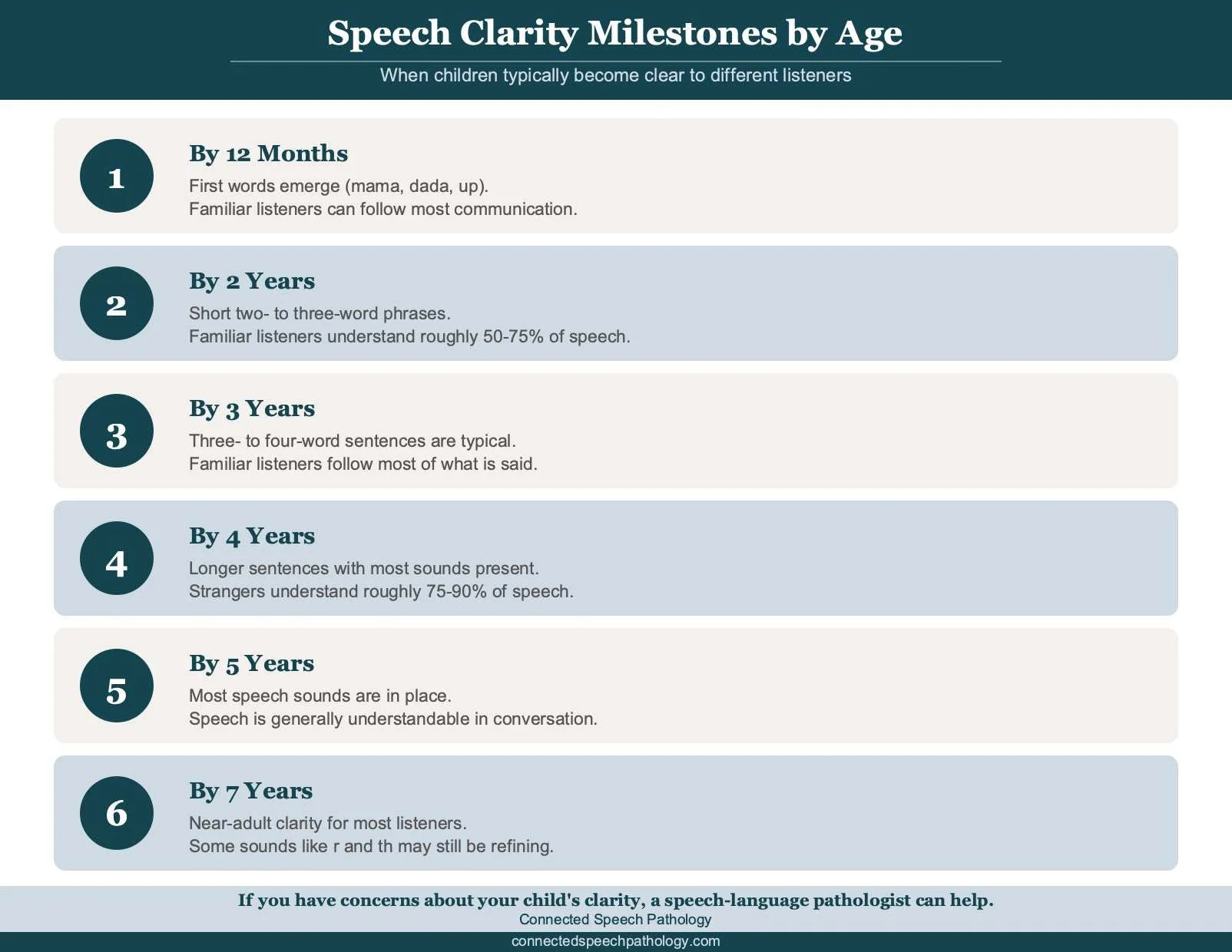
Most children speak clearly enough for familiar listeners by age three and for strangers by age four. Some children take longer for reasons like Down syndrome, where Down syndrome speech therapy can support clearer speech. If you are unsure whether your child is on track, our does my child need speech therapy quiz can help you spot the signs. Speech clarity builds gradually across the first five years rather than arriving all at once, and children move through it at different rates.
A child who is a few months behind one of these points is not necessarily delayed. Milestones describe what is typical, not a deadline. What matters more than any single age is whether a child keeps making progress. If your child is well past an age range, or you are having trouble understanding them day to day, that is worth bringing to a speech-language pathologist rather than waiting to see.
By 12 months, first words appear, such as mama, dada, and up, and familiar listeners can follow most of what a baby communicates.
By 2 years, children use short two- to three-word phrases, and familiar listeners understand roughly 50 to 75 percent of their speech.
By 3 years, three- to four-word sentences are typical, and familiar listeners follow most of what a child says.
By 4 years, sentences grow longer with most sounds present, and strangers understand roughly 75 to 90 percent of speech.
By 5 years, most speech sounds are in place, and speech is generally understandable in everyday conversation.
By 7 years, clarity is near-adult for most listeners, though a few sounds like /r/ and /th/ may still be refining.
One finding that surprises many parents is that 100 percent intelligibility by age four is not typical. Most children are easy for strangers to understand by four or five, while individual sounds like /r/ and /th/ often keep refining into the early school years.
Understanding Speech Development

Infant Vocalization Stages
Before a child says their first words, they go through predictable vocalization stages. Around two to three months, babies begin cooing and making new sounds, and by six months, most babies are babbling and stringing consonant-vowel sounds like "bababa" or "mama."
First words typically appear when a child is about a year old, and by 18 months, most kids say about 20 words as language development accelerates.
By 24 months, most children combine two or three words into short phrases.
The learning process, from first words to phrases to sentences, is steady but not always smooth. As a child develops in a bilingual environment, they sometimes take slightly longer to speak clearly in one language while building vocabulary in both, which is completely normal.
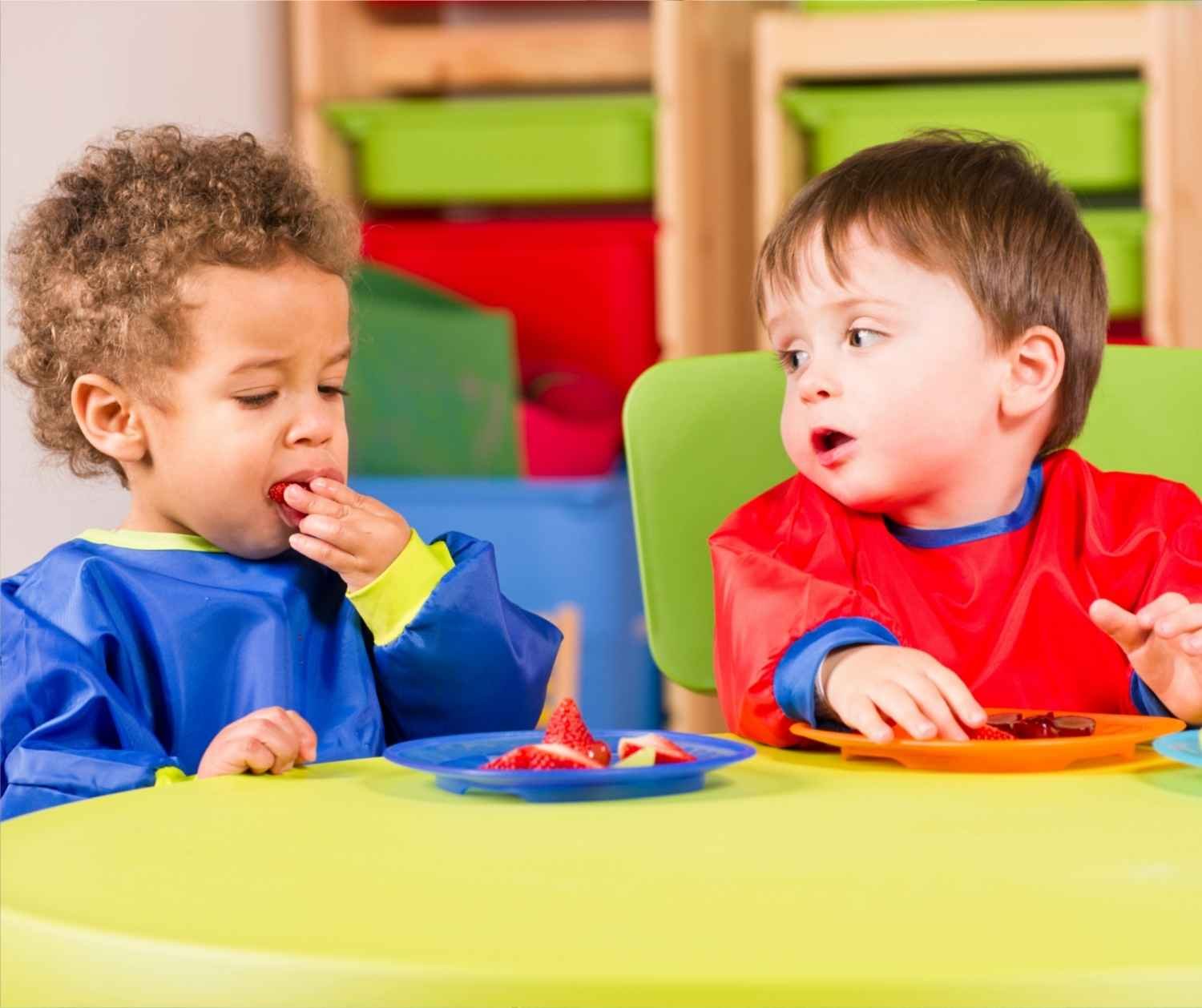
When Do Babies Start Babbling? A Guide to Baby Babbling and First Words
Find out when babies start babbling in this blog.
Factors Affecting Speech Clarity

Several factors shape how clearly a child speaks and how quickly their speech and language develop.
Hearing Ability
Hearing is the foundation of speech development. Mild or recurrent ear problems, such as fluid buildup from frequent ear infections, can make it harder for a child to hear and learn speech sounds.
A child cannot accurately mimic sounds they cannot hear clearly. If you have any concerns about your child's hearing, an audiologist evaluation is the right first step before a speech therapy referral.
How the Mouth Moves
Clear articulation requires coordinated movement of the lips, tongue, and jaw. When a child has trouble with those movements, whether from a structural difference like a cleft palate, weak or hard-to-control muscles, or difficulty planning the movements, speech can be hard to understand even when their language comprehension is fine.
Language Exposure
The quantity and quality of language a child hears each day influence speech and language development. Environmental factors like background noise and screen time can limit the quality of those exchanges. Children who hear more words across more contexts generally develop stronger language skills and speak more clearly.
Family History
Family history can affect how quickly children reach clarity milestones. Speech delays and certain speech disorders, including childhood apraxia of speech and phonological disorders, can run in families. A family history does not mean a child will have a speech delay, but it is worth mentioning to your child's doctor.
When to Seek a Speech-Language Pathologist
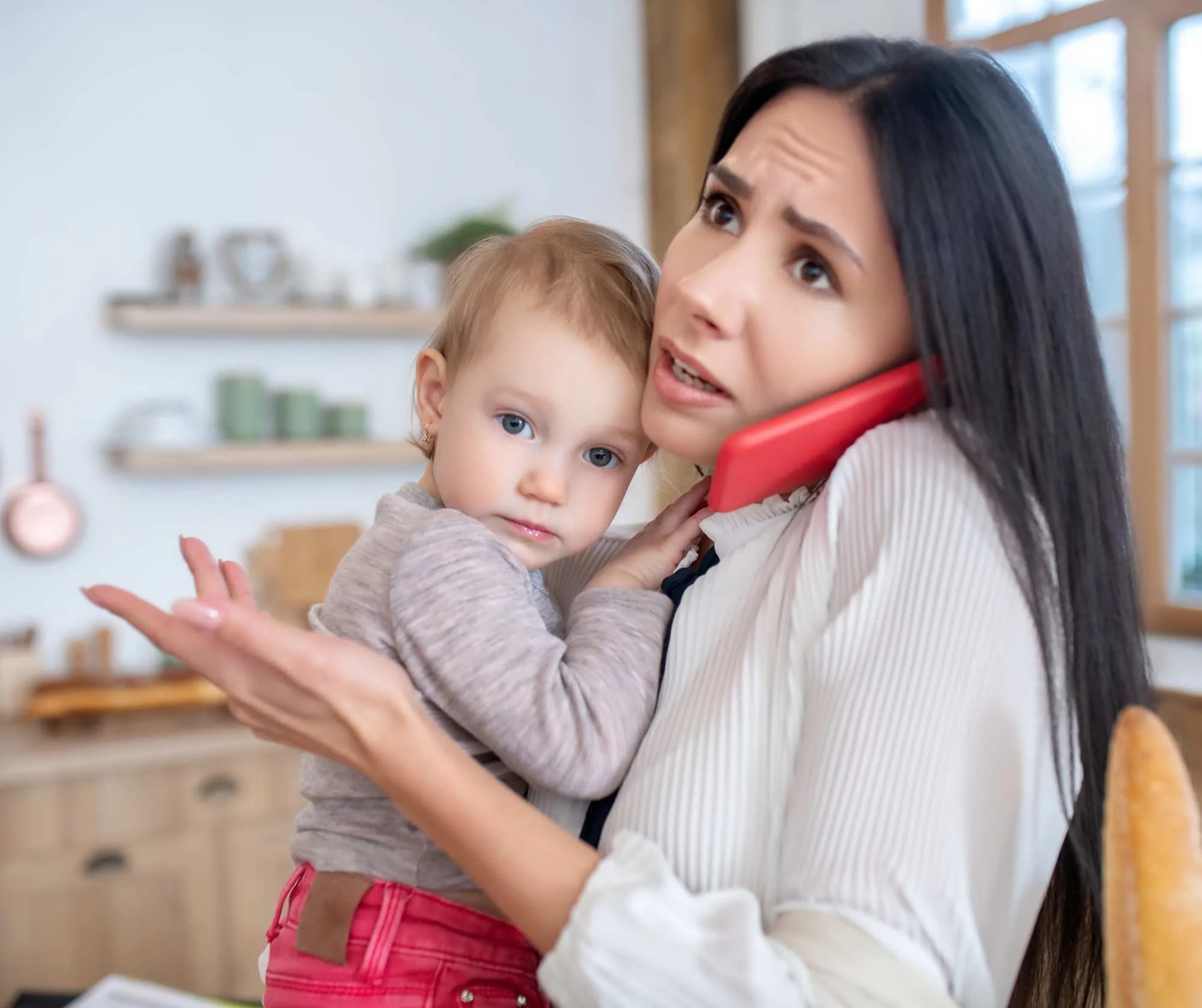
Developmental milestones are ranges, not deadlines. Some signs indicate that it's time to seek an assessment by a speech-language pathologist.
Missed Milestones
Consider an evaluation if your child has not started talking by their first birthday or is not using single words by 15 months.
Not being able to follow instructions by 18 months, not combining two words by age two, or not forming simple sentences by age three are also worth discussing with a pediatrician.
Familiar listeners should understand about 75 percent of what a child says by age three. If familiar people regularly struggle to follow them, that can signal a speech delay.
If a child cannot yet tell a simple story by age four or five, bring it up with a speech-language pathologist.
Difficulty Being Understood
By age four, strangers should understand most of what your child says, a milestone we cover in our guide to 4-year-old speech milestones. If your child is still hard to understand outside the family after age four, or if speech issues persist past age six, a speech-language pathologist can identify the underlying reason, such as a speech disorder or developmental delay.
Concerns About Hearing
Seek help if a child does not recognize their own name by age two, does not turn toward sounds, or seems to hear inconsistently. Hearing loss is one of the most common contributing factors to speech delays and language delays. An audiologist referral is appropriate before or alongside a speech-language evaluation.
Frustration or Avoidance
When a child regularly shows frustration when trying to communicate, or starts avoiding speaking, that is a signal that the gap between what they want to say and what comes out is having a negative impact. Early intervention at this stage can make a meaningful difference.
Speech Regression
A child who was meeting milestones and has started talking less, or has stopped using words they previously used, should be evaluated promptly, as regression can be a sign of an underlying condition.
Supporting Clear Speech at Home

Parents have a direct influence on their child's speech and language development.
Talk and respond. Have conversations with your child throughout the day, during meals, in the car, and during play. Responding to their communication attempts encourages more of them.
Read together. Reading books aloud introduces new words, sentence structures, and sounds. Pointing to pictures and naming body parts and common objects helps kids build vocabulary.
Model clear speech. Speak clearly and at a natural pace. You do not need to slow down dramatically, but speaking clearly gives your child accurate sounds to imitate.
Reduce background noise. When your child is trying to communicate, turn off the TV or move to a quieter space so they can hear you clearly.
Engage in play. Talking during hands-on activities like building blocks, art, and make-believe is one of the most natural ways young children learn language.
A supportive home environment works best when paired with professional support for children with signs of delayed speech.
What We See Working with Clients
Many families reach out when their child's speech is hard for others to follow. The examples below are real clients of ours. Identifying details have been changed to protect privacy.
A mother contacted us about her 3-year-old son because family members were having a hard time understanding him. He talked constantly and happily, but neighbors and grandparents kept asking her to translate.
During his online evaluation, we found a phonological pattern called fronting, where sounds made at the back of the mouth like /k/ and /g/ come out at the front instead. Speech therapy targeting those sounds made his speech easier to follow over a few months of consistent practice, and he began speaking up in situations where he had previously stayed quiet.
A father reached out about his 4-year-old daughter after her preschool teacher mentioned difficulty understanding her. He had assumed she would catch up on her own.
Her evaluation showed two patterns. She was dropping the ends of words and simplifying consonant clusters, so "boat" came out as "bo" and "stop" as "top." Both patterns usually resolve by around ages three to four.
We started with helping her hear the difference, then moved to producing the sounds in words she used every day. She made steady progress with regular sessions, and her preschool teacher noticed the change before her family did.
Frequently Asked Questions About a Child's Speech

1. Should a 2-year-old be talking clearly?
At age two, unclear speech outside the family is perfectly normal. Parents and caregivers follow about 50 to 75 percent of what a 2-year-old says, while strangers understand far less. By age three, familiar listeners should understand most of what a child says.
2. What are the signs of a speech delay in a toddler?
Common signs include delayed babbling, missing gestures, or late first words. Not babbling by 12 to 18 months, not gesturing by their first birthday, a limited vocabulary at 18 months, and not combining phrases by two years are each worth mentioning to a pediatrician.
Boys experience slightly higher rates of early speech delays than girls, so compare your child's progress to general milestones rather than to a sibling.
3. When should I worry if my child is not talking?
A speech-language evaluation is worth pursuing if milestones are missed. Early intervention leads to better outcomes than waiting, particularly for children who started talking later than expected. Most pediatricians encourage parents to raise any concerns, and there is no such thing as asking too early.
4. What is considered a speech or language delay?
A speech delay means development follows the typical pattern but at a slower pace. A speech disorder means the pattern itself is atypical, with the child using sounds incorrectly in ways that are not part of normal development. A speech-language pathologist can distinguish between the two and recommend next steps.
5. When should a child see a speech therapist?
Seek an evaluation if your child does not speak clearly for their age. Other reasons include speech regression and frustration when trying to communicate. A referral can come from your pediatrician, or you can contact a speech therapy practice directly.
How Connected Speech Pathology Can Help

Connected Speech Pathology provides online speech therapy for children with speech delays, articulation or phonological disorders, and childhood apraxia of speech. Each child gets a full evaluation and a plan built around their specific needs.
Children who start speech therapy between ages two and five often make the fastest progress. If you have questions about whether your child needs extra support or would benefit from an evaluation, our team is available to help.
Summary
The short answer to the question, "What age should a child start talking clearly?" is ages three to four for strangers and closer to five for everyday conversation. A few sounds, like /r/ and /th/, take longer, and it is normal for some children to still be working on them at seven.
Several things affect how quickly speech becomes clear, including hearing, how the mouth moves during speech, how much language a child hears, and whether speech delays run in the family. If your child is not meeting these milestones, or you are unsure, a speech-language pathologist can evaluate them and tell you whether anything needs attention. You do not need to wait until a problem is obvious.
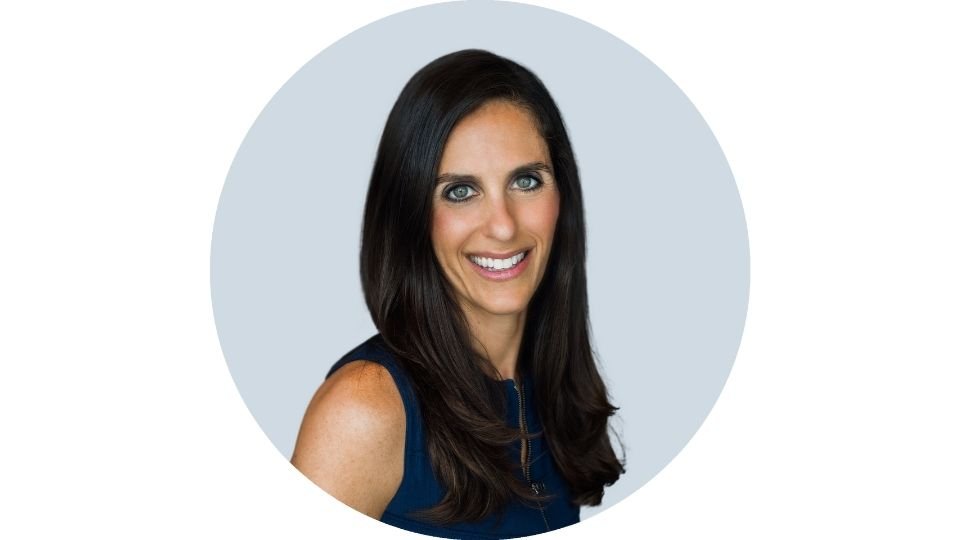
About the Author
Allison Geller, M.A., CCC-SLP, is a communication coach, speech-language pathologist, and founder of Connected Speech Pathology, an international online practice providing professional communication coaching and speech therapy for children, teens, and adults. With more than two decades of experience, she has worked in medical and educational settings and published research on aphasia. Today, she leads a team of specialists who help clients improve their skills in public speaking, vocal presence, accent clarity, articulation, language, fluency, and interpersonal communication.