When Do Babies Start Babbling? A Guide to Baby Babbling and First Words
Most babies begin to babble at four to six months of age, and nearly all babble by six months. Babbling is the stage of speech development when a baby strings consonant and vowel sounds together, like "ba-ba-ba." This article covers the stages of babbling, why it matters for language development, the first signs of a delay, and simple ways to encourage more of it.
If you are a parent or caregiver asking, "When do babies start babbling?", you are in good company. Speech-language pathologists hear that question often from new parents. Knowing what is typical helps you spot a delay early, when support helps most.
Key Takeaways
Babbling typically begins at four to six months of age. It is the early speech stage when babies combine consonants and vowels, like “ba-ba-ba,” and an important step toward first words.
Babbling develops in stages. Cooing comes first, then single syllables, then repeated syllables, then long strings with the rhythm and tone of real conversation.
Responding to the sounds your baby makes builds language. Babies learn fastest when adults respond, imitate, read, sing, and play with them.
Talk with your pediatrician if your baby is not babbling by 7 months. Early evaluation can identify hearing or speech-language issues, and early intervention often makes a meaningful difference for babies who need it.
The Stages of Babbling: From Cooing to First Words
Why Babbling Matters for Language Development
What If Your Baby Isn't Babbling? First Signs of a Delay
How to Encourage Babbling and Language Learning
What We See Working with Clients
What Is Baby Babbling?
Baby babbling is the early stage of language development when an infant combines consonants and vowels into syllables. Sounds like “ba,” “ma,” and “da” are how babies practice the mouth movements of speech before the sounds carry meaning. When your baby babbles, they hear their own voice and feel how their lips, tongue, and breath work together.
Babies typically start babbling at four to six months of age, and most babies will babble by six months. Some babies babble earlier or later than others and still develop normal language skills.
By nine months, babies should use defined consonant sounds in strings copied from the speech they hear, like “ba-da-ga.” Communication itself begins at birth, when crying is a newborn’s main signal, before smiling, squealing, and laughing join in. Crying, cooing, and babbling arrive in that order, each one a practice for learning to speak.
The Stages of Babbling: From Cooing to First Words

Babbling evolves from cooing, and over time it includes more varied consonant-vowel combinations. The stages overlap, and babies typically move through them in their own time. The table shows what each stage sounds like and when it appears:
| Stage | Typical age | What it sounds like |
|---|---|---|
| Cooing | Two to three months | Soft vowel sounds like “ooo” and “aah,” often with smiling and laughing |
| Marginal babbling | Four to six months | Single consonant-vowel syllables like “ba,” “ma,” and “goo” |
| Reduplicated (canonical) | Six to 10 months | One syllable on repeat, like “ba-ba-ba” or “ma-ma-ma” |
| Variegated (canonical) | Six to 10 months | Mixed syllables like “ba-da-ma” and “ga-ba-dee” |
| Conversational babbling | Around 10 months | Long strings with the rhythm and tone of real sentences |
| Connected Speech Pathology | connectedspeechpathology.com | ||
Cooing (2 to 3 Months)
Cooing typically appears around two to three months of age. Coos are open vowel sounds, like “ooo” and “aah,” and the first steady use of the voice. Babies pair them with smiles and laughing during play, since from birth until those first coos, crying and fussing do most of the communicating.
Marginal Babbling (4 to 6 Months)
Marginal babbling usually occurs at four to six months. Babies join single consonant-vowel syllables, like “baa” and “maaa,” and mix in squeals, growls, and other noises as they try out different sounds. Your baby babbles partly to get your attention, and in a quiet moment a well-timed “ba,” for example, usually earns a smile.
Canonical Babbling (6 to 10 Months)
Canonical babbling happens at 6 to 10 months, and it comes in two forms. Reduplicated babbling sounds like one syllable on repeat, “ba-ba-ba” or “ma-ma-ma.” Variegated babbling mixes different syllables, like “ba-da-ma,” and that new variety shows how many sounds babies this age can produce.
Conversational Babbling (Around 10 Months)
Conversational babbling begins around 10 months. Your baby babbles in long strings that mimic the rhythms and patterns of adult conversation, with pauses, shifts in tone, and no meaning yet. It often sounds like your baby is telling you a story, and the last of the babbling stages overlaps with the first real words.
First Words (Around 12 Months)
By 12 months, many children begin saying their first meaningful words, and a word counts once your child uses it with meaning on purpose. “Mama” and “dada” top the list because their repeated syllables are easy for a young mouth to repeat. Other early favorites include “hi,” “bye,” “no,” “ball,” and “dog,” and a baby who lives with a dog usually proves the point early.
Around 12 months, babies should also imitate words and gestures, wave, and point at what they want.
For the milestones that come next, see how many words an 18-month-old typically says and what age children start talking clearly.
Why Babbling Matters for Language Development
Babbling is a vital stage for practicing speech movements and social interaction. Every babble strengthens the connection between the sounds babies hear and the movements their mouths make, a connection that starts forming at birth.
The babbling stage also helps infants learn to connect sounds with the responses of caregivers. You respond to a babble, your baby answers back in their own voice, and the two of you are holding a real conversation without words. Researchers call that pattern serve and return, and it is one of the strongest drivers of early language development.
Those early exchanges support receptive and expressive language, the understanding side and the speaking side of communication development. For example, research on infant vocal growth links late canonical babbling with later speech and language difficulties.
Our guide to speech and language development shows how these early skills build on each other.
What If Your Baby Isn't Babbling? First Signs of a Delay

If your baby is not babbling by 7 months, talk with your pediatrician. If your child is already a toddler, our guide to a 2-year-old who is not talking but understands you covers what comes next.
Bring up any of these signs at your baby's next checkup:
No babbling by 7 months, or babbling that started and then stopped.
Few or no defined consonant sounds by 9 months.
No gestures by 12 months. Signs of speech delay include not using gestures like pointing and waving.
No meaningful words by 15 months.
Your baby rarely turns toward voices, their name, or other sounds in the room.
Causes range from hearing loss, often after repeated ear infections, to developmental conditions, prematurity, and sometimes no clear cause. Our guide to the most common cause of speech delay walks through them. A hearing test comes first, because babies who cannot hear speech sounds clearly struggle to copy them.
Your pediatrician screens your child's overall development and can refer you for that test, and a speech-language evaluation then looks at how your baby communicates. Early evaluation can identify hearing or speech-language issues when support changes the most.
Speech therapy for late talkers does not look or feel like a structured lesson. During sessions, the speech-language pathologist plays with your child, models words for the toys and games they already like, and waits for your child to try those words. Then they show you how to do the same thing at home during meals, baths, and getting dressed, and much of the progress comes from that daily practice between sessions.
Toddlers respond well when speech therapy begins early in life.
How to Encourage Babbling and Language Learning
You can invite more babbling during ordinary care, with no special toys required. The ideas below are suggestions, and a pediatrician or speech-language pathologist can help you pick what fits your little one, since babies respond differently.
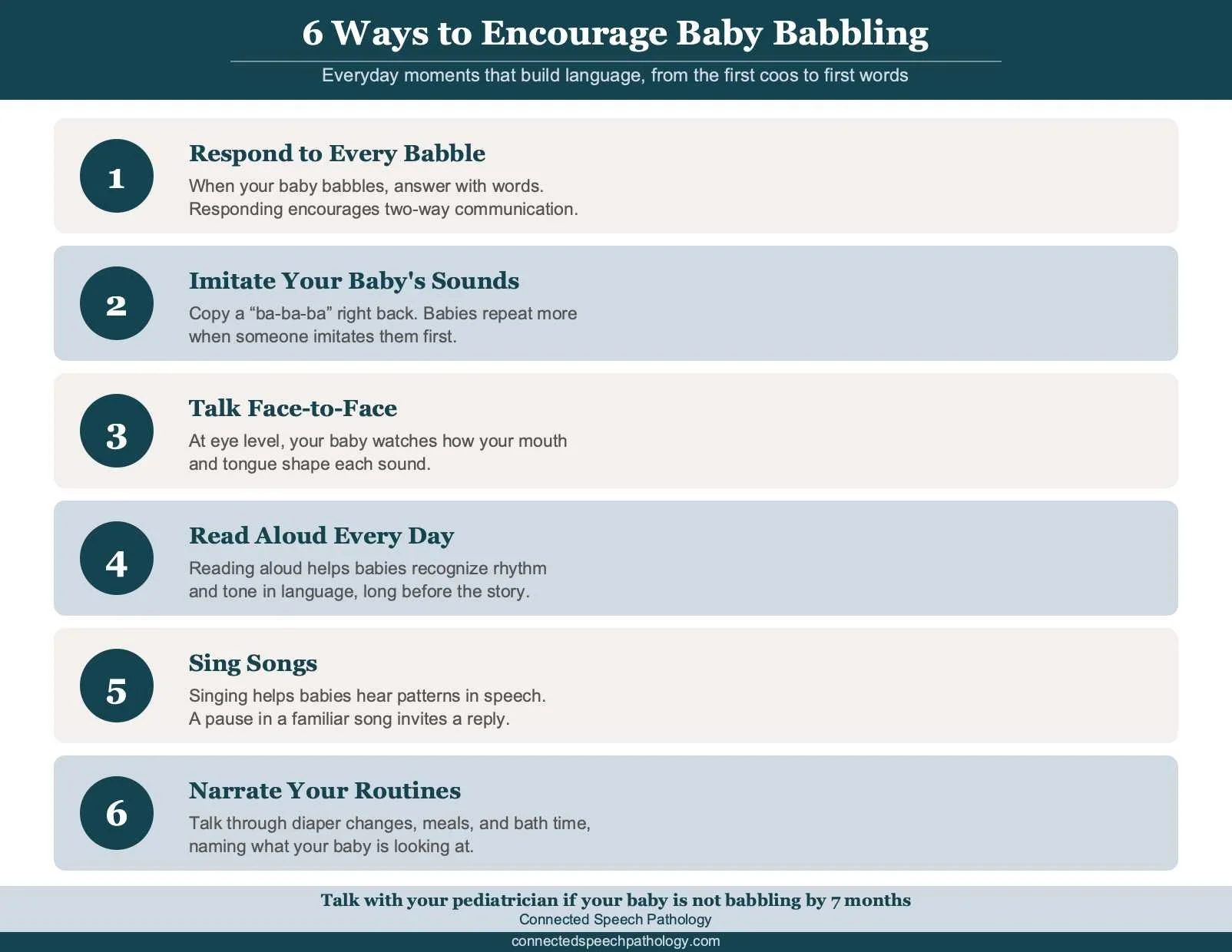
Respond to every babble. When your baby babbles, answer with words, because responding to the sounds your baby makes encourages two-way communication.
Imitate your baby's sounds. Copying a “ba-ba-ba” right back invites another turn, and babies repeat more when someone imitates them first. That gentle repetition is how new babbling sounds settle in.
Talk face-to-face. Time at eye level boosts language learning, because your baby watches how your mouth and tongue shape each sound, and keeps eye contact while you speak.
Read aloud every day. Reading aloud helps babies recognize rhythm and tone in language, and hearing your voice matters long before the story does.
Sing songs. Singing songs helps babies hear patterns in speech, and a pause in a familiar song invites your baby to fill the gap.
Narrate your routines. Talk through diaper changes, meals, and bath time, naming what your baby is looking at, which helps your baby link words with things. Peekaboo games end in laughing and happy noises, and that shared moment teaches language too.
Short, playful exchanges spread across the day work better than one long session, because babies learn to speak from the people who talk with them most. A chatty diaper change, for example, counts as much as floor time.
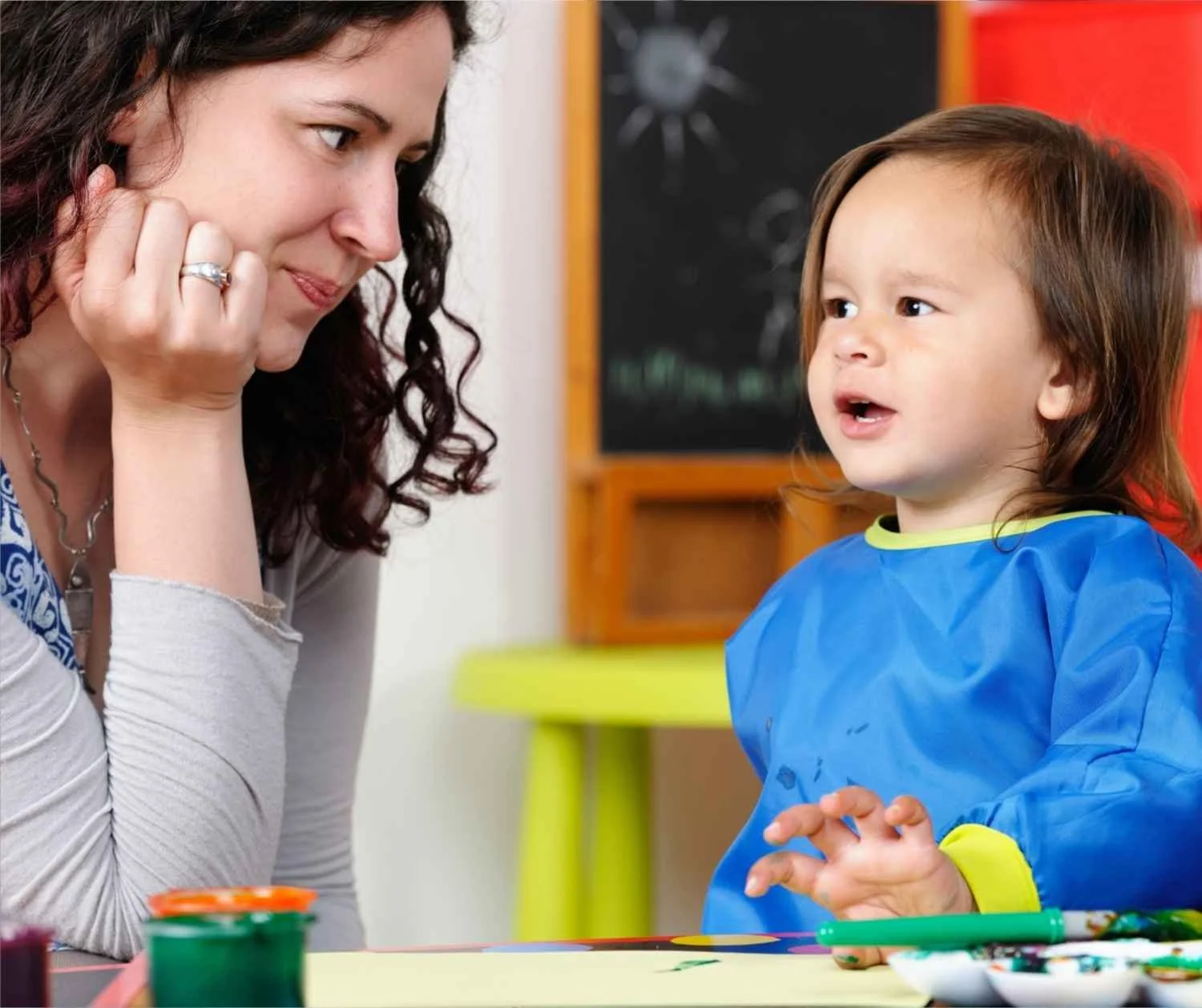
Reliable Approach to Teach Your Toddler to Talk
Learn how to teach your toddler to talk in this blog.
What We See Working with Clients
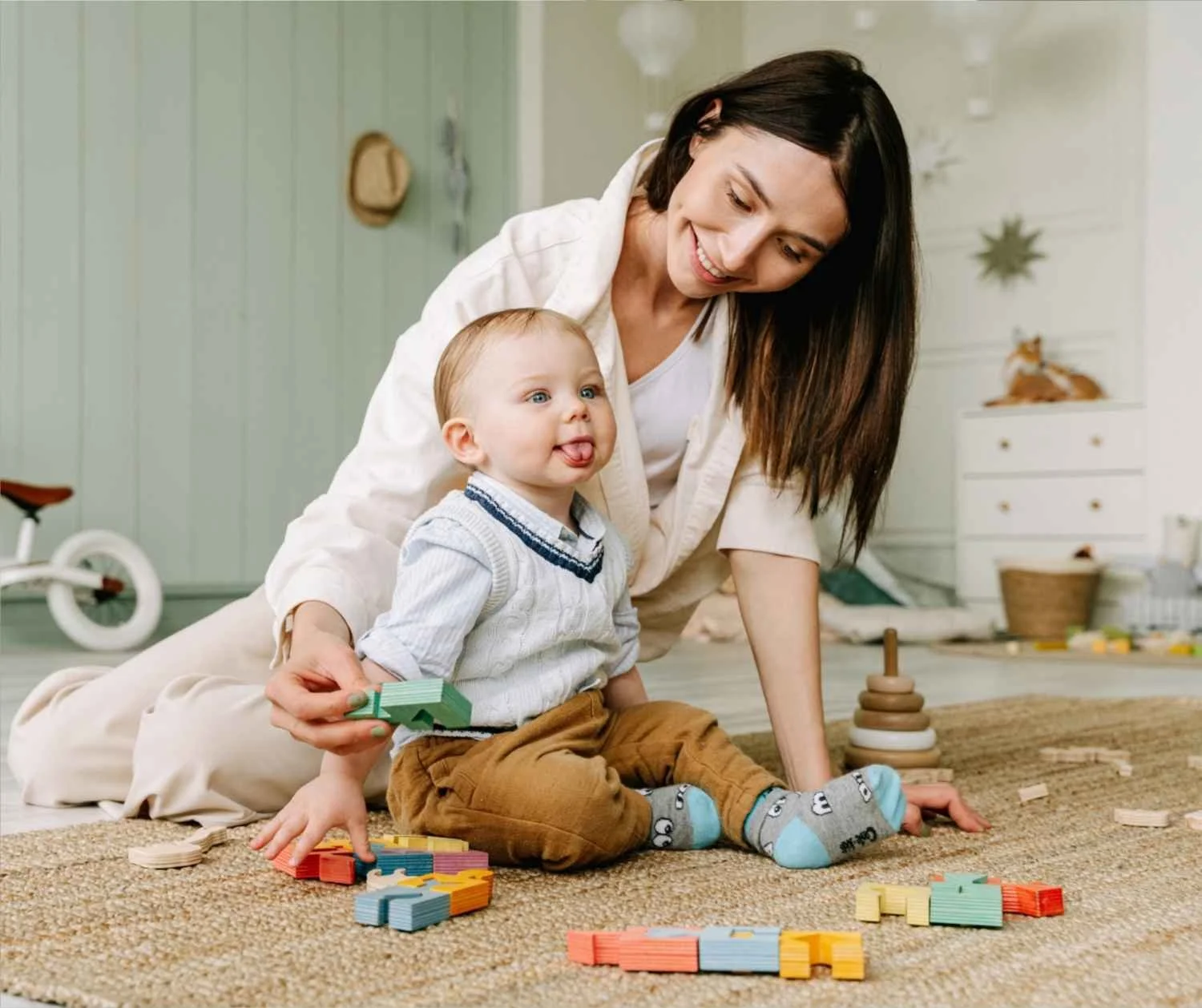
In our practice, parents of quiet babies usually arrive with the same worry. They feel that their child should be saying more by now. The examples below are real clients of ours. Identifying details have been changed to protect privacy.
One family came to us when their daughter was 17 months old and using only two words. She had babbled late and little, and at daycare pickup she pointed and grunted while other toddlers named what they wanted.
Her sessions used a parent-coaching model. We taught her parents to respond to every vocalization, wait out a pause so she had a turn to fill, imitate her sounds during play, and narrate the routines of daily life.
Within a few months, she was taking more vocal turns and trying new words during play, with the fastest progress in the routines her parents practiced daily.
Another family brought in their 20-month-old son after a winter of repeated ear infections. He used few consonant sounds, rarely turned when his name was called, and melted down at mealtimes when no one understood him.
A hearing test completed by the audiologist found lingering fluid in both ears. Once it was treated, sessions focused on sound-imitation games at eye level, gesture-plus-word pairing, and songs with a pause left open for him to fill.
His consonant sounds multiplied over the following months, and he began using his voice to fill those song pauses on his own. Mealtimes are calmer now, his parents tell us.
Frequently Asked Questions About Baby Babbling
1. What is the difference between cooing and babbling?
Cooing uses vowel sounds only, and babbling adds consonants. Coos appear around two to three months, while babbling typically begins at four to six months of age. Both are normal, healthy practices as babies learn to speak.
2. When do babies say “mama” and “dada”?
Many babies say “mama” or “dada” at 9 to 12 months. Your baby babbles those repeated syllables, like “ma-ma-ma,” long before either word carries meaning.
3. Do deaf babies babble?
Yes, deaf and hard-of-hearing babies babble, though the pattern often changes. Vocal babbling can begin on schedule and then fade when babies cannot hear the sounds they make, and babies exposed to sign language babble with their hands. A hearing test is the first step whenever babbling slows or stops.
4. Does late babbling always mean something is wrong?
No, late babbling is common, and many babies who babble late develop typical language. If your baby babbles less than expected, treat it as a first sign worth watching rather than a diagnosis. Mention it to your pediatrician if your child is quiet at 7 months.
5. Will a babbling delay resolve on its own, or does my baby need an evaluation?
Some babies catch up on their own, but no one can know in advance. An early evaluation can identify hearing or speech-language issues and gives you a plan either way. Your pediatrician can arrange a hearing test and a full evaluation.
How Connected Speech Pathology Can Help

At Connected Speech Pathology, we support families of babies and toddlers through early intervention. Our online program serves children starting at about 18 months, and a speech-language pathologist coaches you, the parent, through play-based activities built around your routines.
Because sessions happen inside your real routines, the strategies get practiced where your baby communicates most, in the high chair and at bath time. Our pediatric speech therapy team coaches you between sessions too, so practice continues all week.
If you are unsure whether your child's communication is on track, we can help you find the next step.
Summary
The answer to “When do babies start babbling?” is usually four to six months of age. Nearly all babies babble by six months, and each stage, from cooing to conversational babbling, is practice for the words that arrive around a baby's first birthday.
Respond to the sounds your baby makes, imitate them, read, sing, and talk your way through the day. Babies learn from every one of those small exchanges. That back-and-forth is how communication development happens.
If your baby is not babbling by 7 months, start with your pediatrician and a hearing test. A speech-language pathologist can then evaluate how your child communicates, and early intervention often makes a meaningful difference for late talkers.

About the Author
Allison Geller, M.A., CCC-SLP, is a communication coach, speech-language pathologist, and founder of Connected Speech Pathology, an international online practice providing professional communication coaching and speech therapy for children, teens, and adults. With more than two decades of experience, she has worked in medical and educational settings and published research on aphasia. Today, she leads a team of specialists who help clients improve their skills in public speaking, vocal presence, accent clarity, articulation, language, fluency, and interpersonal communication.