What if Your 2-Year-Old is Not Talking But Understands You?
If your 2-year-old understands what you say but isn't talking much yet, an expressive language delay could be the reason. Children with this type of delay understand more than they can say. Other causes are possible too.
Many parents worry when their toddler is not talking as expected. Research by Black et al. found that nearly 1 in 12 U.S. children ages 3 to 17 has a speech or language disorder, underscoring how common these concerns are.
Knowing the common reasons for delayed talking, how to tell the difference between a late talker and something more, and when to seek an evaluation can help you decide what to do next.
If you are a parent of a toddler who follows directions, points to what they want, but says only a few words, this is for you. Many late talkers catch up over time, and recognizing the signs early helps you decide when to seek an evaluation.
Key Takeaways
When a 2-year-old understands what you say but is not talking much, an expressive language delay is one possible reason. In children with an expressive language delay, understanding language is stronger than speaking it.
By age 2, most toddlers use at least 50 words and begin putting two words together. If your child says only a few words, it is a good idea to talk with a speech-language pathologist.
How your child communicates without words matters, too. Behaviors such as pointing, sharing, making eye contact, and bringing you things to show you give valuable clues about how they interact and communicate with others.
There are several reasons for a communication delay. Common reasons include expressive language delay, hearing loss, autism, and motor speech disorders. The right support depends on the cause.
Early intervention can help improve speech and language skills. You do not have to wait until your child "catches up" before seeking an evaluation.
Why Your 2-Year-Old Seems to Understand Everything but Is Not Talking
Is Your Child a Late Talker, or Is It Something More?
Speech Delay vs. Autism Spectrum Disorder: How to Tell the Difference
When to Get a Speech and Language Evaluation
How to Help Your Late Talker at Home
What We See Working With Clients
Frequently Asked Questions About a 2-Year-Old's Speech
How Connected Speech Pathology Can Help Your Toddler Communicate
Why Your 2-Year-Old Seems to Understand Everything but Is Not Talking

Some 2-year-olds understand almost everything that is said to them but say only a few words. Speech-language pathologists call what a child understands receptive language and what they say expressive language. When receptive language is much stronger than expressive language, an expressive language delay is one possible explanation.
For example, your toddler may come to the kitchen when you say it is time to eat, bring you their shoes when you ask, or follow simple directions around the house. At the same time, they may use only a handful of words or have trouble putting words together.
Strong receptive language skills are an encouraging sign because they show your child understands that words have meaning. You can get a general sense of your child's receptive language by giving a simple two-step direction, such as, "Get your cup and give it to me," and seeing whether they follow both steps. A speech-language pathologist can evaluate both receptive and expressive language to determine whether your child's communication skills are developing as expected.
Is Your Child a Late Talker, or Is It Something More?
A late talker is a child who is slower than expected to start talking but is otherwise developing as expected. Many late talkers understand language well, use gestures to communicate, and enjoy interacting with other people. As they grow, you can compare their progress with the speech milestones at age 4. Many catch up over time as their language skills continue to grow.
By 18 months, toddlers usually use words with purpose, and by age 2, most have a spoken vocabulary of at least 50 words and start combining them into short phrases. Around age 3, many children say between 200 and 1,000 words and can be understood by strangers about 75 percent of the time. These milestones are typical ranges, not strict rules, since every child develops at their own pace.
Look for signs that your child may need extra support if they say very few words, rarely imitate sounds or words, or are not combining two words by about two and a half years of age. The earliest signals often come before age 1, and our guide to when babies start babbling covers those infant milestones. Although some children catch up on their own, others benefit from early support.
Several different factors can cause a 2-year-old to understand what you say but not talk much. Some are temporary, while others benefit from early support. Common causes include:
Expressive language delay, when a child understands more than they can say.
Hearing loss, including temporary hearing loss caused by frequent ear infections, which can make it harder for children to hear and learn spoken language.
Speech sound difficulties occur when a toddler struggles with the motor coordination required to produce speech sounds clearly.
Autism spectrum disorder, when social communication is affected alongside speech.
Limited exposure, including fewer opportunities for back-and-forth conversation. Too much screen time can reduce these opportunities and may slow language development by replacing real interactions with caregivers.
Less often, selective mutism.
Cognitive delay or other developmental conditions.
Limited vocabulary and a lack of imitation can be early warning signs of an issue with early language development that should be addressed.
Speech Delay vs. Autism Spectrum Disorder: How to Tell the Difference
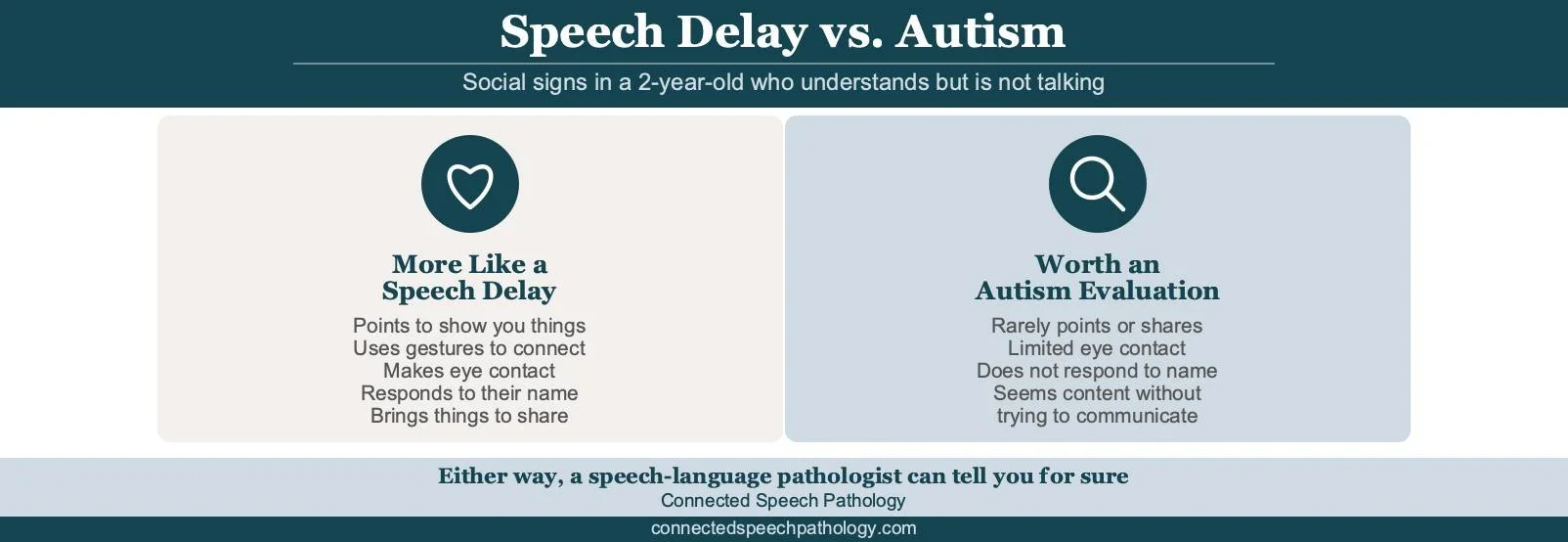
Speech delay and autism can overlap, especially in toddlers. No single behavior can confirm or rule out autism, so it is important to look at a child's communication, social interaction, play, and overall development.
Some communication behaviors are a reason to talk with your pediatrician about an autism evaluation. These include limited eye contact, inconsistent responses to their name, infrequent pointing to share interest, few gestures, little interest in interacting with others, and repetitive behaviors and restricted interests. These signs do not necessarily mean a child is autistic, but they are worth discussing with your child's healthcare provider.
Many children with delayed speech do not have autism. They may point, use gestures, enjoy interacting with others, and try to communicate even if they are not using many words yet.
A comprehensive evaluation can help identify the reason for your child's communication delay. Our guide on speech delay versus autism explains the differences in more depth.
When to Get a Speech and Language Evaluation
Consider a speech and language evaluation if your 2-year-old uses few or no words. It also helps to act if a child does not put two words together by two and a half years, or does not respond to their name. Research shows children start talking sooner when they receive early intervention services.
During a speech evaluation, a speech therapist observes how your child communicates, plays, understands language, and uses words. They may also use standardized assessments to measure both receptive and expressive language skills.
How to Help Your Late Talker at Home

A child who understands language well already has an important foundation for developing spoken words. You can encourage your child to talk by building language into everyday routines. Bath time, getting dressed, grocery shopping, playing at the park, mealtime, and bedtime all create natural opportunities to hear and practice new words.
The goal is not to quiz your child but to make talking part of what you are already doing together.
Model simple words and short phrases. Instead of asking lots of questions, describe what your child sees and does. For example, "Wash hands," "Big splash," "Red apple," or "Up the slide."
Follow your child's lead. Talk about what has their attention instead of changing the subject. If they are playing with cars, you might say, "Car goes fast," "Blue car," or "Crash!"
Use gestures with words. Point, wave, nod, and reach while you talk. Pairing words with gestures helps children connect language with meaning.
Read together every day. Choose books with simple pictures and repeated phrases. Pause before a familiar word to give your child a chance to fill it in if they are ready.
Take turns during play. Roll a ball back and forth, build with blocks, or make animal sounds together. Taking turns teaches the back-and-forth rhythm of conversation.
Talk during everyday activities. At the grocery store, name foods and colors. During bath time, talk about pouring, splashing, washing, and drying. At the park, describe actions like climbing, swinging, running, and sliding.
Limit screen time. Children learn language best through real words, conversations, and shared activities with other people.
Small moments throughout the day add up. Short, playful conversations during everyday routines give your child many chances to hear and practice language.
Speech Therapy for Late Talkers
Learn more about speech therapy for late talkers in this blog.
What We See Working With Clients
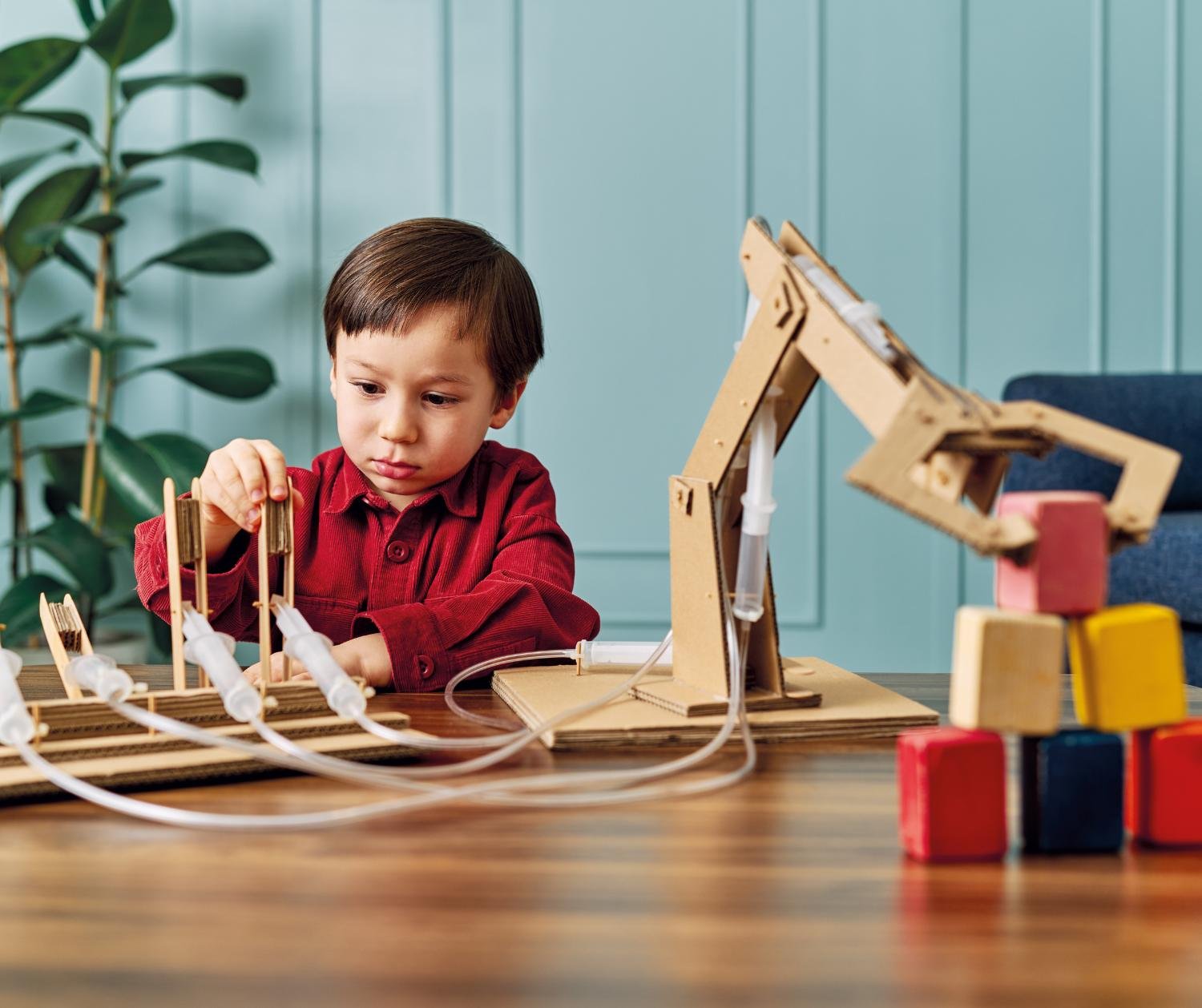
Many toddlers who understand language well but use very few words benefit from parent coaching and early speech therapy. The following examples are based on real clients we have worked with. Identifying details have been changed to protect each family's privacy.
One family came to us because their 2-year-old followed directions, pointed to what they wanted, and appeared to have a strong understanding of everyday conversations but had not yet said their first word. Both the child and the parents were experiencing frustration. During virtual sessions, we showed the parents how to model short phrases during meals, bath time, and play, rather than asking repeated questions.
We also practiced simple ways to create opportunities for their child to imitate sounds and words throughout the day. Between sessions, the parents used these same strategies during everyday routines, giving their child many chances to practice communication in real-life situations.
Another family was concerned because their toddler communicated with gestures but rarely imitated words. Together, we built language into everyday routines like getting dressed, reading books, going to the grocery store, and visiting the park. By coaching the parents in real time and adjusting strategies from week to week, we helped them turn ordinary moments into opportunities for language learning.
Frequently Asked Questions About a 2-Year-Old's Speech

1. Why is my 2-year-old not talking but understands everything?
Understanding well but using few words usually points to a delay in spoken language. A speech therapist can confirm if it is an expressive language delay and suggest next steps.
2. When do late talkers start talking, and can early intervention help?
Many late talkers make steady progress during the toddler years, but every child develops at a different pace. Some children catch up on their own, but it is difficult to predict who will. That is why experts recommend addressing speech and language concerns early instead of waiting to see what happens.
3. Can a 2-year-old have an expressive language delay without autism?
Yes. Many children have an expressive language delay without autism. Although speech delay and autism can occur together, many children who are slow to start talking do not have autism.
4. Should my 2-year-old get a hearing test?
Yes, a hearing test is a smart first step. Even mild hearing loss can delay speech development, so it is worth ruling out early.
5. Is my 2-year-old too young for online speech therapy?
No, toddlers are not too young. Many toddlers can participate successfully in online speech therapy and do even better with active parent involvement. Starting early often helps the most.
How Connected Speech Pathology Can Help Your Toddler Communicate

Online speech therapy can help toddlers build expressive language while coaching parents to support communication during everyday routines. Connected Speech Pathology provides online speech therapy for toddlers and coaching for their parents. Our speech-language pathologists evaluate how your child understands and uses language, then build a plan around play, modeling, and your daily routines.
Because sessions happen online, your child learns in a familiar setting, and you take part so strategies continue between visits. We tailor each plan to your child's strengths and your family's goals.
Summary
When your 2-year-old is not talking but understands you, an expressive language delay is one possible explanation. Strong receptive language skills are encouraging, but a gap between understanding and speaking is still worth evaluating if your child uses very few words.
Many children make steady progress with time and the right support. If you have concerns about your child's speech and language development, an early evaluation can help identify the cause and determine whether speech therapy would be beneficial.
About the Author
Allison Geller, M.A., CCC-SLP, is a communication coach, speech-language pathologist, and founder of Connected Speech Pathology, an international online practice providing professional communication coaching and speech therapy for children, teens, and adults. With more than two decades of experience, she has worked in medical and educational settings and published research on aphasia. Today, she leads a team of specialists who help clients improve their skills in public speaking, vocal presence, accent clarity, articulation, language, fluency, and interpersonal communication.