How to Improve Your Body Language in Public Speaking

Body language in public speaking is everything you say without words, including your posture, gestures, eye contact, and facial expressions while you talk. When your body matches your message, an audience finds you easier to trust and follow. If it doesn't, people sense the mismatch even if they can't name it.
If speaking in front of a group leaves you stiff, fidgety, or unsure what to do with your hands, that's normal, and it's something you can practice.
This article covers what these nonverbal cues do, the elements worth working on, the mistakes that pull attention away, and how to steady your nerves. You'll get the most benefit from this if you speak at work, present to a team, or want to feel more at ease in front of a group.
Key Takeaways
Body language in public speaking: Your posture, eye contact, gestures, and facial expressions shape your credibility and how confident you seem, often before you finish your first sentence.
The elements to practice: Steady eye contact, a tall, relaxed posture, purposeful hand gestures, and facial expressions that match your words do the most to make you look at ease.
Common mistakes: Fidgeting, closed posture, a blank face, and aimless pacing pull attention away from what you are saying.
Nerves are physical: When you are anxious, your breathing becomes shallow and your body tenses, so calming the body first steadies the rest.
The Key Elements of Effective Body Language
Common Body Language Mistakes to Avoid
How to Improve Your Body Language
How a Communication Coach Helps You Improve Body Language
What We See Working with Clients
What Is Body Language?

Your body language while you present is the set of nonverbal cues you send. When nerves are what tightens your posture and stiffens your hands, our guide to managing stage fright during a presentation covers what to do about the nerves themselves. These signals, everything in how you stand, move, gesture, and use your eyes and face while you're talking, run alongside your words and shape the first impression you make.
You may have heard that most communication is nonverbal, often quoted as 93 percent. That figure comes from Albert Mehrabian's 1970s research, but he studied how people read feelings and attitudes, not speeches.
When your body contradicts your words, people believe your body. The goal is to keep your nonverbal cues backing up your message, not fighting it.
The Key Elements of Effective Body Language
Effective body language comes down to a handful of elements you can practice one at a time. Together, they enhance your stage presence. Working on the few below tends to make the biggest difference.
Eye Contact
Eye contact is how you create a connection with an audience. Instead of scanning faces quickly or staring over people's heads, make eye contact with one person for a full thought, then move to someone else.
You don't have to maintain eye contact with everyone at once. In a large room, pick a few friendly faces in different areas and rotate between them so audience members in every section feel spoken to.
Eye contact isn't the same for everyone. Many autistic and ADHD speakers find it draining to hold a gaze, and glancing toward faces at natural pauses still reads as connected.
Posture
Posture sets the tone before you say a word. Stand tall with your feet shoulder-width apart, weight even, shoulders relaxed rather than pulled up or hunched. An open, settled stance conveys confidence and lets you breathe more freely, which steadies your voice.
Gestures
Gestures work best when they match what you're saying. Open-hand and arm gestures, with palms visible, and movements that fit the size of your point look natural and honest.
Speaker and trainer David JP Phillips, whose TED talk on body language is widely watched, sorts hand gestures into a few kinds, from showing size or shape to emphatic gestures that emphasize key points. The habit to avoid is having hands clasped tightly, buried in pockets, or fluttering without a link to your words.
Facial Expressions
Your facial expressions should reflect the emotions in what you're saying. A warm, animated face invites people in, while a flat or tense one makes even good content feel distant.
You don't need to perform. Letting your expression follow your own story and smiling where it fits is usually enough to convey what you mean.
Movement
Purposeful movement keeps an audience engaged. Plant your feet at a key moment, then walk a few steps as you move between your key ideas so people follow your structure. Avoid aimless movement, rocking, swaying, or pacing, which pulls focus from your message.
Common Body Language Mistakes to Avoid

A few habits distract an audience no matter how strong your content is. Most are nervous habits, and all are fixable once you're aware of them.
Closed or slouched posture reads as guarded or unsure, especially with crossed arms or hands jammed in pockets.
Little or no eye contact, like reading from slides the whole time, breaks the connection with the room.
Fidgeting with a pen, your keys, or your face pulls attention away from an important point.
A blank or tense face makes it hard for people to feel what you mean.
Nervous pacing, or constant back-and-forth movement, signals anxiety rather than confidence.
How to Improve Your Body Language

Improving your body language is a skill you build by practicing a few habits until they feel natural. There's no rule to memorize for every second on stage.
The most useful tool is the simplest. Record part of a talk, then watch it back with the sound off. Without the words to focus on, your posture, hands, and pacing stand out.
From there, a communication coach can shape the practice around your goals. Not every habit matters equally for every speaker, so a coach helps you spend your effort where it counts, whether that's steadying restless hands or matching your gestures to your words.
One habit ties the rest together, and that's your breath. Standing tall with an open posture lets your diaphragm move freely, which powers a voice that carries and a pace that doesn't rush.
A lot of body language trouble on stage is nerves, or public speaking jitters, showing up in the body. When you're anxious, your breathing turns shallow, your shoulders tense, and your hands look for something to do.
A few slow breaths with a long exhale settle the muscles your voice depends on and loosen your shoulders. There's some truth in the power pose idea, since standing tall and open before you start speaking can help you feel steadier, even if it won't do more than that.
None of this erases nerves, and it doesn't need to. The aim is to keep them from taking over how you look and sound.
How a Communication Coach Helps You Improve Body Language
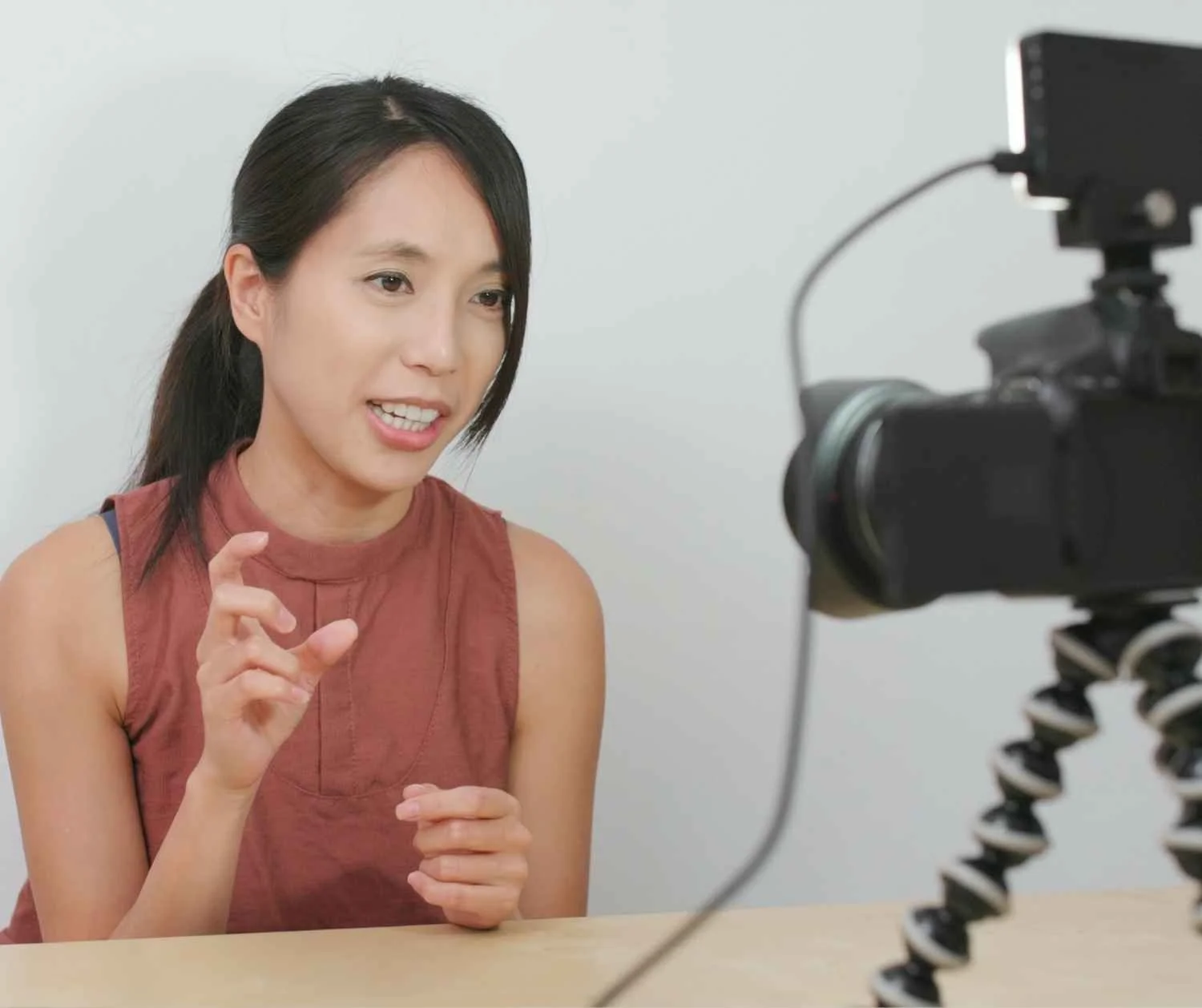
Body language is hard to judge from the inside, which is why an outside eye helps. A communication coach sees how you come across and the lasting impression you leave, points out the habits you can't see, and gives you specific things to practice.
At Connected Speech Pathology, the coaches are trained in speech-language pathology. That training means they understand how posture, breath, and voice work together. The feedback covers not just what your body is doing, but how it shapes the way you sound.
Sessions are online, so you practice over video, the setting where many talks happen now.

How a Business Communication Coach Boosts Your Career
A closer look at how a business communication coach builds the presence and delivery skills for meetings and presentations.
What We See Working with Clients

We coach professionals who present at work, from team leads to executives, on how they come across. The examples below are based on real clients we have worked with. Identifying details have been changed to protect privacy.
One client, a project manager, came to us because people talked over him in meetings. On video, his shoulders were hunched, and his eyes stayed on his notes, so he read as unsure even when his ideas were strong. We worked on an open, settled stance, resting his gaze on one person at a time, and a slow breath before he started.
Over a few months, colleagues interrupted him less and asked sharper questions about his points.
Another client, a sales director, paced and gestured over every word when presenting. We slowed things down, planting her feet for key points and saving gestures for the ideas that mattered most. She said her presentations felt calmer to give, and her team found them easier to follow.
Frequently Asked Questions About Body Language

1. What is the body language rule?
The rule people mean is that your body language should match your words. When they don't line up, audiences tend to believe your body over your words. So the aim is to keep your posture, face, and gestures in line with your message.
2. How do I stop fidgeting or having nervous hands when I speak?
Give your hands a job. Rest them at your sides or lightly at your waist as a home base, and gesture from there when a point calls for it. Fidgeting usually comes from nerves, so a few slow breaths beforehand help too.
3. How do I show confident body language?
Stand tall, keep your shoulders relaxed, and make steady eye contact. Feet about shoulder width apart, open hands, and a face that matches your words do the rest. It reads less as a pose than as looking settled and unhurried.
4. Does body language mean the same thing in every culture?
No. Eye contact, personal space, and gestures can carry different meanings across cultures, so a cue that seems friendly in one place can seem rude in another. With an international audience, keep gestures simple and open, and watch how people respond.
5. Does body language still matter on video calls?
Yes. In virtual settings, look into the camera rather than at the screen so it reads as eye contact, and keep your hands high enough to gesture in the frame. A tall, open posture and an expressive face carry just as much as they do in a room.
How Connected Speech Pathology Can Help

At Connected Speech Pathology, our communication coaching helps adults present with more confidence and clarity, including body language. Our coaches have a background in speech-language pathology, so they connect the visible habits to how you breathe and sound. Posture, gestures, and eye contact all shape how you are perceived, and together they improve the overall delivery.
Summary
Body language in public speaking is how your posture, eye contact, gestures, and expressions carry your message alongside your words. A few habits do most of the work, including standing tall and relaxed, holding steady eye contact, gesturing with purpose, and letting your face match what you say. Most slips come from nerves, so calming your breath before you speak steadies the rest.
With practice, and often with a coach's outside eye, confident body language becomes something you build rather than something you're born with.

About the Author
Allison Geller, M.A., CCC-SLP, is a communication coach, speech-language pathologist, and founder of Connected Speech Pathology, an international online practice providing professional communication coaching and speech therapy for children, teens, and adults. With more than two decades of experience, she has worked in medical and educational settings and published research on aphasia. Today, she leads a team of specialists who help clients improve their skills in public speaking, vocal presence, accent clarity, articulation, language, fluency, and interpersonal communication.