How Much Does Speech Therapy Cost?

How much does speech therapy cost? If you are looking into speech therapy for yourself, your child, or another family member, this question is usually the first one to come up.
In 2026, private speech therapy in the United States typically costs $100 to $250 per hour-long session with a licensed speech-language pathologist. Shorter 30-minute sessions range from $65 to $175.
The final price depends on who provides the service, where you live, whether you use insurance, and how often you attend sessions. The sections below walk through what shapes that price, the different ways to pay, and how to make speech therapy fit your budget without sacrificing quality.
Key Takeaways
Private speech therapy sessions in the U.S. typically cost $100 to $250 per hour. Thirty-minute sessions often range from $65 to $175, and initial evaluations typically cost $150 to $400.
Cost is influenced by several factors. Location, provider credentials, session length, frequency, and level of specialization can affect what you pay.
Insurance coverage varies widely. Medicare, Medicaid, and private health insurance may cover speech therapy when it is considered medically necessary, though plan limits, copays, and deductibles apply.
Online and in-person speech therapy are often priced similarly, depending on the provider. Research supports online speech therapy as an effective option for many speech and language goals
What Is the Average Cost of Speech Therapy?
Factors That Affect the Cost of Speech Therapy
How Much Does an Initial Speech-Language Evaluation Cost?
How Online Speech Therapy Compares on Cost
Different Ways to Pay for Speech Therapy
What Should Be Included in Speech Therapy Services?
How to Make Speech Therapy More Affordable
What We See Working with Clients
What Is the Average Cost of Speech Therapy?

Private speech therapy in the United States typically costs $100 to $250 per 60-minute private-pay session. Rates vary by provider, and shorter 30-minute sessions commonly range from $65 to $175. These estimates reflect 2025–2026 pricing across private practices and teletherapy providers.
Several variables push prices within or outside that range. Urban providers and speech-language pathologists with specialized certifications often charge at the high end. Online providers, group sessions, and university clinics frequently fall at or below the low end.
For families using insurance, out-of-pocket costs can drop substantially. Medicare beneficiaries generally pay 20 percent coinsurance after meeting the Part B deductible. Private insurance plans vary, with some covering speech therapy fully when it is medically necessary and others applying session limits or requiring a referral.
The total cost depends on how many sessions are needed. National estimates suggest families typically spend $2,000 to $8,000 per year when combining insurance coverage or 3rd party reimbursement with out-of-pocket expenses.
Factors That Affect the Cost of Speech Therapy
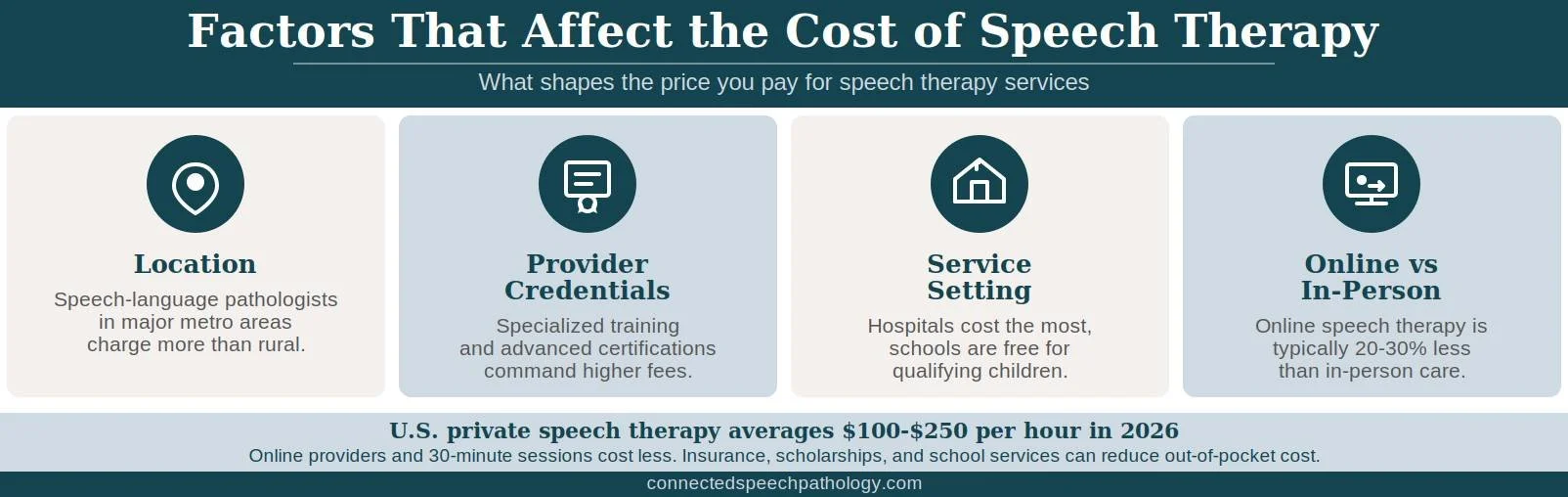
Pricing is rarely a single flat rate. Each of the following factors affects what you will pay per session and over the full course of speech therapy.
Geographic Location
Where you live drives a significant portion of the cost. Speech-language pathologists in major metro areas like New York, San Francisco, or Boston commonly charge more than those in smaller cities or rural regions. Costs vary widely by region, which is why session rates can differ by over $100 per hour depending on location and specialization.
Provider Credentials and Experience
Rates can also vary based on the provider’s experience and area of specialization. Speech-language pathologists with advanced training or a focused specialty often charge more, particularly for services that require more complex assessment, real-time feedback, or individualized coaching.
Examples include voice work, neurological rehabilitation, and other specialized communication services. Routine speech therapy needs may be priced differently based on the level of complexity and clinical decision-making involved.
Severity and Complexity of the Communication Disorder
More involved conditions usually require longer treatment timelines or more frequent sessions. Someone working on a mild articulation issue may finish in a few months, while a person with severe communication challenges following a stroke or managing a progressive neurological condition often needs sustained speech therapy. Total expense rises as the treatment timeline extends.
Session Length and Frequency
Thirty-minute sessions cost less per appointment than 60-minute sessions, though not always exactly half. Providers build in documentation, planning, and overhead time. Weekly attendance is most common, but some clients attend twice weekly, particularly during intensive treatment phases.
Service Setting
Where speech therapy happens influences price. Private practices and clinics carry overhead costs that hospital outpatient departments and school programs do not. Hospital-based speech therapy can run $200 to $300 per session due to facility fees.
School-based services delivered under the Individuals with Disabilities Education Act are free for qualifying children. University training clinics, where graduate students provide supervised speech therapy, are typically the most affordable in-person option.
For a closer look at how a fully online practice compares with traditional in-person care, see how Connected Speech Pathology compares to local clinics.
Insurance Coverage
Your benefits structure changes what reaches your wallet. A plan that covers speech therapy with a modest copay produces a different out-of-pocket number than a plan that requires you to meet a high deductible first or limits annual sessions.

In-Person vs Online Speech Therapy
Check out our blog comparing in-person vs online speech therapy for more information!
How Much Does an Initial Speech-Language Evaluation Cost?

An initial speech-language evaluation typically costs $150 to $400 and runs 45 to 90 minutes. An evaluation is typically completed before starting speech therapy to establish the diagnosis, identify areas of difficulty, and set measurable goals for the treatment plan.
During the evaluation, the speech-language pathologist reviews relevant history and observes communication in conversation, using a mix of standardized tests, informal measures, or functional tasks based on the individual’s needs. For children, evaluations often include play-based tasks and parent interviews. For adults, evaluations focus on functional communication, cognition, voice quality, or whichever area the client wants to address.
Our guide on what to expect during a speech and language evaluation walks through the process step by step.
Some practices charge the evaluation as a separate line item. Others bundle it into a starter package. Always ask in advance so the bill does not arrive as a surprise.
How Online Speech Therapy Compares on Cost

Online speech therapy is often priced similarly to in-person sessions. Some providers offer slightly lower rates due to reduced overhead. Pricing ultimately depends on the provider, specialization, and setting.
Online speech therapy removes travel time, simplifies scheduling, and can reduce the need for additional coordination around transportation or childcare. For families with busy schedules or in rural areas, the indirect savings often outweigh the per-session rate.
Research supports online speech therapy as an effective option for many communication goals, including articulation, language, fluency, and social communication.
It works best for individuals who can stay engaged, process instructions, and actively participate in a screen-based format. Some situations, especially those requiring more hands-on support, may still be better suited for in-person care.
Different Ways to Pay for Speech Therapy
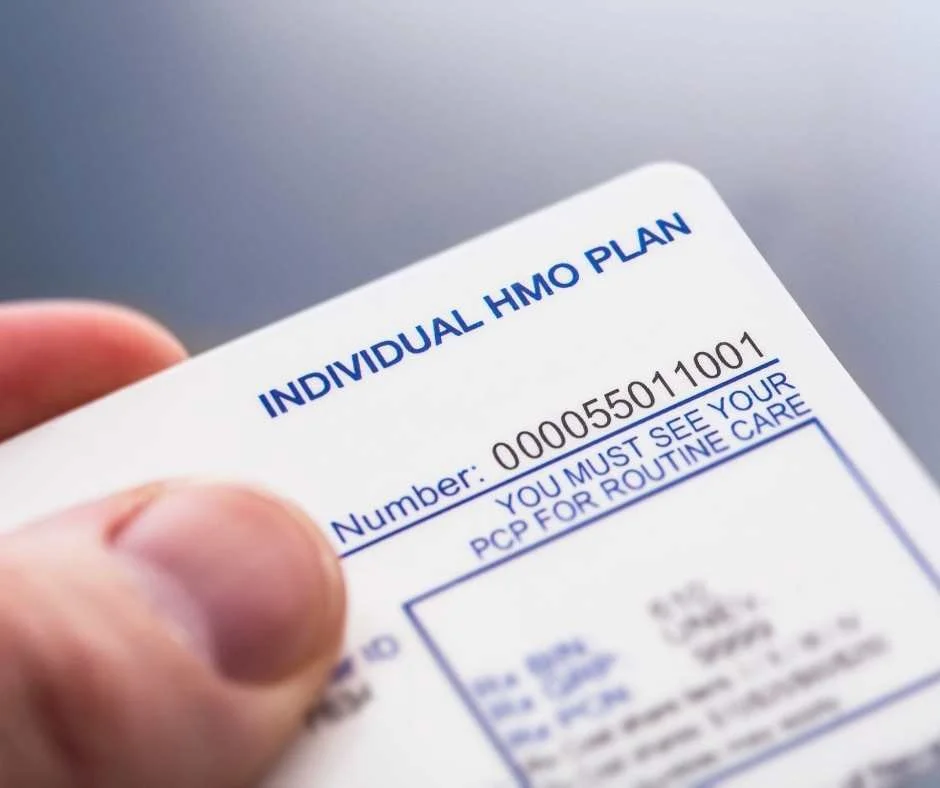
Speech therapy can be paid for through multiple channels, and many families combine more than one. Knowing the options that apply to your situation makes the planning process easier.
Private Pay
Paying out of pocket typically offers more flexibility in choosing a provider, scheduling sessions, and setting goals. Private-pay rates often fall in the $100–$250 range for 60-minute sessions, depending on the provider and level of specialization.
Compared to insurance-based care, private pay usually involves fewer restrictions on session frequency, medical necessity, or referral requirements. Some speech therapy practices also accept HSA or FSA funds toward these services.
Private Health Insurance
Many private insurance plans cover speech therapy, but coverage varies dramatically. Some plans require a physician referral, limit the number of sessions per month, or require prior authorization.
Other plans only cover speech therapy when tied to a specific medical diagnosis like apraxia, dysphagia, or aphasia. Services, such as accent modification,, voice training, and other non-medical communication goals are typically not covered by insurance.
Before scheduling, call your insurance company and ask:
Is speech therapy a covered benefit on my plan?
Do I need a referral or prior authorization?
What is my copay or coinsurance?
Is there an annual session limit?
Do I need to meet a deductible first?
Medicare
Medicare Part B covers speech-language pathology services for adults when they are considered medically necessary and ordered by a physician or qualified provider. After meeting the Part B deductible, beneficiaries are typically responsible for a 20% coinsurance on the Medicare-approved amount.
Coverage generally includes conditions, such as stroke-related communication disorders, traumatic brain injury, swallowing disorders, and voice disorders with a documented medical cause. Coverage details, reimbursement rates, and documentation requirements can change over time.
Medicaid
Medicaid coverage for speech therapy varies by state. For children under 21, services are typically covered when medically necessary under the Early and Periodic Screening, Diagnostic, and Treatment (EPSDT) benefit.
Adult coverage is more limited and depends on the specific state’s Medicaid policies, with some states offering comprehensive benefits and others providing more restricted access.
Early Intervention
Children under age three with developmental delays usually qualify for early intervention services, which are generally free or offered on a sliding scale based on family income. Each state runs its own program. Contacting your state's early intervention agency is the fastest way to find out what your family qualifies for.
School-Based Services
Public schools currently provide speech therapy services to qualifying students under the Individuals with Disabilities Education Act (IDEA). Services are delivered through an Individualized Education Program (IEP) after an evaluation determines eligibility, and they are designed to support academic access and classroom participation. Frequency and duration are determined by the school team and may differ from private services.
Flexible Spending and Health Savings Accounts
Both FSA and HSA funds can typically be used for speech therapy when it qualifies as a medical expense. Eligible uses usually include services for medically related conditions when documentation supports medical necessity.
Services that are not considered medically necessary, such as some types of communication coaching, may not be eligible. Check with your benefits administrator before submitting receipts.
Professional Development Funds
Adults may be able to use professional development funds for communication coaching, including accent modification, public speaking, executive presence, and other services that support workplace communication.
In some cases, this can also include work on areas such as fluency or articulation when they affect clarity, confidence, or professional performance. Reimbursement policies vary by employer, so it’s best to confirm with your HR or professional development team.
For ideas on how to use these funds, see our guide to spending professional development funds.
Scholarships
A handful of organizations offer scholarships to help cover the cost of speech therapy. For example, Florida residents may qualify for the Family Empowerment Scholarship, a state program for families of children with unique abilities. In Arizona, families may be eligible for the Empowerment Scholarship Account (ESA), which provides funds that can be used toward services like speech therapy, depending on eligibility.
National nonprofits, such as the UnitedHealthcare Children's Foundation, also offer grants for pediatric speech therapy based on financial need.
What Should Be Included in Speech Therapy Services?

A quality speech therapy package goes beyond drilling sounds. When comparing providers, look for these components in the service.
A Thorough Evaluation
A strong evaluation provides a clear understanding of strengths, areas of need, and recommended next steps. In some cases, it may include a formal diagnosis, depending on the setting and concern.
The value of the evaluation comes from the speech-language pathologist’s ability to identify patterns, interpret subtle communication differences, and translate those insights into a targeted plan. A written summary may be provided, but the most important outcome is a clear, actionable path forward.
A Personalized Treatment Plan
No two clients have identical needs. A strong plan reflects the client’s age, condition, goals, and learning style, and focuses on building skills that carry over into real-life communication.
Active, Engaging Sessions
Speech therapy works best when sessions are interactive, and the client is actively engaged. For children, this often involves play-based activities that are guided by the speech-language pathologist to support specific goals. For adults, sessions may focus on real-world communication scenarios or workplace simulations.
Home Practice Materials
Progress in speech therapy depends heavily on what happens between sessions. Quality providers send home practice activities and check on follow-through.
Progress Monitoring
Progress is tracked over time, though it may not always be linear. Providers should adjust goals and strategies based on how the client responds and how skills carry over outside of sessions.
Caregiver and Family Involvement
For children, parent involvement accelerates progress significantly. For adults, support from a spouse, partner, family member, or employer can reinforce gains made in session. In some cases, collaboration with a workplace or supervisor can also support carryover, particularly when communication is a key part of the individual’s role.
How to Make Speech Therapy More Affordable

Even when speech therapy is covered by insurance, the cumulative cost can stretch a household budget. These strategies help reduce the financial burden without compromising quality.
Consider online providers. While session rates are often similar, you may save time and simplify scheduling by avoiding travel and other logistics.
Ask about session packages. Some practices offer reduced rates when you prepay for a block of sessions.
Use 30-minute sessions when appropriate. Shorter sessions can reduce overall cost and may be effective for clients working on targeted goals or those who benefit from shorter, more frequent sessions.
Combine private speech therapy with school-based services. Combine school-based speech therapy and private pay services when appropriate. School services can cover core needs, so private sessions stay targeted and potentially reduce the total number needed.
Look into university clinics. Graduate student providers offer supervised speech therapy at substantially reduced rates.
Submit superbills for out-of-network reimbursement. Many insurance plans reimburse a percentage of private-pay speech therapy when you submit a detailed billing receipt.
Apply for scholarships and grants. Even small awards can offset several months of sessions.
Use HSA or FSA funds. Pre-tax dollars stretch further than after-tax income.
What We See Working with Clients

Cost is one of several factors clients consider, but it is rarely the only one. In our work, we see a few consistent patterns in how people decide to move forward with speech therapy.
One pattern involves professionals who have spent time using apps, courses, or general resources and made some progress, but still struggle with consistency in real conversations. They often seek more individualized feedback and structured practice. A targeted approach can reduce time spent on trial and error and help them reach specific goals more efficiently.
We also work with families who have used school-based or early intervention services and want additional support. School services address academic needs, but may not fully cover social communication, articulation precision, or intensity of practice. Private sessions are used more selectively to focus on specific goals, which can make the overall plan more efficient.
A third pattern involves adults continuing speech therapy after insurance coverage changes or ends. In these cases, clients are often focused on maintaining progress or improving functional communication in daily life. Ongoing, targeted sessions can help preserve gains and avoid regression, which can be more cost-effective than restarting speech therapy later.
Frequently Asked Questions About Speech Therapy Cost
1. How much does speech therapy cost without insurance?
Without insurance, private speech therapy typically ranges from $100 to $250 per hour. Thirty-minute sessions often range from $65 to $175, with pricing varying by location, provider, and setting. At Connected Speech Pathology, sessions range from $75 to $150, with current pricing on our rates page.
2. Does insurance cover speech therapy?
Insurance often covers speech therapy when it is deemed medically necessary. Coverage varies by plan, state, and diagnosis. Medicare covers speech therapy for adults when ordered by a physician, and Medicaid covers many children and some adults, depending on state rules.
3. Is online speech therapy cheaper than in-person?
Online speech therapy is often priced similarly to in-person sessions. Some providers may have different pricing structures, but there is no consistent cost difference across the field. Research supports online speech therapy as an effective option for many speech and language goals.
4. How many speech therapy sessions will I need?
Session count varies widely. Some clients see meaningful progress in four to six sessions for focused goals, while others benefit from ongoing speech therapy over a longer period, depending on the nature and complexity of the concern. Your speech-language pathologist will provide a realistic estimate during the initial evaluation.
5. Can I use HSA or FSA funds for speech therapy?
HSA and FSA funds often cover speech therapy as a medical expense. Eligibility depends on the specific plan, and services tied to a diagnosed communication, swallowing, or medical condition are more likely to qualify.
Confirm with your benefits administrator before submitting receipts, since some plans may require documentation, such as a letter of medical necessity.
6. Do I need a referral from my doctor to start speech therapy?
It depends on how you plan to pay. Insurance companies often require a physician referral before they will cover sessions. Private-pay clients usually do not need a referral and can schedule directly with a provider.
How Connected Speech Pathology Can Help

Connected Speech Pathology is a fully online speech therapy and communication coaching practice serving adults, teens, and children worldwide. We operate as a private-pay service.
Operating outside insurance lets us offer flexible scheduling, individualized session planning, and a focus on each client’s specific goals. For clients seeking out-of-network reimbursement, we provide detailed superbills.
Our team includes licensed speech-language pathologists and communication coaches. We offer communication coaching, voice and performance coaching, accent modification, and speech therapy for adults, along with services for teens and children.
Session pricing at Connected Speech Pathology ranges from $75 to $175, depending on the service. Every new client begins with a free consultation so we can answer pricing questions and recommend the right specialist on our team.
Summary
How much does speech therapy cost? In the United States, private sessions typically run $100 to $250 per hour, with shorter appointments ranging from $65 to $175. The exact price depends on where you live, your provider's credentials, the setting, session length, and how you pay.
Medicare, Medicaid, private insurance, school services, early intervention, FSA and HSA funds, and scholarships each play a role for different families. ‘
Choosing the right provider matters more than chasing the lowest sticker price. A clear evaluation, a personalized plan, and consistent follow-through deliver the value that makes speech therapy worth the cost.
About the Author
Allison Geller, M.A., CCC-SLP, is a communication coach, speech-language pathologist, and founder of Connected Speech Pathology, an international online practice providing professional communication coaching and speech therapy for children, teens, and adults. With more than two decades of experience, she has worked in medical and educational settings and published research on aphasia. Today, she leads a team of specialists who help clients improve their skills in public speaking, vocal presence, accent clarity, articulation, language, fluency, and interpersonal communication.