Brain Fog at Work: Losing Your Words Mid-Sentence

Brain fog is a state of foggy thinking where your mind feels slow, cloudy, and hard to focus, and at work it shows up first in how you communicate. Here is what to know about brain fog at work: how it shows up, why it clouds your words, what causes it, from poor sleep to hormones to medications, and how to manage it.
If you are a professional who goes blank in meetings, loses words mid-sentence, or feels foggy after a medication change, brain fog can chip away at your confidence, though it is usually manageable once you know the cause.
Key Takeaways
Brain fog is a symptom, not a diagnosis. It is a cluster of cognitive symptoms like forgetfulness, slow thinking, and trouble finding words.
At work, brain fog shows up in your communication first. You blank on names, lose your train of thought, and reach for words that will not come.
Most brain fog traces back to everyday causes. Poor sleep, stress, dehydration, hormonal shifts, illness, and some medications are common triggers.
GLP-1s can play an indirect role. Eating and drinking less during weight loss leaves your brain short on fuel and water.
Small, steady changes usually clear it. Better sleep, hydration, and a few in-the-moment tactics restore your clarity.
Losing Your Words: How Brain Fog Affects Communication at Work
Common Causes of Brain Fog at Work
Can GLP-1s Like Ozempic Cause Brain Fog?
How to Manage Brain Fog at Work
What We See Working With Clients
What Is Brain Fog?

Brain fog is not a medical diagnosis. It is an everyday term for a cluster of cognitive symptoms: trouble concentrating, forgetfulness, slow processing, mental fatigue, and difficulty finding words. Usually, it points to something else: poor sleep, stress, hormones, or a medication.
Losing Your Words: How Brain Fog Affects Communication at Work

At work, brain fog surfaces in your communication first, because talking draws on several systems. You must hold an idea, find the words, and form a sentence while someone waits.
When your brain is foggy, that chain breaks. You lose your train of thought, reach for a word, or blank on a familiar name.
A blank in a meeting can dent your confidence. Brain fog also taxes the working memory and executive function skills a conversation relies on.
When thoughts scatter under pressure, our guides on organizing your thoughts when speaking and why you lose your train of thought help.
Most word-finding trouble with brain fog is temporary and eases once the cause improves. It is not aphasia, which usually follows a stroke or brain injury. Word-finding that is steady, clearly worsening, or paired with slurred speech or sudden confusion needs medical care.

Why You're Suddenly Having Trouble Finding Words When Speaking
Find out why you're suddenly having trouble finding words when speaking in this blog.
Common Causes of Brain Fog at Work

Brain fog usually has an underlying cause, and at work several overlap. Name it, and the fog often lifts.
Poor Quality Sleep
Poor sleep is the most common cause. Your brain consolidates memories and restores cognitive function overnight, so short nights leave you slow and forgetful. Even a few nights of poor quality sleep dull focus and word-finding.
Chronic Stress
Chronic stress floods your body with cortisol, which impairs memory and concentration. Stress also disrupts sleep, which compounds the fog.
Hormonal Shifts During Perimenopause and Menopause
Hormonal changes during perimenopause and menopause are a well-known trigger. As estrogen fluctuates, many people notice forgetfulness, slower recall, and word-finding lapses that are usually temporary.
Recovering From Illness, Including Long COVID
Illness can leave cognitive symptoms behind after you feel better. Long COVID is linked to persistent brain fog that affects memory and concentration. If your fog started after an infection, our guide to post-COVID cognitive changes covers recovery.
Dehydration, Skipped Meals, and Other Causes of Brain Fog
Even mild dehydration impairs focus and slows how you process information. Skipping meals does the same, since low blood sugar levels leave your brain short on fuel. Poor nutrition, medication side effects, thyroid or autoimmune conditions, and mental health conditions like anxiety and depression can also contribute, so a persistent case is worth raising with a healthcare provider.
Can GLP-1s Like Ozempic Cause Brain Fog?

GLP-1s like Ozempic, Wegovy, and Mounjaro are not a documented direct cause of brain fog. When people feel foggy after starting one, the effect is usually indirect, tied to eating and hydration.
These medications curb appetite, so many people eat and drink much less, especially early on. That can leave your brain short on water, nutrients, and steady blood sugar, adding to the fog.
Digestive side effects get the most attention, but this fog usually traces back to eating and drinking less. It is often manageable with steady hydration, protein, and regular meals.
Because brain fog has many causes, do not assume the medication is the reason. If it is bothering you, talk with the provider who prescribed it before changing anything.
How to Manage Brain Fog at Work
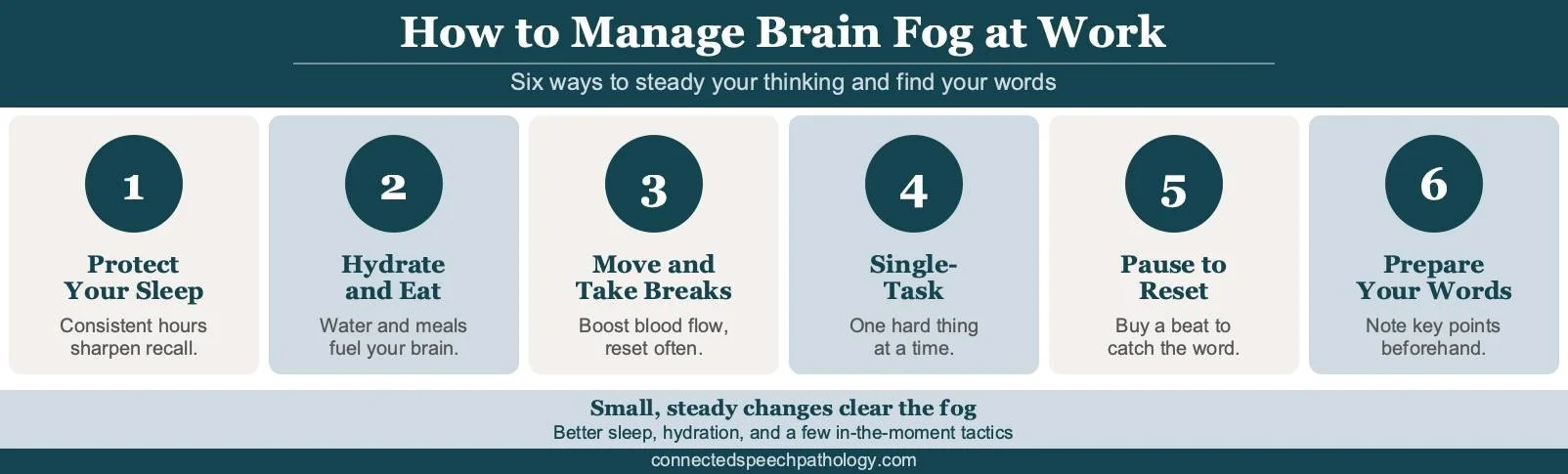
You can manage brain fog at work on two fronts at once. Steady the daily habits that fuel your brain, and keep a few tactics ready for the moment your words stall.
Protect your sleep. Aim for a consistent schedule and enough hours; better sleep is the fastest route back to mental clarity.
Hydrate and eat steadily. Keep water nearby and do not skip meals, so low blood sugar does not add to the fog.
Move and take short breaks. Brief physical activity boosts blood flow, and short breaks help you reset.
Single-task the hard things. Multitasking adds to your mental load, so give demanding conversations your full attention.
Buy yourself a beat when you blank. A calm pause, or a bridge phrase like “let me put that another way,” gives your brain a second to catch the word.
Prepare your words in advance. Jot a few key points before a meeting, so a foggy moment cannot derail you.
What We See Working With Clients

Our practice coaches adults on the communication side of brain fog, from new managers to senior professionals. The examples below are real clients of ours. Identifying details have been changed to protect privacy.
One client, a manager in her fifties, came to us during perimenopause, frustrated that she kept losing words in leadership meetings. She would open a point clearly, then blank on a common word while the room waited, and dreaded the meetings where she used to feel sharp.
We mapped her three key points beforehand, added a short opening line and a bridge phrase to buy a beat when a word stalled, and paired it with steadier sleep. Over a few weeks, the blanks eased, and meetings felt manageable again.
Another client, an account director, noticed foggy thinking a couple of months after starting a weight-loss medication. On back-to-back call days, he lost his thread mid-explanation, and by afternoon his recommendations came out muddled.
We built a pre-call outline habit, practiced slowing his pace and pausing instead of pushing through a blank, and rehearsed handling interruptions, while he worked with his prescriber on steadier eating. His word-finding on calls felt more reliable within weeks, though busy afternoons still took effort.
Frequently Asked Questions About Brain Fog

1. What does brain fog feel like?
Brain fog feels like slow, cloudy thinking. You have difficulty concentrating, forget words, and find routine tasks harder than usual.
2. Can brain fog cause trouble finding words when you speak?
Yes. Difficulty finding words is a common brain fog symptom that eases once the underlying cause, like poor sleep or stress, improves.
3. Does Ozempic or another GLP-1 cause brain fog?
Not directly. Foggy thinking on these medications usually comes from eating and drinking less, so fluids, protein, and steady meals help.
4. How long does brain fog last?
It depends on the cause. Fog from a few bad nights lifts in days; fog from illness or hormones can last weeks.
5. Is brain fog a sign of ADHD?
Not necessarily. ADHD and brain fog both affect focus, but brain fog is usually temporary. Our guide to ADHD and communication at work explains the difference.
6. When should you see a healthcare provider about brain fog?
See a healthcare provider if brain fog is persistent or clearly worsening. Get prompt care if it comes with confusion, numbness, or slurred speech.
How Connected Speech Pathology Can Help

Brain fog often affects how you communicate, and that is exactly the part we help with. At Connected Speech Pathology, a communication coach or speech-language pathologist works with you on practical ways to find your words, organize your thoughts, and stay clear at work.
We focus on the cognitive skills brain fog disrupts and build each plan around your goals. If word-finding or mental clarity has become a concern, our communication coaching can help you feel like yourself again.
Summary
Brain fog at work is a symptom, not a diagnosis. It shows up first in how you communicate, through lost words, dropped thoughts, and slower thinking. The usual causes are everyday: poor sleep, stress, dehydration, hormone shifts, illness, and sometimes GLP-1s.
Because it is a symptom, brain fog lifts when you treat the cause. Cognitive-communication coaching can help when word-finding and mental clarity affect your work.

About the Author
Allison Geller, M.A., CCC-SLP, is a communication coach, speech-language pathologist, and founder of Connected Speech Pathology, an international online practice providing professional communication coaching and speech therapy for children, teens, and adults. With more than two decades of experience, she has worked in medical and educational settings and published research on aphasia. Today, she leads a team of specialists who help clients improve their skills in public speaking, vocal presence, accent clarity, articulation, language, fluency, and interpersonal communication.