Interview Preparation Coaching: How It Works and How It Can Help
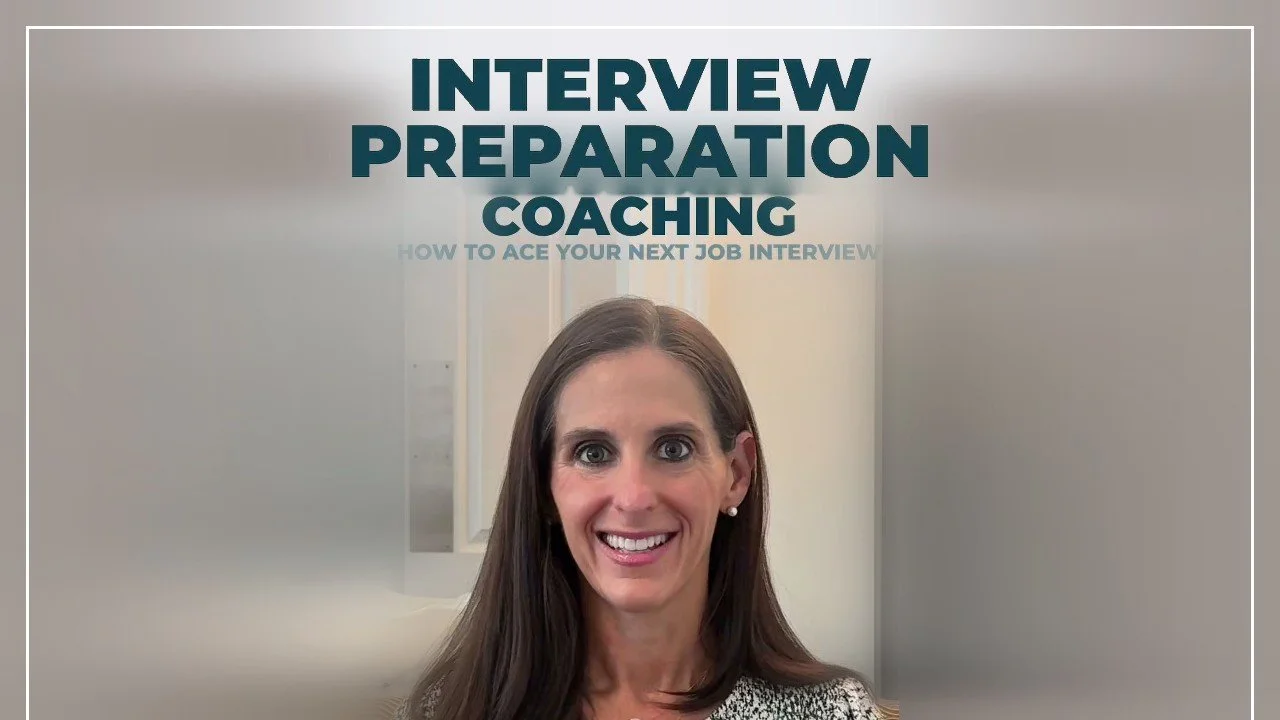
Interview preparation coaching helps job seekers improve their communication during interviews. In one-on-one sessions, you practice answering common interview questions and receive personalized feedback on your responses, speaking style, and delivery.
Even experienced professionals can struggle to explain their qualifications, organize their thoughts, or answer questions confidently during an interview. If you have an upcoming interview or have attended several interviews without an offer, a coach can help you identify areas for improvement.
In this article, you'll learn what interview coaching involves, how it can help you prepare, what it costs, and how to choose a coach who fits your needs.
Key Takeaways
What it is: Interview preparation coaching lets you practice for a job interview and get specific feedback on how you explain your experience.
How it helps: A coach can help you shorten long answers, prepare stories for behavioral questions, and practice speaking clearly and using natural body language under pressure.
What it costs: Interview coaching can cost about $50 to $300 per hour, though some coaches charge by the session or offer packages.
How to choose: Look for a coach whose experience fits your goals and who offers realistic mock interviews and specific feedback on your answers.
What Is Interview Preparation Coaching?
How Can Interview Coaching Help?
How Does Interview Coaching Work?
How Much Does Interview Coaching Cost?
How Do You Choose an Interview Coach?
What We See Working with Clients
What Is Interview Preparation Coaching?

Interview preparation coaching is one-on-one support tailored to the job you're applying for. A coach helps you prepare through mock interviews, with feedback on your answers and, depending on their expertise, your voice and body language. You'll practice organizing your thoughts, answering questions, and explaining your experience clearly and confidently.
Many candidates look for interview coaching in these situations:
You're getting interviews during your job search but haven't received a job offer.
You go blank or lose your train of thought on certain questions.
Your answers are too long, and the interviewer seems to have trouble following what you're saying.
You're changing careers or returning to work and aren't sure how to explain the change.
You're up for your dream job and want to feel prepared and gain a competitive edge.
You're applying to top companies with many interview rounds, or for a technical role.
Depending on the coach's experience and your goals, coaching can address what you say in your answers, the communication skills you use, or both. Experienced professionals also use interview coaching when applying for senior or leadership roles.
How Can Interview Coaching Help?

An interview coach can help you communicate your qualifications clearly and respond to unexpected questions with greater confidence. Practicing out loud with a coach allows you to strengthen your interview skills, get personalized feedback, and identify speaking habits you may not notice on your own.
| Common problem | What it can look like | What a coach works on |
|---|---|---|
| Rambling answers | Long, unfocused answers, so the interviewer has trouble following | Answering the question directly, using one clear example, then stopping |
| Going blank | Forgetting what you planned to say on a question you expected | Realistic practice and getting comfortable with a short pause |
| Filler words and fast pace | Lots of “um” or “so,” or speaking faster when nervous | Using pauses, reducing repeated filler words, and listening to recordings |
| A voice that gets too quiet | Volume drops at the end of sentences, so answers are hard to hear | Breath, volume, and voice inflection |
| Describing only the team's work | Leaving out what you did and what happened as a result | STAR stories that explain your actions and results |
| Online interviews | Looking away from the camera, or audio that is hard to hear | Camera and sound setup, eye contact, and mock video interviews |
| Connected Speech Pathology | connectedspeechpathology.com | ||
A communication coach can help you prepare for job interviews by focusing on both what you say and how you deliver your answers. Working with a coach who is also a speech-language pathologist gives you the benefit of specialized training in how people speak and communicate. They can identify subtle issues with your voice, speaking pace, and clarity, then help you make specific changes so your answers are easier to understand and more engaging.
How you speak can influence the impression you make during an interview. A 2015 study in Psychological Science found that people evaluating job candidates, including professional recruiters, rated candidates as more competent and thoughtful when they heard a short pitch rather than reading the same words.
Rambling is a common challenge during interviews, especially when you're trying to explain your experience in detail. A coach can help you organize your thoughts, answer questions directly, and choose examples that highlight your qualifications.
You can also work with your coach to identify core value themes, such as leadership, problem-solving, or teamwork, and choose examples that demonstrate those strengths. For example, when asked, "Why do you want this job?" you can explain what interests you about the position and connect it to a relevant experience or career goal.
Even when you've prepared for an interview, nerves can make it difficult to recall what you want to say. A 2018 research review in the Canadian Journal of Behavioural Science found that candidates who experienced greater interview anxiety tended to receive somewhat lower interview ratings. Practicing realistic mock interviews can help you get familiar with the process and feel better prepared for unexpected questions.
You don't need to answer every question immediately. A coach can help you become comfortable taking a brief pause to gather your thoughts before responding.
Some coaches also incorporate visualization techniques or breathing exercises to help you manage nerves before an interview. If interview anxiety is severe or affects other areas of your life, a licensed mental health professional can address the anxiety itself while a coach focuses on your communication skills.
Nervousness can also cause you to speak too quickly or rely on filler words such as "um" and "so." A coach can help you recognize these patterns, use pauses more effectively, and maintain a speaking pace that makes your answers easier to follow.
Your voice also shapes how your answers are received. If your volume drops at the end of sentences, an interviewer may have difficulty hearing important details.
A coach can help you coordinate your breathing, maintain a comfortable speaking volume, and use voice inflection to emphasize key points. Pitch changes also shape your tone of voice, helping you convey interest and enthusiasm.
When describing previous work experience, it's important to distinguish your individual contributions from the accomplishments of your team. A coach can help you explain your responsibilities, describe the actions you took, and highlight the results so interviewers have a clearer understanding of your qualifications.
For online interviews, your camera position, audio quality, and nonverbal communication also matter. Looking directly at the camera creates stronger eye contact, while clear audio helps interviewers follow your answers. A coach can help you prepare your setup and practice using natural facial expressions and gestures that support what you're saying.
How Does Interview Coaching Work?
Interview preparation coaching usually works as a cycle of practice and feedback. A coach learns about the job and your goals, runs mock interviews, gives specific feedback, and helps you practice your answers.
What Happens in Your First Interview Coaching Session
Coaching often starts with your strengths and the interview questions you find difficult. A coach can also ask about the interview format and have you answer a few questions out loud. Bring your resume, the job description, and notes from previous interviews, so your coach can help you prepare.
Many interview coaching sessions last about 60 to 90 minutes. Some interview coaching services also include resume review or resume writing.
Mock Interviews With Actionable Feedback
A mock interview session is a practice interview designed to feel like a real interview. Your coach plays the interviewer, asks tough questions, and adds follow-ups to help you practice responding under pressure. These coaching sessions can help you build confidence before the actual interview.
After each answer or at the end of the mock interview, you get actionable feedback on what worked well and what you can improve in your interview responses. A coach can tell you that your example was strong but took too long to reach the result, or that you looked down each time you were unsure.
Many coaches record your mock interview session so you can see your body language, hear your pace, and spot any distracting habits. Some coaches use a checklist to rate your answers and compare your progress across sessions.
Behavioral Interviews and the STAR Method
Behavioral questions ask about past experiences, such as “Tell me about a time you handled a conflict.” Employers use behavioral interviews to learn how you've handled past situations that required soft skills like teamwork and problem-solving. The STAR method, which stands for Situation, Task, Action, and Result, helps you explain what happened, what you were responsible for, what you did, and how it turned out.
A STAR answer can sound like this. “Our team missed two deadlines in a row, and I was asked to fix the schedule. I set up a short weekly check-in and moved two tasks to another teammate, and we delivered the next three projects on time.”
Some coaches use a shorter version called CAR, which stands for Challenge, Action, and Result. Whichever structure you use, a word-for-word script can sound rehearsed and make it harder to adjust when an interviewer phrases a question differently. Practicing only the main points of each STAR answer can help you tell it naturally in different ways.
Practicing for Different Interview Formats
Coaching can also prepare you for the format you'll face, such as a phone screen, a panel, or a video interview. For technical roles that involve problem-solving questions, coaching can include explaining your thinking out loud as you work. If you're applying for a senior role, a coach can help you draft a 30-60-90 day plan, a short outline of what you would focus on in your first three months.
Some employers use one-way video interviews, where you record answers to questions shown on a screen without speaking to an interviewer. Practicing with a camera and timer can help you get used to answering questions without live feedback.
How Much Does Interview Coaching Cost?

Interview preparation coaching typically costs about $50 to $300 per hour, although rates vary widely. The cost depends on the services offered, session length, and what's included in the coaching.
One-on-One Interview Coaching
Some coaches charge per session, while others offer packages with multiple sessions at a discounted rate. You can also find coaches who offer individual sessions without requiring a package, which is helpful if you're preparing for a specific interview.
When comparing coaches, ask about session length, what's included, and the total cost. If you're interviewing for a promotion, check whether your employer's professional development funds can cover coaching.
Free Resources and AI Interview Practice Tools
You can prepare for interviews on your own by researching the company, reviewing common interview questions, and practicing your answers out loud with a friend. Speaking clubs, such as Toastmasters, offer another way to practice speaking in front of others and build confidence.
AI interview coaching tools let you practice answering questions on your own schedule. Some analyze your speaking pace, pauses, and filler words, while others provide feedback on your answers' content. Free and paid options are available.
These tools help with repeated practice, but they don't replace the personalized feedback of a communication coach. A coach can identify habits you haven't noticed, such as giving overly detailed answers, sounding rehearsed, or looking away when you're unsure. They can also help you prioritize the changes that will make the biggest difference in your interviews.
You can combine both approaches by using AI tools for independent practice and working with a coach for mock interviews and individualized feedback. Whatever approach you choose, practicing out loud helps you develop the verbal communication skills you'll use during an interview.
How Do You Choose an Interview Coach?

First, identify what you want to improve, then look for a coach whose training and experience match your goals. Interview preparation for a nurse involves different questions and expectations than coaching for a software engineer or sales manager. A coach familiar with your industry can help you prepare for the questions and situations you're likely to encounter.
Interview coaches come from different professional backgrounds, including career counseling, recruiting, and business communication coaching. Their qualifications vary, so it's worth understanding what each type of coach brings to the process.
Professional communication coaches with a background in speech-language pathology: A coach with a master's degree in speech-language pathology has advanced training in how people produce speech, organize language, and use their voice to communicate. This makes them an excellent choice for professionals who struggle with rambling, speaking too quickly, finding the right words, or delivering answers confidently. They can identify the underlying communication patterns contributing to these challenges and provide individualized strategies to improve clarity, pacing, vocal delivery, and how you express your ideas.
ICF-certified coaches: The International Coaching Federation offers three credential levels. The Associate Certified Coach (ACC) requires at least 60 hours of coach training and 100 hours of coaching experience. The Professional Certified Coach (PCC) requires 125 training hours and 500 coaching hours, while the Master Certified Coach (MCC) requires 200 training hours and 2,500 coaching hours. Each level also has additional requirements, including assessments.
Certified Career Counselors: The National Career Development Association (NCDA) offers this credential to professionals with graduate-level education and additional training or supervised experience. Career counselors can help with career planning, job searches, and interview preparation.
Credentials are only one consideration. Ask prospective coaches how they conduct mock interviews, what personalized feedback they provide, and how they measure progress.
Some coaches use scoring rubrics to evaluate answer structure, clarity, speaking pace, and delivery across multiple practice sessions. These progress metrics help you see which skills are improving and where you need more practice. Avoid coaches who guarantee job offers or rely entirely on memorized interview scripts.
If you're preparing for a leadership position, consider someone with experience in executive communication coaching. Senior-level interviews often require you to explain complex decisions, respond to challenging questions, and communicate with authority. A professional communication coach with a speech-language pathology background can help you strengthen these skills while refining your voice, speaking style, and overall delivery.

How To Find A Public Speaking Coach
Check out our blog on finding a public speaking coach for more information!
What We See Working with Clients
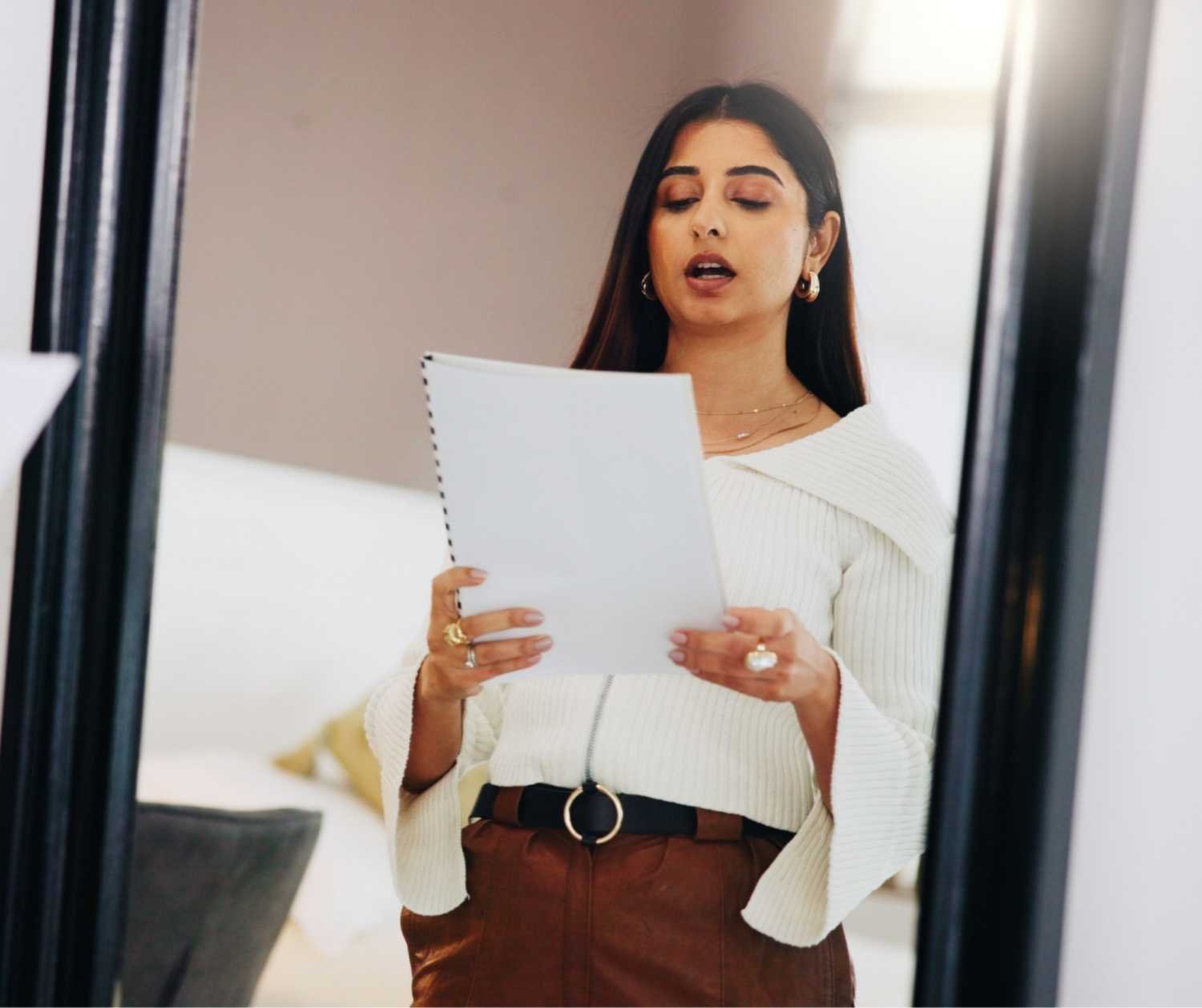
We coach job seekers and professionals who want to explain their experience clearly in interviews. The examples below are based on real clients we have worked with. Identifying details have been changed to protect privacy.
One client, a software engineer, was interviewing for his first team-lead role. He knew his projects well, but his interview experience was limited. When he answered behavioral questions, he often spent so much time explaining technical details that he didn't get to the results of his work.
We helped him organize his answers using the STAR structure, keep the technical background brief, and pause instead of filling silence with “um.” Recording mock interviews helped him hear when his explanations became too detailed. He said his answers felt shorter and more focused, and he felt better prepared for follow-up questions.
Another client was returning to work after several years at home with her children. During her job search, she was nervous about explaining the gap in her resume. When discussing it, she tended to speak quickly and quietly.
We helped her prepare a short, honest explanation for her time away from work. During mock interviews in our live online sessions, we practiced breathing, speaking at a comfortable pace, and looking at the camera. She said she felt more confident answering questions about the gap and less worried about how she sounded.
Frequently Asked Questions About Interview Coaching

1. What is the difference between interview coaching and career coaching?
Interview coaching focuses on the interview itself. It helps you practice answering questions, speaking clearly, and managing nerves before specific interviews. Career coaching is broader and can help with your career goals, your job search, and long-term plans.
2. How many interview coaching sessions do you need?
The number of interview coaching sessions varies from person to person. Some people want help before one important interview, while others spend more time building interview skills, such as giving shorter, more focused answers. After your first session, a coach can suggest a plan.
3. Can speech coaching help with job interviews?
Yes, speech coaching can help you speak more clearly and confidently in job interviews. A communication coach helps you practice speaking at a comfortable pace and volume, saying “um” less often, and organizing your answers clearly. You can also use these communication skills in meetings and presentations at work.
4. Can interview coaching help with video interviews?
Yes, interview coaching can help you prepare for online interviews. You can practice looking at the camera, speaking clearly into a microphone, and setting up good lighting and sound. Many coaches run mock interviews on a video call, so you practice in the same format you'll use in the interview.
5. What should you bring to your first interview coaching session?
Bring the job description, your resume, and your hardest interview questions. If you've had recent interviews, bring notes about what went well and what was difficult, so your coach can decide where to start. Come ready to answer a few questions out loud.
How Connected Speech Pathology Can Help

Connected Speech Pathology provides personalized, one-on-one interview preparation coaching for job seekers and professionals preparing for career advancement. Our communication coaches have graduate-level training in speech-language pathology, giving them specialized knowledge of how people use their voice, organize their thoughts, and communicate clearly.
This background allows our coaches to identify speaking habits that affect your interview performance, such as rushing through answers, rambling, or struggling to explain your experience. You'll receive individualized feedback and practice strategies tailored to your communication goals.
Our online communication coaching sessions can focus on an upcoming interview while also strengthening skills you'll use in meetings, presentations, and other professional conversations. During live online sessions, you'll practice answering interview questions and receive feedback from your coach.
Summary
Interview preparation coaching helps job seekers communicate their qualifications clearly and prepare for challenging questions. Through mock interviews, personalized feedback, and targeted practice, you can improve how you organize your answers, pace your speech, deliver your voice, and build confidence.
Coaching typically costs about $50 to $300 per hour, with options ranging from individual sessions to multi-session packages. When choosing a coach, consider their professional background, communication expertise, and approach to personalized feedback.
About the Author
Allison Geller, M.A., CCC-SLP, is a communication coach, speech-language pathologist, and founder of Connected Speech Pathology, an international online practice providing professional communication coaching and speech therapy for children, teens, and adults. With more than two decades of experience, she has worked in medical and educational settings and published research on aphasia. Today, she leads a team of specialists who help clients improve their skills in public speaking, vocal presence, accent clarity, articulation, language, fluency, and interpersonal communication.