How Singing Benefits Individuals with Parkinson's Disease
Many people with Parkinson’s disease notice that their voice becomes quieter and their breathing feels tight during everyday conversation.
Singing provides a practical way to strengthen these skills. The steady rhythm and controlled breath patterns help support louder and clearer speech and often bring a greater sense of confidence.
By the end of this post, you will see how singing can support the body, lift mood, and build social connection so you can decide whether this approach feels right for you.
Key Takeaways
Singing strengthens the same muscles used for speech and swallowing, which helps people with Parkinson's disease communicate with more confidence.
Group singing builds strong social support, which reduces isolation and improves mood for people living with Parkinson's symptoms.
Regular singing practice improves respiratory function and voice volume, which helps people speak clearly during everyday conversations.
Singing offers a low-risk complementary therapy that enhances quality of life and fits easily into daily routines.
Singing Benefits For Individuals With Parkinson's Disease
Social Support, Group Singing, and Quality of Life for People With Parkinson's
Music Therapy, Complementary Therapies, and Parkinson's Disease
Frequently Asked Questions About How Singing Benefits Individuals with Parkinson's Disease
Singing Benefits For Individuals With Parkinson's Disease
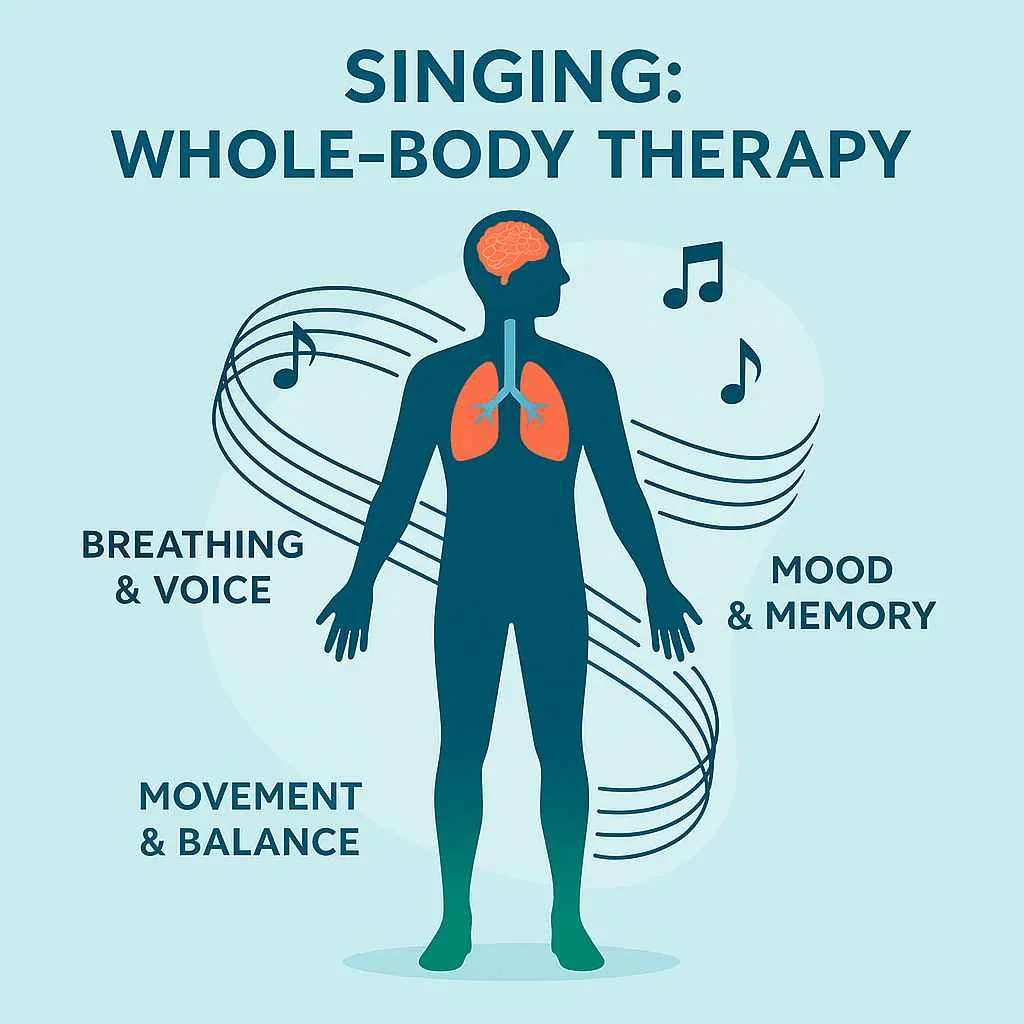
Singing supports people with Parkinson's disease by targeting the vocal cords, breathing muscles, and throat muscles that weaken in neurological conditions.
The nervous system affects these muscles, which can reduce voice control and swallow function. Singing guides these muscles through steady patterns that help communication feel more natural.
1. Respiratory Function, Parkinson's Symptoms, and Voice Improvements
Singing improves respiratory function by training long, controlled breaths that naturally support louder, more stable speech.
People living with Parkinson's disease often experience reduced voice volume, and singing helps build the breath support needed to carry sound with less effort. Over time, these skills can ease speech-related symptoms and make communication feel more comfortable.
Vocal Cords, Voice Volume, and Parkinson's Symptoms
Singing also helps the vocal cords move in a clear and consistent rhythm, which can make the voice sound stronger and steadier. Many people with Parkinson's notice that their voice becomes soft, but singing encourages more airflow and a fuller pitch range. These changes can make daily conversation easier, especially when talking with family and friends.
Respiratory Control, Breathing Work, and Quality of Life
Breathing exercises in singing help the lungs take in more air at once, which supports longer and louder sentences. This work strengthens chest muscles and improves speech timing. People often feel clearer communication because their breath lasts longer.
2. Movement, Physical Benefits, and the Nervous System in Parkinson's Disease
Singing supports physical benefits because rhythm helps the brain guide movement. People who live with movement disorders often feel more balanced when singing because songs create consistent timing. This timing supports smoother arm and leg movement during everyday tasks.
Same Muscles Used for Speech and Swallowing in People With Parkinson's
The muscles used in singing lift the voice box during swallowing. Some studies show that when people with Parkinson’s work on structured vocal exercises, they often see better speech strength and smoother, safer swallowing.
Rhythm, Movement, and Quality of Life
Rhythm helps the brain send steady signals that guide movement and breath. Research shows that singing can help people maintain smoother coordination during activities like walking and stretching. These consistent patterns make it easier for people with Parkinson's disease to move in a predictable and more supported way.
3. Cognitive Function, Mood, and Quality of Life for People With Parkinson's
Singing supports cognitive function by activating memory and attention networks throughout the brain. People with Parkinson's often feel more alert and engaged when singing familiar songs. This activation supports daily thinking skills and mental focus.
Singing, Mood, and Parkinson's Symptoms
Singing can improve mood by increasing chemicals that support well-being. People living with depression or anxiety from Parkinson's often feel relief during songs. Group singing also promotes mental health because participants feel connected and understood.
Cognitive Function, Brain Activity, and the Nervous System
Songs activate both sides of the brain, which improves attention and memory. People with Parkinson's disease notice that singing keeps their minds active and focused. These changes support clear thinking during daily routines.
Social Support, Group Singing, and Quality of Life for People With Parkinson's

Group singing builds community because people share songs, stories, and humor. This connection reduces social isolation, which many people with Parkinson's disease experience. Singing groups also provide a safe place to practice speech, breathing, and rhythm.
Choir groups and singing groups help people build friendships through shared songs. These groups can foster a sense of joy and belonging. People often say these groups help them feel more supported and confident.
A Fun Way to Support Parkinson's Symptoms and Quality of Life
Singing offers a fun activity that supports movement, voice, and breathing. Many people find that singing gives them a sense of control over their voice. These improvements lead to a better quality of life during daily activities.

Parkinson's Speech Therapy Techniques
Check out our blog on Parkinson's speech therapy techniques for more information!
Music Therapy, Complementary Therapies, and Parkinson's Disease
Music therapy uses rhythm, breath, and vocal exercises to support people with neurological disorders. Many people use music therapy as a complementary therapy that works alongside traditional treatments. Support from groups like the Parkinson's Foundation helps people find programs that match their needs.
Outcome Measures From Singing Intervention Programs
Researchers often track changes in respiratory control, voice volume, mood, and overall communication during singing-based intervention studies. Many programs show meaningful improvements in these areas after regular practice. This growing evidence suggests that singing can offer real benefits for people living with Parkinson's symptoms.
Regular Singing Practice and Quality of Life
Regular singing practice strengthens speech muscles and reduces strain during daily communication. Singing classes help people learn breath timing and pitch control that support clear speech. People often stay motivated when they join a group because group singing builds a steady routine.
Frequently Asked Questions About How Singing Benefits Individuals with Parkinson's Disease

1. Does singing help reduce Parkinson's symptoms?
Singing may help ease some speech and communication symptoms in people with Parkinson's disease. It can strengthen breathing muscles and support louder, clearer speech, often improving confidence during conversation.
Many people also report feeling better emotionally after singing, which can support daily well-being. While results vary from person to person, research shows that singing can be a helpful complement to traditional treatment.
2. How does singing improve respiratory function for people with Parkinson's disease?
Singing improves respiratory function by training long, controlled breaths that support speech. People with Parkinson's often struggle with short breaths, and singing helps them gain better control.
This improvement helps people finish sentences more easily. It also supports swallow control and airway safety.
3. Can group singing help people with Parkinson's disease socially?
Group singing helps people with Parkinson's disease by building strong community support. People feel less isolated when they share music with others. Singing groups create friendships that support mood and confidence. Many participants say these groups improve their quality of life.
4. Does singing offer benefits for swallowing problems in Parkinson's disease?
Singing supports swallowing by strengthening the muscles that lift the voice box. These muscles guide food safely into the stomach. Stronger airway muscles protect the throat during meals. People often notice easier swallowing after steady practice.
5. Is singing a low-risk activity for people with Parkinson's disease?
Singing is a low-risk activity because it uses natural movements the body already performs. People can adjust each song to match comfort levels.
Singing groups and classes also offer guidance that supports safe participation. This flexibility helps people stay active without strain.
How Connected Speech Pathology Can Help

At Connected Speech Pathology, we provide online speech therapy that supports people with Parkinson's disease through vocal exercises, breath training, and singing-based activities.
Our speech therapists help people build stronger voices, better respiratory control, and clearer communication during daily life. We also help people use songs and rhythm during speech therapy so they feel more confident speaking at home.
Our online programs support each person with steps that match their goals. Our speech pathologists guide people who want to join a singing group or choir for social support. We focus on helping each person build a stronger voice and a better quality of life.
Summary
Singing supports breathing, movement, communication, and mood for people with Parkinson's disease. Many people enjoy songs because they give the brain a steady rhythm and comfort during daily tasks.
Singing groups build community and reduce isolation. Regular practice strengthens muscles used for speech and swallowing. These changes help people feel more confident and supported.

About the Author
Allison Geller is a communication coach, speech-language pathologist, and founder of Connected Speech Pathology, an international online practice providing professional communication coaching and speech therapy for children, teens, and adults. With more than two decades of experience, she has worked in medical and educational settings, published research on aphasia, and leads a team of specialists helping clients improve skills in public speaking, vocal presence, accent clarity, articulation, language, fluency, and interpersonal communication.