Soft Skills Training That Strengthens Employee Communication

Soft skills often shape how adults handle conversations at work. Many people notice that their confidence shifts when tasks change or pressure rises. This post offers clear guidance for readers seeking steady growth in their communication.
You will see how key habits like active listening and emotional awareness support smoother teamwork. The goal is to give you practical insight based on training methods used every day by communication specialists. By the end, you will know which skills matter most and how they push long-term progress in any role.
Key Takeaways
Soft skills training develops strong communication skills that help employees respond with clarity during daily tasks. These skills support teamwork and smoother relationships.
Soft skills training teaches active listening, emotional intelligence, and practical techniques to guide adults through common workplace problems. Using these skills in the workplace strengthens collaboration.
Soft skills add value by helping employees build relationships and practice new behaviors that support professional development. These skills also guide career growth.
Soft skills focus on personal attributes that shape communication, whereas hard skills focus on technical tasks. Both areas support long-term success.
Soft Skills Training and Strong Communication Skills
Common Communication Challenges Employees Face
How Soft Skills Coaching Works
Frequently Asked Questions About Soft Skills Training
How Connected Speech Pathology Can Help With Soft Skills Training
Soft Skills Training and Strong Communication Skills
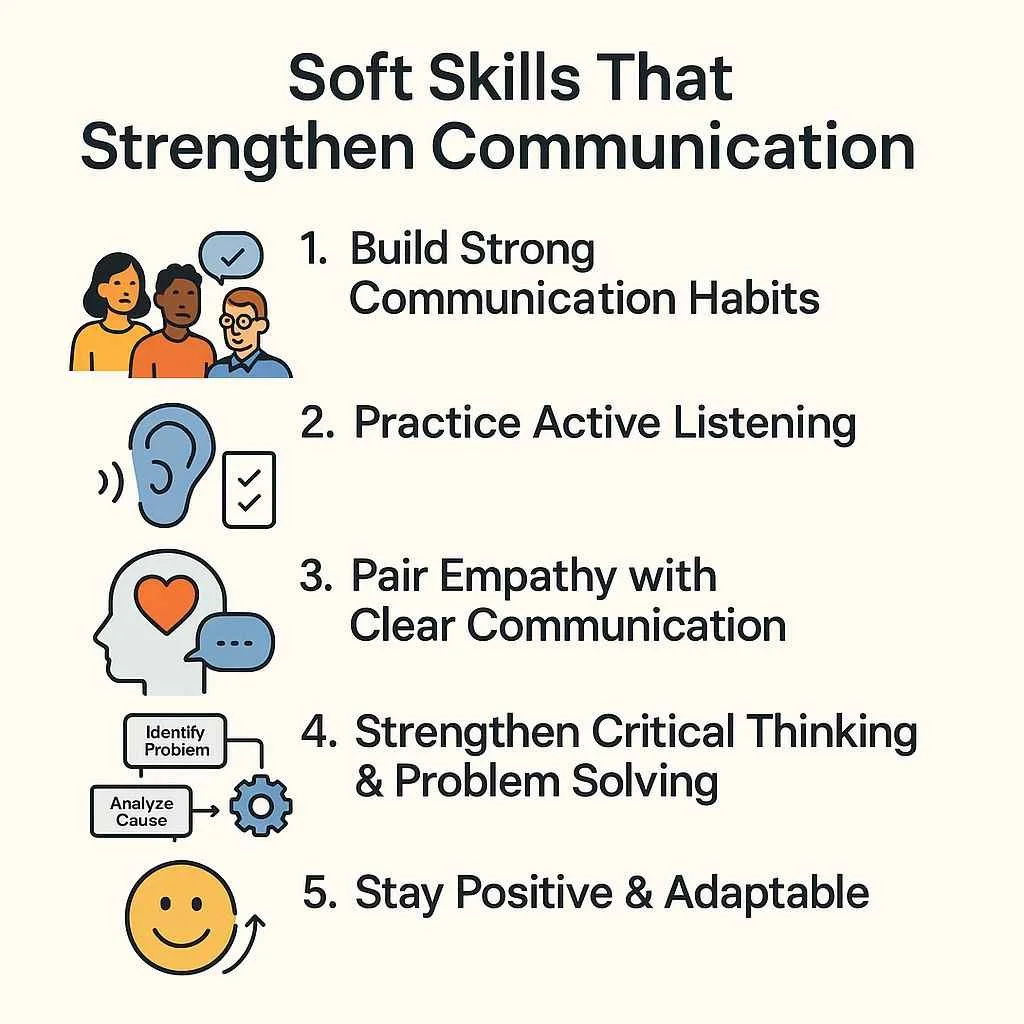
Active Listening
Active listening helps employees stay fully engaged in conversations, understand the complete message, and respond clearly. This reduces misunderstandings and improves collaboration across teams.
Emotional Intelligence and Verbal Communication
Emotional intelligence helps employees stay aware of their tone, reactions, and impact during conversations. When combined with clear verbal communication, it allows people to express ideas calmly and confidently, even in stressful situations.
Critical Thinking and Problem-Solving
Critical thinking and problem-solving skills help employees analyze issues, identify root causes, and choose effective solutions. Training often includes real-world scenarios to help employees practice making thoughtful decisions in daily tasks.
Positive Attitude and Adaptability
A positive attitude influences how employees respond to pressure, and adaptability helps them adjust when tasks or priorities shift. These qualities support steady communication and smooth teamwork in fast-paced environments.
Interpersonal Communication and Relationship Building
Interpersonal communication guides how employees connect with coworkers, build trust, and share ideas respectfully. Strong relationship-building skills help teams collaborate more effectively and reduce conflict.
Public Speaking and Presentation Skills
Public speaking is an essential soft skill because employees often need to share ideas, speak in meetings, or present information to clients and teams. Soft skills training helps employees organize their thoughts, speak with clarity, manage pacing, and communicate with confidence during presentations.
Conflict Resolution
Conflict resolution helps employees handle disagreements with professionalism and emotional intelligence. Employees learn how to listen actively, stay calm during tense conversations, and communicate clearly to find solutions that support teamwork and stronger workplace relationships.
Cultural Awareness
Cultural awareness teaches employees how background, experience, and language shape communication styles. When teams understand these differences, workplace interactions become more patient, inclusive, and productive.
Leadership Development and Career Growth
Leadership development relies on strong soft skills. Skills like active listening, clear communication, emotional intelligence, and problem-solving help leaders guide teams with confidence and steady decision-making. These habits support professional growth and career advancement.

Stronger Communication Skills
Check out our blog on stronger communication skills for employee retention.
Common Communication Challenges Employees Face

Many employees have strong technical skills but still struggle with everyday communication. These challenges can affect teamwork, productivity, and overall confidence at work. Soft skills training helps address the habits that make communication feel unclear, rushed, or overwhelming.
One common challenge is difficulty organizing thoughts before speaking. Many people know what they want to say but struggle to express it clearly in meetings or fast-paced conversations. Others may talk too quickly, speak too quietly, or use filler words that distract from their message.
Some employees have trouble reading social cues or adjusting their tone for different situations. This can lead to misunderstandings with coworkers or clients, even when the message itself is correct. Emotional reactions can also get in the way. Stress, frustration, or pressure can make communication feel tense or hurried.
Teams often notice these challenges during group projects, presentations, or any task that depends on collaboration. When employees do not listen actively, interrupt without meaning to, or lose track of key details, communication breaks down, and tasks take longer to complete.
These challenges are common across industries and experience levels. With targeted coaching, employees can build communication habits that support clearer thinking, stronger collaboration, and more steady professional interactions.
How Soft Skills Coaching Works

Soft skills coaching helps employees develop the communication habits that support teamwork, leadership, and career growth. Unlike hard skills or technical skills, soft skills shape how people listen, speak, collaborate, and respond to challenges in the workplace.
Assessment and Skill Awareness
Coaching often begins with an assessment to identify strengths and areas for growth. Employees build self-awareness in skills such as active listening, verbal communication, emotional intelligence, interpersonal communication, creative thinking, problem-solving, time management, and adaptability. These skills influence how employees share ideas, manage tasks, and build relationships at work.
Practice Through Realistic Activities
Soft skills training programs use practical techniques that help learners practice new behaviors. Group activities, simulated scenarios, and role plays give employees the chance to slow down, study the root cause of a common problem, and choose the best solution. This hands-on approach helps them communicate effectively during real workplace situations.
Building Strong Workplace Habits
Coaching focuses on skills that support steady communication, teamwork, leadership, and conflict resolution. Employees learn how to stay organized, express ideas clearly, offer assistance with confidence, and adjust their communication style as tasks or teams change. These habits strengthen collaboration and help employees develop strong soft skills that employers highly value.
Supporting Leadership Development and Career Growth
Soft skills coaching also supports leadership development. Employees learn how to guide teams, communicate expectations, and respond to challenges with a positive attitude. These skills help people take on greater responsibility and grow professionally.
A Foundation for Lifelong Learning
Teaching soft skills encourages lifelong learning and ongoing self-improvement. As employees develop soft skills, they gain tools to manage workplace demands, build stronger relationships, and communicate with professionalism and confidence.
Frequently Asked Questions About Soft Skills Training
1. What is soft skills training?
Soft skills training teaches communication and personal attributes that help adults work with others in a steady and respectful way. These programs include active listening, emotional intelligence, and interpersonal communication.
You gain new behaviors that strengthen teamwork. These skills support career growth and steady collaboration.
2. How does soft skills training help employees?
Soft skills training helps employees communicate clearly and manage problems with calm focus. Teams cooperate more smoothly when communication feels steady and predictable.
These skills help employees build relationships with clients and coworkers. Many employees also report stronger confidence during group tasks.
3. How long does it take to develop soft skills?
Soft skills development takes time because people practice behaviors until they feel natural. Many employees see progress within several weeks when they use these skills during daily conversations.
Training programs often include simulated scenarios that speed learning. Steady practice supports long-term success.
4. What are the most highly valued soft skills for employees?
Highly valued soft skills include communication, emotional intelligence, critical thinking, time management, and teamwork. These abilities guide strong collaboration and problem-solving.
Employers value these skills because they support professionalism and steady results. Many employees use them to lead tasks with confidence.
5. Is soft skills training different from hard skills training?
Soft skills training focuses on communication and behavior, and hard skills training focuses on technical tasks. Many jobs need both areas for balanced performance.
Employees who combine these strengths can explain ideas clearly and deliver strong results. Teams see higher success when both skill types develop together.
How Connected Speech Pathology Can Help With Soft Skills Training

At Connected Speech Pathology, we provide online soft skills training that supports clear communication and strong relationships at work.
Our professional communication coaches teach public speaking, verbal communication skills, active listening skills, and interpersonal communication. We also offer online communication coaching to help adults strengthen speech control and build confidence in conversations.
Summary
Soft skills training gives adults practical techniques that shape communication, teamwork, and confidence. These skills help employees manage tasks with steady focus and a positive attitude.
Soft skills also support leadership development and career growth across many fields. Many people use these skills to strengthen relationships with coworkers and clients. Daily practice helps these skills stay strong over time.

About the Author
Allison Geller is a communication coach, speech-language pathologist, and founder of Connected Speech Pathology, an international online practice providing professional communication coaching and speech therapy for children, teens, and adults. With more than two decades of experience, she has worked in medical and educational settings, published research on aphasia, and leads a team of specialists helping clients improve skills in public speaking, vocal presence, accent clarity, articulation, language, fluency, and interpersonal communication.